
Beyond The Hype: Understanding NFTs That Actually Matter
Before learning how to create NFTs, it's essential to grasp their significance. Non-Fungible Tokens (NFTs) represent a paradigm shift in digital asset ownership. Unlike fungible cryptocurrencies like Bitcoin, where one unit is identical to another, NFTs are unique.
This uniqueness mirrors the art world. Think of a famous painting: countless prints exist, yet the original holds significantly more value due to its provenance and scarcity. NFTs bring this digital scarcity to the digital realm, where copying is effortless. This empowers creators to establish verifiable ownership.
The NFT market has boomed. In 2021, approximately $41 billion was spent on NFT marketplaces, nearly matching the $50 billion spent on traditional art sales in 2020. Find more detailed statistics here. This surge reflects the increasing value placed on digital art and the realization that digital scarcity can create tangible value. For broader context on the evolving digital landscape, see our article on Web3 statistics.
Why NFTs Matter For Creators
NFTs empower creators in several crucial ways:
Direct Monetization: Artists can bypass traditional intermediaries, connecting directly with their audience and retaining a greater share of the profits.
Ongoing Royalties: Creators can receive a percentage of every subsequent sale, establishing a long-term income stream from their work.
Community Building: NFTs can facilitate the creation of unique digital experiences and communities, fostering stronger fan engagement and collaboration.
What Types Of Content Thrive As NFTs?
While virtually any digital file can become an NFT, some content types are particularly well-suited:
- Digital Art
- Collectibles
- Music
- Videos
- Virtual Real Estate
The key is to consider the inherent value and potential appeal to collectors. Strategic presentation within the NFT ecosystem is crucial. For further insights into this dynamic space, see our guide on How to master the Web3 world.
Essential Tools That Transform Your NFT Creation Process
Creating high-quality Non-Fungible Tokens (NFTs) demands more than artistic talent; it requires the right tools. Understanding these tools, from digital art software to blockchain platforms, is essential for bringing your NFT vision to life. This section explores the key components of a successful NFT creation process.
Digital Art Software: Your Creative Canvas
The foundation of any NFT is the underlying digital artwork. Whether it's 2D illustrations, 3D models, or animated sequences, selecting the right software is paramount. Popular choices include industry-standard tools like Adobe Photoshop and Adobe Illustrator for 2D work, Blender for 3D modeling and animation, and Cinema 4D for motion graphics. Each software offers unique strengths and caters to different artistic styles, so choose the one that aligns best with your creative vision.
Hardware Considerations: Powering Your Creations
While not specific to NFTs, your hardware significantly impacts your creative workflow and output quality. A powerful computer with a dedicated graphics card is crucial for handling complex artwork and rendering high-resolution images or videos. Sufficient RAM is also vital for smooth performance, especially when working with large files or resource-intensive software.
Wallet Setup: Your Gateway to the Blockchain
A crypto wallet is your digital vault for storing and managing cryptocurrency and NFTs. Setting up a wallet is crucial for NFT creation. MetaMask and Trust Wallet are popular choices, offering user-friendly interfaces and compatibility with various blockchains. Choose a reputable wallet and follow secure setup practices to protect your digital assets.
Choosing the Right Blockchain: Ethereum vs. Polygon
The blockchain you choose to mint your NFT on impacts costs, transaction speeds, and environmental impact. Ethereum, the most established NFT platform, offers robust security but can have high gas fees (transaction costs). Polygon, a layer-2 scaling solution for Ethereum, offers faster transactions and lower fees, making it an attractive alternative. The following infographic visualizes key differences: average gas fees, transaction confirmation times, and environmental impact.
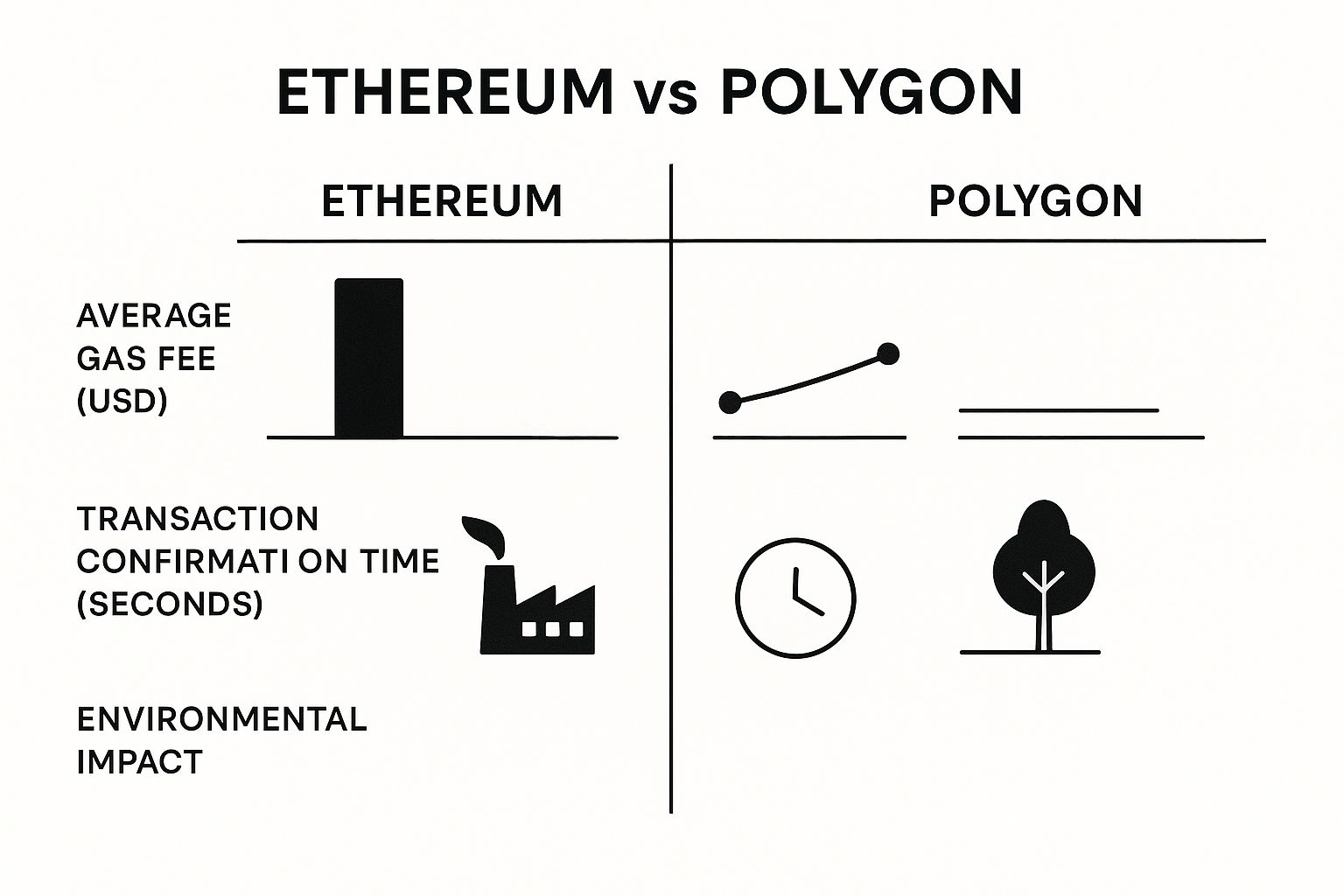
As the infographic shows, Polygon presents significantly lower gas fees and faster transaction times than Ethereum, with a smaller environmental footprint. These factors make Polygon a compelling choice, particularly for creators new to NFTs.
To further understand the tools available for NFT creation, let's explore a comparison of popular digital art creation tools.
To help you choose the best software for your needs, the table below compares several popular NFT creation tools:
NFT Creation Tools Comparison
| Tool Name | Difficulty Level | Cost | Best For | AI Integration |
|---|---|---|---|---|
| Adobe Photoshop | Intermediate to Advanced | Paid | 2D art, image editing | Emerging |
| Adobe Illustrator | Intermediate to Advanced | Paid | Vector graphics, illustrations | Emerging |
| Blender | Beginner to Advanced | Free | 3D modeling, animation | Growing |
| Cinema 4D | Intermediate to Advanced | Paid | Motion graphics, animation | Emerging |
This table highlights the diverse range of tools available, catering to varying skill levels and creative goals. Choosing the right tool depends on your specific needs and project requirements.
The NFT market is experiencing significant growth, projected to increase by $84.13 billion from 2025 to 2029, with a CAGR of 30.3%, according to Technavio. This growth is driven by the increasing demand for digital art and the integration of AI, enhancing market appeal and accessibility. Learn more about the growth of the NFT market here. These advancements are democratizing the creation process, making it easier for individuals without traditional art backgrounds to participate in the NFT space. You may also be interested in exploring NFT job opportunities.
Minting Your First NFT: A No-Nonsense Action Plan
Turning your digital artwork into an NFT is called minting. This process registers your creation on a blockchain, giving it a unique identity and verifiable ownership. Let's explore a practical action plan for creating NFTs, incorporating insights from successful NFT creators.
Choosing the Right Blockchain
The blockchain you select is a critical decision, influenced by several factors. Ethereum, the dominant NFT platform, provides a secure environment but comes with potentially high gas fees (the transaction costs). This can be a significant hurdle for new creators.
However, established artists with more capital may find Ethereum's security and broader recognition beneficial. For instance, a high-profile NFT launch might leverage Ethereum's security and existing collector base.
Polygon is another option, offering lower gas fees and faster transactions. As a layer-2 scaling solution for Ethereum, it operates on top of the main network, improving efficiency. This makes Polygon attractive for creators mindful of costs or those minting a large number of NFTs.
Setting Up Your Crypto Wallet
A crypto wallet is necessary to manage your cryptocurrency and interact with blockchains. Setting one up is simple, with various options like MetaMask and Trust Wallet available. These wallets function as browser extensions or mobile apps, offering user-friendly interfaces for managing digital assets. For optimizing your workflow, consider using some of the AI productivity tools available today. After choosing a wallet, prioritize security.
This includes setting a strong password and safeguarding your seed phrase (the recovery key for your wallet).
Navigating the Marketplace Interface
Once your wallet is set up, choose an NFT marketplace to mint and list your NFT. Marketplaces such as OpenSea and Rarible connect creators with collectors. Each marketplace has a unique interface, fee structure, and community. Research and select the best fit for your target audience and goals. Some marketplaces cater to specific NFT types, like game assets or digital art.
Optimizing Your Minting Strategy
Minting involves key decisions that influence your NFT's value and discoverability. Consider these factors:
Royalty Structures: Set a suitable royalty percentage to earn a share of all future sales. This establishes a passive income stream beyond the initial sale.
Metadata Strategies: Comprehensive metadata (title, description, creator info) enhances discoverability and perceived value, giving collectors greater context.
Minting Costs: Account for gas fees and marketplace fees. A well-planned minting strategy minimizes costs and boosts potential profits.
By thoughtfully considering these factors, you can mint NFTs effectively and improve their chances of success in the market.
Selecting the Perfect NFT Marketplace for Your Work
After minting your NFT, choosing the right marketplace is paramount. This decision significantly impacts your success. The wrong platform can limit your visibility and shrink your potential audience. This guide explores key factors in selecting a marketplace aligned with your work and objectives.
Understanding Marketplace Nuances
Different marketplaces cater to various niches and audiences. OpenSea, the largest NFT marketplace, boasts a broad audience and supports diverse NFT types. This makes it an ideal starting point, especially for newcomers. OpenSea can be overwhelming due to its sheer size, making it harder for creators to stand out.
Rarible is another popular option known for its community-driven focus and emphasis on creator royalties. Rarible provides a more curated experience than OpenSea, which benefits artists seeking a more engaged audience. However, its smaller user base might restrict reach.
Foundation is an exclusive platform specializing in high-quality digital art. Foundation operates on an invite-only basis, creating a sense of prestige and attracting serious collectors. While valuable for established artists, its exclusivity poses a challenge for emerging creators.
Navigating Exclusivity and Verification
Some marketplaces, like Foundation, have exclusivity requirements, from invitations to criteria based on artistic merit or community standing. These requirements aim for quality and attract discerning collectors, but can limit opportunities for newer creators.
Many marketplaces also offer verification processes. Verification badges build trust with potential buyers, which is crucial in a space susceptible to scams. Verification usually involves submitting proof of identity and work ownership.
Platform-Specific Features and Visibility
Each marketplace has unique features enhancing visibility. OpenSea offers tools for creating collections and organizing NFTs. Rarible allows community governance and voting on featured artwork. Understanding these platform-specific features is crucial for maximizing your reach and engagement.
Strategic Multi-Platform Presence
Listing your NFTs on multiple platforms expands your audience, increasing your chances of connecting with the right collectors. However, manage your multi-platform presence carefully to avoid diluting your brand or confusing potential buyers. A cohesive strategy across marketplaces is essential for building a strong collector base.
Key Marketplace Considerations: A Comparison
The table below compares popular NFT marketplaces to aid your decision-making process. It summarizes key features, fees, and benefits.
| Marketplace | Gas Fees | Platform Fees | Supported Blockchains | Audience Size | Best For |
|---|---|---|---|---|---|
| OpenSea | Variable (Ethereum) | 2.5% | Ethereum, Polygon, others | Largest | Beginners, diverse creators |
| Rarible | Variable (Ethereum, Flow) | 2.5% | Ethereum, Flow, Tezos | Medium | Community-focused artists |
| Foundation | Variable (Ethereum) | 15% (initial sale), 5% (secondary sales) | Ethereum | Smaller, curated | Established artists |
This table highlights key differences in fees, supported blockchains, and target audiences, providing valuable information for strategically listing your NFTs. Choosing the right marketplace is essential for reaching the right collectors and thriving in the NFT world. Research and compare different platforms to find the perfect fit for your work.
Building a Collector Base That Actually Values Your Work
Creating your NFT is only the first step. The real challenge lies in attracting collectors who genuinely appreciate your work and building a community around it. This means fostering a connection that goes beyond the potential for quick profits. This section explores strategies for cultivating such a loyal collector base. Choosing the right marketplace is crucial. Many creators are exploring how Web3 Naming Markets might reshape how we interact with digital assets.
Crafting a Compelling Narrative
Successful NFT creators understand the importance of storytelling. They don't just sell art; they sell a vision. This involves crafting a compelling narrative around their work, explaining the inspiration, the creative process, and the significance behind it. This narrative helps create a deeper connection with potential collectors, turning a simple transaction into a shared experience. For example, an artist could share the story behind their collection, detailing its symbolism and the personal journey reflected within the artwork.
Engaging Authentically on Social Media
Social media platforms like Twitter, Instagram, and Discord are invaluable for building a collector base. However, simply posting promotional material isn't enough. Authentic engagement is essential. This involves participating in relevant community conversations, offering behind-the-scenes glimpses into your creative process, and responding thoughtfully to comments and inquiries. Engaging with relevant hashtags and online communities can also increase your visibility and attract new collectors. For more insights, take a look at this article about important NFT Statistics.
Building Sustainable Relationships
Growing a strong collector base requires more than just online presence; it requires building real relationships. This includes responding to direct messages, hosting online events, and offering exclusive previews to your community. These personal touches foster loyalty and encourage long-term engagement. Actively participating in community discussions and supporting fellow creators further strengthens the bond with your collectors.
Timing and Limited Editions
Strategic timing and limited editions can significantly impact demand. Creating a sense of scarcity can drive interest and encourage early adoption. This might mean announcing launch dates in advance and limiting the number of available NFTs. However, it's crucial to strike a balance between scarcity and accessibility to ensure a sustainable and inclusive community. Offering different tiers of NFTs with varying levels of exclusivity can also appeal to a wider audience.
Adding Value Through Utility and Community Building
Many successful NFT projects offer additional value beyond simple ownership. This could include access to exclusive online communities, physical merchandise, or even opportunities to collaborate with the creator. This added utility increases the perceived value of the NFT and reinforces the connection between the creator and the collector. Hosting community events such as online workshops or meetups cultivates engagement and a sense of shared purpose. By offering ongoing value and fostering a vibrant community, NFT creators can build a collector base that transcends speculative investment, nurturing genuine appreciation and long-term support.
Avoiding the Costly Mistakes That Derail NFT Creators
Creating a successful Non-Fungible Token (NFT) project can be challenging. It requires understanding both technical complexities and the ever-changing NFT market. Many promising projects fail due to avoidable mistakes. This section examines common pitfalls experienced by NFT creators and offers strategies for navigating them.
Navigating the Technical Minefield
Several technical issues can significantly impact your NFT's value and even lead to its removal from marketplaces. One crucial area is gas fees. These are transaction fees on the blockchain. Unexpectedly high gas fees can dramatically reduce profits, especially when minting multiple NFTs or operating on blockchains like Ethereum. Careful calculation of gas fees and strategic timing of the minting process can help mitigate this risk.
Another critical element is metadata. This is the descriptive information associated with your NFT. Incorrectly formatted metadata can make your NFT harder to find and decrease its perceived value. Ensure your metadata is accurate and descriptive to improve discoverability for collectors.
Market Misconceptions and Pricing Strategies
Blindly following trends is a common mistake many creators make. This often leads to market oversaturation and a lack of unique offerings, making it hard to stand out. Conduct thorough market research. Understand the demand for your specific type of NFT.
Pricing is another critical aspect. Overpricing can deter potential buyers, while underpricing can leave money on the table. Research comparable NFTs and consider your target audience when establishing prices.
Protecting Your Intellectual Property
Intellectual property issues can have serious consequences for NFT creators. Minting copyrighted material as your own can result in removal from marketplaces and even legal action. Always ensure you own the rights to the artwork you're minting.
Understand the implications of using other creators' work as inspiration. Consider using creative commons or public domain assets as alternative options for legally incorporating external content.
Avoiding Scams and Building Sustainable Relationships
The NFT space is unfortunately susceptible to scams that target both creators and collectors. These can include phishing attacks, fake marketplaces, and fraudulent investment opportunities. Carefully research any platform or opportunity before you participate. Verify its legitimacy through multiple sources and never share your private keys.
Building genuine relationships with collectors is vital for long-term success. This involves more than just promotional activities. Actively engage with your community, maintain open communication, and provide value beyond the initial NFT purchase to build trust and a loyal following.
Are you ready to explore Web3 careers? Find Web3 offers numerous job opportunities in crypto, NFTs, Decentralized Finance (DeFi), and blockchain. Discover your next Web3 role on Find Web3