
Understanding the Web3 Marketing Landscape
Let's face it, Web3 marketing can feel like a whole new ballgame. It's not about sprinkling crypto buzzwords into your existing plan. It's a completely different way of thinking about connecting with your audience. I've talked to marketers who've crushed it in Web3, and others who've watched their budget disappear chasing the wrong things. The big lesson? Understanding the core differences between Web2 and Web3 is absolutely essential.
The infographic below gives you a snapshot of some key data on Web3 marketing adoption, tactics, and ROI compared to Web2:
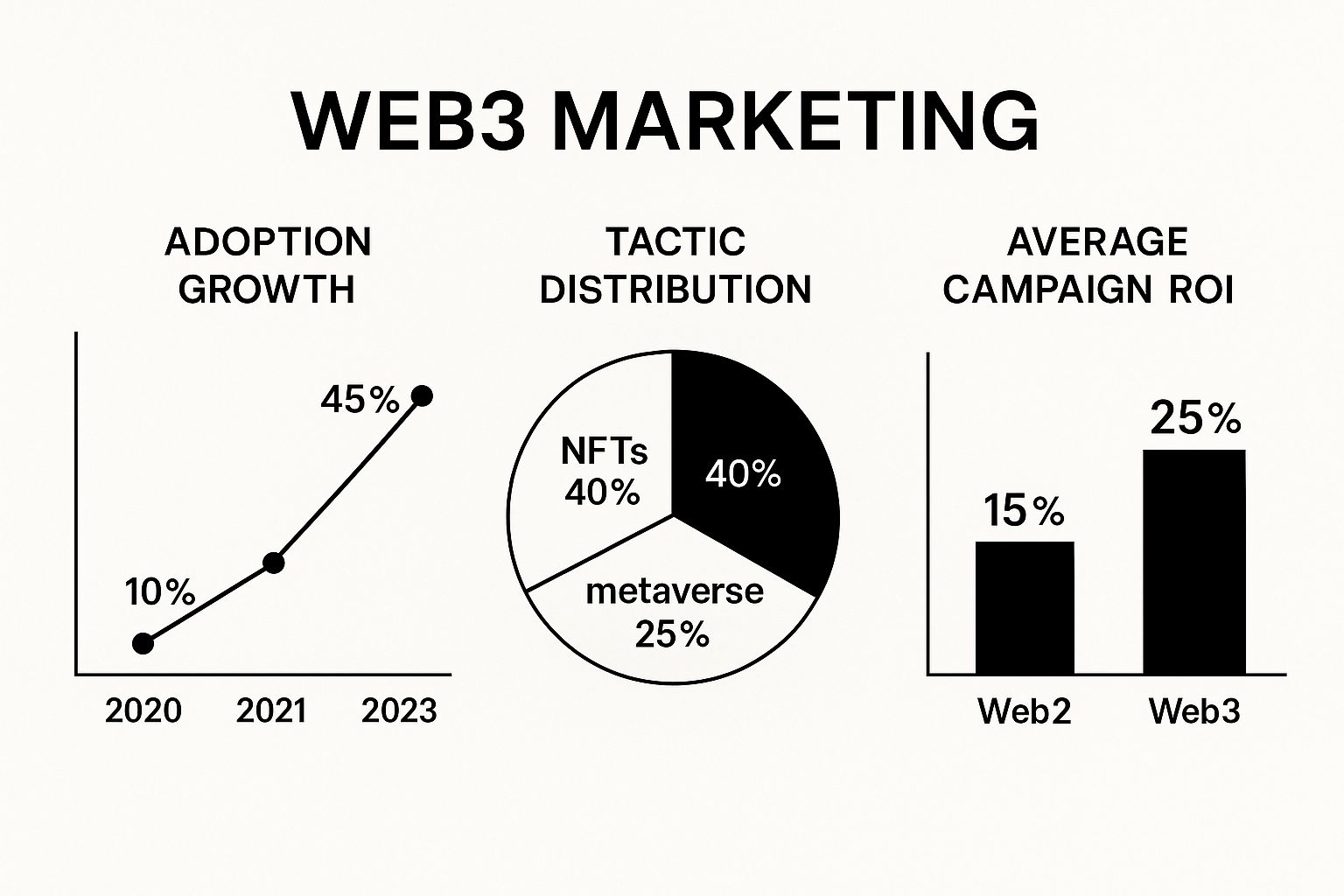
You can see adoption is growing fast, with NFTs and tokens leading the way. The higher average ROI in Web3 campaigns is especially interesting. It really shows the potential of this developing space. To truly grasp the Web3 marketing landscape, understanding broader digital marketing strategies is key.
What Makes Web3 Marketing Unique?
One of the biggest shifts is how we measure success. Traditional metrics like website visits and social media followers don't tell the whole story in Web3. Here, we're focused on community engagement, token activity, and on-chain interactions. Think about a successful NFT project, for instance. It's not just about the number of NFTs sold. It’s about how active the community is on Discord, how many holders are staking their tokens, and the overall energy of the ecosystem.
This move toward community-centric marketing is driven by blockchain technology. The rapid growth of the Web3 market is fueled by these tech advancements and the increasing use of blockchain and cryptocurrencies. The global Web3 market, worth about $4.43 billion in 2024, is expected to hit $6.15 billion by the end of 2025, with a CAGR of 38.9%. For more information, check out this report on Web3 market growth. These Web3 statistics offer even more valuable insights.
Decentralization and Its Marketing Implications
Decentralization is another core Web3 principle that significantly impacts marketing. Instead of depending on centralized platforms owned by big tech, Web3 empowers communities to govern themselves. This changes the power balance, giving users more control over their data and online experiences. This creates new hurdles for marketers because they need to build trust within decentralized communities, not just rely on traditional top-down advertising.
Let's dive into a comparison to really understand the differences:
To help illustrate these differences, let’s take a look at the following table:
| Marketing Element | Traditional Approach | Web3 Approach | Key Considerations |
|---|---|---|---|
| Audience Targeting | Demographic, Geographic, Psychographic | Community-based, Token Holder, DAO Member | Identifying shared values and interests within Web3 communities |
| Content Strategy | Brand-centric, One-way communication | Community-driven, Two-way dialogue | Co-creating content with the community, focusing on value exchange |
| Engagement Tactics | Paid advertising, Social media campaigns | NFT drops, Tokenized incentives, Community events | Building genuine relationships and fostering a sense of belonging |
| Metrics | Website visits, Social media followers, Lead generation | Community engagement, Token activity, On-chain interactions | Measuring the health and vibrancy of the Web3 ecosystem |
| Platform | Centralized social media, Search engines | Decentralized platforms (Discord, Telegram), DAOs | Understanding the nuances of each platform and community |
As you can see, Web3 marketing demands a fundamental shift in perspective. It’s less about broadcasting messages and more about building relationships.
The screenshot above, from CoinMarketCap, shows how dynamic the cryptocurrency markets are – a vital part of the Web3 world. The changing values and trading volumes highlight how marketers need to be adaptable and understand the forces driving these markets. This is a key part of building effective strategies in this constantly changing environment. This knowledge can help you anticipate and respond to changes, ensuring your marketing remains effective. In the end, succeeding in Web3 marketing means understanding these new dynamics, building real relationships, and providing actual value to decentralized communities.
Mapping Your Web3 Audience Beyond Demographics
Forget those old-school buyer personas. They just don't cut it in Web3. Your audience isn't about age or income brackets; it's about their on-chain footprint, their community involvement, and the values they share. Think cryptographics, not demographics. We're talking about understanding how they interact with the blockchain, not just who they are. What DAOs are they active in? What NFTs are they holding? What’s their trading history look like on-chain? These are the questions that actually move the needle.
Identifying Your Core Web3 Communities
Experienced Web3 marketers don’t just scratch the surface with social media analytics. They go deep, analyzing on-chain data, getting into the nitty-gritty of Discord engagement, and seeing how involved people are in DAOs. Tools like Dune Analytics are essential for this kind of deep dive.

This Dune dashboard screenshot gives you a glimpse of the on-chain data you can access. By analyzing metrics like token holdings, transaction volume, and smart contract interactions, you get a real granular view of how users behave within your ecosystem. This data is gold for identifying key community segments and tailoring your Web3 marketing strategy accordingly.
Understanding Web3 User Segments
It's crucial to understand what makes different Web3 user segments tick. A DeFi yield farmer has a totally different focus than an NFT collector, and both are miles apart from a protocol builder. For example, a yield farmer is all about maximizing returns, so your marketing should highlight APYs and platform security. An NFT collector, on the other hand, might be more drawn to the artistic value, the sense of community exclusivity, or the potential utility of a project down the line. Understanding these nuances is key to crafting a message that truly resonates.
Understanding the basics is essential for Web3 marketing success. This article gets into the nitty-gritty of why: Web3 Domains Aren’t a Trend — They’re Infrastructure
The growing interest in Web3 from traditional businesses adds another layer of complexity. It's interesting to note that 82% of Fortune 500 companies were planning to explore Web3 in 2023. Combine that with the fact that about 65% of Web3 users are male, and you can see how targeted marketing strategies become absolutely essential. For more stats and a deeper look into these trends, check out this resource on Web3 marketing stats.
Mapping the Web3 Audience Journey
Mapping the Web3 audience journey is a whole different ballgame compared to the traditional marketing funnel. Users might enter your ecosystem from all sorts of places – a Discord server, an NFT drop, or a DeFi protocol. Their journey can span multiple blockchains and communities. This decentralized environment requires flexible and adaptable marketing strategies. Think about how you can create meaningful touchpoints across this fragmented landscape, building engagement at each step of the way. This could involve targeted airdrops, community events, or even collaborations with other projects. Remember, in Web3, community is king.
Building Authentic Community-First Campaigns
Community isn't just a marketing channel in Web3; it's the channel. It's the bedrock upon which successful projects are built. Forget those generic Discord servers and fleeting Twitter Spaces. I've chatted with community managers who've scaled projects from zero to millions in Total Value Locked (TVL), and the real magic isn't about hype, it's about genuine value. It's about making members feel like they're part of something real, not just another number.
Building a vibrant community is about fostering a sense of belonging. It's about creating a space where members feel valued and their contributions matter. This sense of shared purpose is what fuels long-term growth and distinguishes truly successful Web3 projects.
Creating Genuine Value for Community Members
The best Web3 projects get that community members aren't just potential customers; they're active participants, shaping the project's journey. This change in perspective is everything. Instead of thinking about how to extract engagement, focus on what you can offer that genuinely benefits your community. This could be anything from sneak peeks at new features and exclusive educational content to opportunities to directly influence the project's development.
For example, some projects offer tokenized rewards for code contributions or content creation. Others host exclusive AMAs with the development team, giving members a direct line to the people building the project. These initiatives not only cultivate a sense of ownership but also offer real value that keeps members engaged and invested in the long haul.
Designing Rewarding Participation
Participating in your community shouldn't feel like a chore; it should feel rewarding. Consider how you can design experiences that encourage meaningful contributions and make members feel truly appreciated. Think about gamifying community tasks, offering badges and recognition for contributions, and creating avenues for members to shape the project's direction.
This screenshot shows a typical Discord server, a central hub for many Web3 communities. See how the different channels are dedicated to specific topics? This allows members to connect with others who share their interests. Creating dedicated spaces for different types of engagement, from technical deep dives to creative showcases, can make participation more focused and rewarding. This structure helps facilitate real conversations and builds stronger connections within the community.
Building a Culture That Lasts
A strong community culture is essential for long-term success. This means fostering a welcoming and inclusive atmosphere, setting clear community guidelines, and actively moderating conversations to keep things positive and productive. A positive community culture not only attracts new members but also keeps existing ones around, even when the market gets bumpy. It's about building a sense of belonging and shared purpose that goes beyond the ups and downs of the crypto world.
Community Activation Strategies
There are tons of strategies you can use to activate your Web3 community. Here are a few ideas:
Contributor Reward Systems: Rewarding members for their contributions (think token rewards, NFTs, or other forms of recognition) encourages active participation and fosters a sense of ownership.
Governance Participation Incentives: Empower your community by encouraging participation in project governance. Offer voting rights, exclusive access to information, or other perks. This not only gives members a voice but also ensures the project's decisions align with the community's interests.
Community Events: Organizing regular online and offline events strengthens bonds between members and creates shared experiences. Think meetups, workshops, and online AMAs.
Scaling Community Engagement While Maintaining Authenticity
Scaling community engagement can be tricky. As your community grows, it's crucial to maintain the personal touch that made it special in the beginning. This might involve creating sub-communities for niche interests, empowering community moderators, or using tools to automate certain tasks without losing that human connection. It's a delicate balancing act between growth and preserving the authentic interactions that define a strong Web3 community. This is at the heart of successful Web3 marketing – maintaining genuine connections, especially as your project grows.
Let's look at some real-world performance metrics to understand what works best:
Introducing the "Community Engagement Tactics Performance Analysis" table, which breaks down the effectiveness of different community-building approaches. This table shows how various tactics perform across key metrics, giving you insights into what to prioritize.
| Engagement Tactic | Implementation Effort | Community Response Rate | Long-term Retention | Cost Effectiveness |
|---|---|---|---|---|
| Contributor Reward Systems | Medium | High | Medium | High |
| Governance Participation Incentives | High | Medium | High | Medium |
| Community Events (Online) | Low | Medium | Low | High |
| Community Events (Offline) | High | High | High | Low |
| AMAs with Dev Team | Low | High | Medium | High |
| Content Creation Contests | Medium | Medium | Medium | Medium |
As you can see, certain tactics, like rewarding contributors and hosting online events, offer a good balance of high community response and cost-effectiveness. While offline events are powerful for retention, they require more investment. Understanding these trade-offs will help you build a sustainable and engaging community strategy.
Leveraging Tokenomics in Your Marketing Strategy
This CoinMarketCap screenshot gives you a glimpse into the live crypto market. See how those prices and volumes jump around? That volatility is a constant reminder that your Web3 marketing strategy needs to be flexible and data-driven.
So, let's talk tokenomics. In the Web3 world, tokens aren’t just about raising money. They’re a crucial part of your marketing toolkit. Think of them as levers you can pull to influence user behavior, get your community engaged, and ultimately, hit your business goals.
A solid tokenomics model can be the driving force behind your entire Web3 marketing strategy. It's about crafting incentives that truly resonate with your community and align with what they value.
Designing Token Incentives That Work
The trick is to create token incentives that encourage the community to act in ways that support your bigger business objectives. I’ve seen projects use liquidity mining campaigns to get a quick boost in early adoption, but then those users vanish as soon as the rewards dry up. You want incentives that build lasting engagement, not just quick bursts of activity. Think about rewarding meaningful contributions, like content creation or bug reporting. That's how you build a sustainable and engaged community.
Governance Tokens and Stakeholder Investment
Governance tokens are another powerful tool in your arsenal. They give your community a real voice in the project's direction, essentially turning users into stakeholders. This fosters a sense of shared ownership and encourages long-term commitment. When users feel like they have a say, they’re much more likely to stick around and actively contribute to the ecosystem. Want a refresher on some key Web3 terms? Check out this Web3 dictionary.
Case Studies and Cautionary Tales
It's crucial to learn from both the wins and the losses of others. We’ve seen projects with amazing tokenomics take off, and others with flawed designs completely fall apart. A common pitfall is getting fixated on price appreciation. A rising token price is fantastic, but it shouldn’t be your only measure of success. A healthy community, an active user base, and strong on-chain activity are just as critical, if not more so.
Measuring Token-Driven Marketing Performance
Measuring the success of your token-driven marketing requires looking beyond just the token price. Consider metrics like token velocity, staking rates, and governance participation. These metrics provide a much richer understanding of how users are interacting with your token and the overall health of your ecosystem. This big-picture view helps you tweak your strategy and maximize the impact of your tokenomics.
Practical Approaches and Frameworks
Let's get down to brass tacks. Here are a few approaches you can use when designing your tokenomics strategy:
- Vesting Schedules: Use vesting schedules for team tokens and early investors to keep everyone’s incentives aligned and avoid token dumps.
- Token Burns: Strategically burning tokens can reduce the supply and potentially increase value, but it needs to be done carefully and transparently.
- Community Rewards: Set aside some tokens specifically for community rewards. This incentivizes participation and makes people feel like they’re part of something bigger.
By using these approaches, you can build a robust and effective tokenomics model that supports your long-term marketing goals. Remember, in Web3, your community is your most valuable asset. Building trust and aligning incentives is the key to sustainable growth.
Scaling Across Multiple Blockchain Ecosystems

This screenshot from DeFiLlama visualizes the Total Value Locked (TVL) across different blockchain ecosystems. Think of it as a heat map of decentralized finance—showing you where the action (and the money) really is. You'll notice some chains are absolute TVL giants, which underlines why choosing the right ecosystem is so strategic.
Going multi-chain isn't just a checklist item; it's fundamental to your Web3 marketing strategy. It's all about understanding the unique vibes of each blockchain community and tailoring your approach. Imagine marketing to different countries. You wouldn't use the same campaign in Japan and Brazil, right? Same idea here. Ethereum, Solana, Polygon, and the up-and-coming Layer-2s each have distinct communities with their own values and expectations.
Adapting Your Messaging for Different Ecosystem Cultures
Ethereum, the original smart contract platform, tends to attract a more tech-savvy crowd. They care about decentralization, security, and how things work together (composability). Solana, known for its speed and cheap transactions, attracts a community focused on performance and scalability. Knowing this lets you craft targeted messages. For example, on Ethereum, you might highlight the security audits of your smart contracts. On Solana, you might focus on how fast your dApp is.
Knowing your audience is key.
Navigating the Dynamics of Emerging L2s
Layer-2 solutions, built on top of existing chains like Ethereum, are gaining serious traction. They offer the security of the main chain with better scalability and lower costs. The communities here are often early adopters hungry for innovation. Your messaging should focus on the specific advantages your project brings to the L2 ecosystem, such as lower gas fees or faster transactions. Think about how you're making the user experience better within that specific L2.
Maintaining Brand Consistency While Respecting Local Norms
Keeping your brand consistent across multiple chains is essential, but don't sacrifice respecting local community norms. Think global, act local, as they say. Your core brand values should stay the same, but your messaging and how you engage should be flexible. For example, different communities might prefer different communication channels. Some love Discord; others are all about Telegram or even forums. Adapting shows respect and builds real connections.
Multi-Chain Expansion: Strategies and Pitfalls
Expanding to multiple chains needs careful planning. A phased approach—starting with a core community on one chain and strategically expanding to others—is often better than trying to be everywhere at once. A common mistake is neglecting community building on new chains. Just deploying your smart contract isn't enough. You have to engage with the community, build relationships, and show the value you bring. Skipping this can hurt your reputation and slow down adoption.
Choosing the Right Ecosystems
Picking the right blockchain ecosystems to target is a crucial strategic decision. Consider the technical aspects of each chain, who's in the community, and what the overall market looks like. Think about development costs, the tools available to developers, and the potential for growth on that particular chain. The global Web3 industry is booming, with huge investment and expansion in different regions. For instance, ASEAN governments launched a $200 million blockchain fund in 2024 to boost Web3 adoption in Southeast Asia. You can learn more about the growth of the Web3 industry.
Building Bridges Between Blockchain Communities
Connecting different blockchain communities can really boost your Web3 presence. This could mean organizing cross-chain events, encouraging collaboration between projects, or even building tools that benefit multiple ecosystems. By building these connections, you're creating a stronger network for your project. This becomes even more important as Web3 gets more complex. Remember, a strong community is everything.
Measuring Success Beyond Vanity Metrics
Let's be honest, a huge Twitter following or a buzzing Discord server looks great on paper. But I've learned the hard way that these vanity metrics can be deceptive. They don’t always tell the full story. I've seen projects with massive social media presence that ultimately went nowhere. Why? Because they weren’t paying attention to the right metrics.
So, how do you measure what actually matters for your Web3 project?
Tracking Real Community Health
Forget about chasing follower counts. Instead, dive into on-chain behavior. Look at how many users are actively using your protocol. What's the transaction volume like? Are people holding onto your token for the long haul, or are they just in for a quick flip? These are the kinds of questions that reveal the true health of your community.
For example, a project with a smaller, dedicated group of users consistently interacting with the protocol is far more valuable than a project with a massive, inactive following. Think quality over quantity.
This screenshot from Google Analytics shows how to track website traffic and user behavior. Metrics like bounce rate, time spent on page, and conversion rates offer valuable insights into user interaction. This data helps you understand whether your marketing is resonating with the right audience and if your website is guiding them towards the actions you want them to take.
Measuring Genuine Engagement vs. Bot Activity
Bots are a real nuisance in Web3. They inflate numbers and create a distorted picture of community activity. Learning to distinguish between genuine engagement and bot-driven noise is crucial.
Pay attention to the quality of conversations in your Discord server. Are people having meaningful discussions and sharing valuable insights, or is it just a flood of emojis? Look for telltale signs of bot activity, like repetitive messages or a bunch of accounts created on the same day.
Connecting Marketing to Protocol Usage and Revenue
At the end of the day, your Web3 marketing strategy needs to drive protocol usage and revenue. Ask yourself: How are your marketing efforts translating into tangible value? Can you draw a line from a particular campaign to a boost in transactions or new token holders? This is where attribution comes in.
It’s not always easy to track in the complex world of Web3, but it’s vital to understand how your different marketing channels are contributing to your overall goals.
Frameworks for Attribution and Sentiment Analysis
Figuring out attribution in Web3 requires a fresh approach. Cohort analysis, which tracks the behavior of user groups acquired through different campaigns, can be incredibly helpful. This allows you to see which marketing initiatives are bringing in long-term users who truly contribute to your project.
Tracking community sentiment across different platforms is another essential piece of the puzzle. Sentiment analysis tools can help you understand how people perceive your project across social media and forums, enabling you to address negative feedback and strengthen your brand reputation.
Measuring Long-Term Community Value
Think long term. Community sustainability trumps short bursts of growth. Are you building a community that will weather market fluctuations and continue to support your project’s success?
Consider metrics like the number of active code contributors, participation in governance proposals, and overall involvement in community initiatives. These are the indicators of a truly valuable, long-term community. Remember, it’s not about the loudest voices; it’s about the most consistent contributors. Building that lasting value is at the heart of a successful Web3 marketing strategy. It's about nurturing a community that believes in your project and actively participates in its growth.
Your Web3 Marketing Action Plan
So, you're ready to jump into Web3 marketing? Awesome! It's time to turn all that research and brainstorming into a real, actionable plan. Whether you're launching a brand new protocol or growing an existing Web3 project, this is where things get real.
Prioritizing Your Actions
First things first: you can’t do everything at once. Focus on the activities that really make sense for your specific goals and where your project is right now. Just starting out? Community building is key. Seriously, don’t get sidetracked by fancy metaverse integrations or complicated tokenomics before you’ve built a solid core community.
If you’re already established, maybe it’s time to explore expanding to other blockchains or refining your token incentive programs. The point is to focus on what’s going to make the biggest impact right now.
Realistic Timelines and Success Indicators
Let's be real, building a thriving Web3 community takes time. You’re not going to have thousands of engaged members overnight. Set realistic timelines and define what success actually looks like. For example, in your first 90 days, concentrate on building a small but mighty group of highly engaged users. Track metrics like active Discord participants, governance proposal voters, or even the number of users giving you valuable feedback. Those early signs are gold.
Looking for your next role in Web3? Check out the marketing jobs and other exciting opportunities on Find Web3.
Tools, Platforms, and Measurement
Use the right tools for the job. For community building, platforms like Discord and Telegram are essential. For on-chain analytics, Dune Analytics is your best friend. And when it comes to measuring success, dig deeper than vanity metrics. Track on-chain activity, community sentiment, and token engagement to really understand how you're doing. Measuring success in Web3 is a whole different ballgame. For a good overview on how to measure brand awareness, take a look at this article on Brand Awareness Measurement.
Expect the Unexpected (and Be Prepared)
Web3 is fast-paced and, let's face it, sometimes unpredictable. Be prepared for things to not always go as planned. Your token launch might hit a snag, or your community might face unexpected challenges. That's okay. The important thing is to be flexible, learn from your mistakes, and keep improving.
Learning From Real Experiences
The best way to find your way in Web3 is to learn from those who have already walked the path. Talk to seasoned marketers, study successful campaigns, and don’t hesitate to ask for advice. Collaboration and knowledge sharing are huge in this space. Speaking of knowledge, did you know Web3 marketing is projected to be a $100 billion industry by 2030? That's a massive piece of the global marketing pie. Discover more insights.
This projected growth really highlights how important it is to get your Web3 marketing strategy right. By combining a solid plan with the right tools and a willingness to adapt, you’ll be set up for success in this exciting new frontier.
Ready to connect with top talent in the Web3 space? Find Web3 is the place to be for blockchain and crypto professionals. Post your open positions and find a global pool of skilled candidates.