
Understanding What Decentralized Finance Really Means
This screenshot from Wikipedia gives us a helpful visual of the key concepts within decentralized finance. Notice how everything is interconnected. This highlights the core principle of decentralization, showing a network rather than one central authority. This shift in control is key to understanding DeFi. It empowers individuals by giving them direct control over their assets and access to financial services without needing a middleman.
Imagine needing a loan. Traditionally, you'd go to a bank, fill out paperwork, and wait for approval—a process that can take days or even weeks. DeFi changes this. You could use cryptocurrency as collateral and borrow instantly through a decentralized lending platform, cutting out the traditional gatekeepers and speeding up the process dramatically. That's the power of DeFi.
Breaking Down the Basics of DeFi
DeFi aims to rebuild traditional financial systems, like banking and lending, without central authorities. Instead of banks, DeFi uses blockchain technology, specifically smart contracts, to provide these services. These self-executing contracts automate agreements and ensure everything is transparent and secure.
Think of it like this: if you deposit cryptocurrency into a DeFi savings protocol, a smart contract automatically calculates and distributes your interest earnings based on the agreed-upon terms.
This means DeFi services are available 24/7, accessible globally, and operate with lower costs than traditional finance. These advantages are driving its growing popularity. DeFi also promotes financial inclusion by providing services to those who might not have access to traditional banking, opening up opportunities for individuals who lack bank accounts or credit facilities.
The Core Principles of DeFi
Several core principles underpin the DeFi movement:
- Decentralization: Power is distributed across a network, removing single points of failure and censorship.
- Transparency: Every transaction is recorded on a public blockchain, creating accountability and trust.
- Permissionless Access: Anyone with an internet connection can participate, regardless of location or background.
- Interoperability: Different DeFi applications can connect and work together, expanding what's possible and adding new functionality. You might be interested in: AI in Customer Support.
DeFi is still a relatively young technology, constantly evolving and innovating. New protocols and services are popping up all the time, expanding its potential uses. For a deeper dive into related terms and concepts, check out our guide on: Web3 Dictionary. As DeFi matures, understanding these core principles and how they differ from traditional finance becomes crucial for anyone wanting to get involved.
How DeFi Actually Works Behind The Scenes
Think of decentralized finance (DeFi) as a vending machine, but one that operates 24/7 and handles complex financial transactions. Instead of dispensing snacks, DeFi uses smart contracts—self-executing agreements written in code and stored on a blockchain—to automate everything from lending and borrowing to trading and investing. These smart contracts remove the need for traditional intermediaries like banks, making the entire process more efficient and often less expensive.
Let's visualize this with an infographic. Imagine depositing cryptocurrency into this "DeFi vending machine." The infographic shows the basic flow: deposit, smart contract execution, and transaction recording on the blockchain.
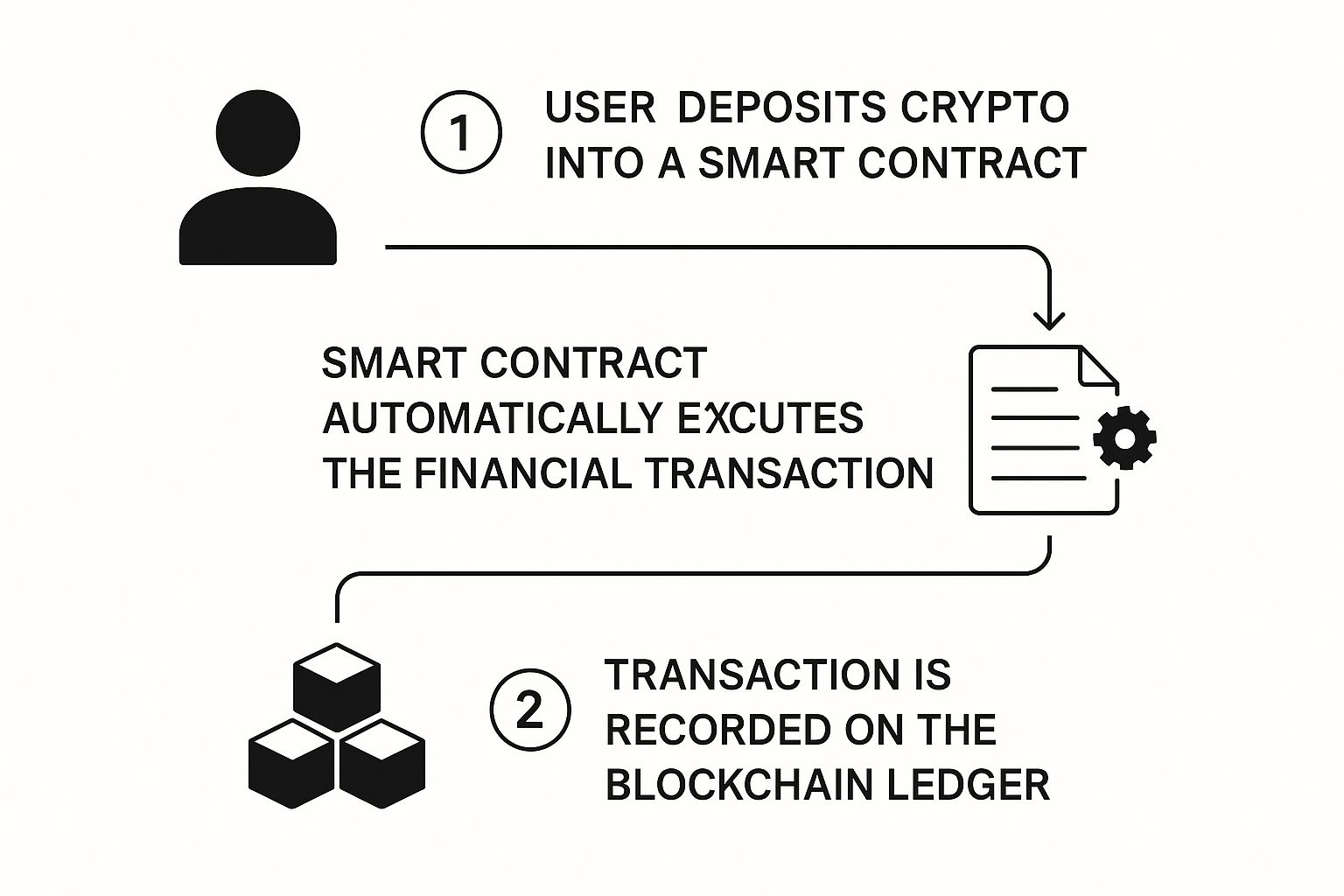
This three-step process highlights the core DeFi principles of transparency and automation. Each step is recorded immutably on the blockchain, making everything verifiable and secure.
Now, let's walk through a real-world example: depositing money into a DeFi lending protocol. You connect your crypto wallet (like connecting your payment card to the vending machine) to the platform and deposit your chosen cryptocurrency. The smart contract immediately locks your funds and starts accruing interest based on the current market rate. This rate fluctuates in real-time based on supply and demand, just like the price of goods can change based on availability.
This screenshot from ethereum.org illustrates some key aspects of DeFi. Notice the emphasis on accessibility and transparency. You, the user, retain control of your funds. This control is a key component of the financial empowerment that DeFi offers.
Blockchain's Role in DeFi
Behind the scenes, blockchain technology serves as an incorruptible record-keeper. Every transaction, every interaction, is permanently etched onto the blockchain. This creates a transparent and auditable history, eliminating the possibility of fraud and building trust within the system. Your holdings are represented by tokens, digital assets also managed on the blockchain, further enhancing security and transparency.
Key Advantages of DeFi's Automated System
This automated system brings several key advantages.
- 24/7 Availability: Access financial services anytime, anywhere.
- Reduced Costs: By eliminating intermediaries, DeFi often reduces transaction fees.
- Censorship Resistance: Operates on a decentralized network, free from control by any single entity.
- Increased Efficiency: Automated processes streamline transactions.
This resilience makes DeFi especially appealing, fostering a more robust and reliable financial system, particularly in areas with unstable traditional financial infrastructures.
To further understand how DeFi revolutionizes traditional finance, let's look at a comparison table:
Traditional Finance vs DeFi: Core Differences
Side-by-side comparison revealing how DeFi transforms every aspect of financial services
| Service | Traditional Approach | DeFi Innovation | User Impact |
|---|---|---|---|
| Lending & Borrowing | Banks act as intermediaries, setting interest rates and requiring extensive paperwork. | Smart contracts automate lending/borrowing, with rates determined by market forces. | Faster access to loans, potentially lower interest rates, and fewer requirements. |
| Trading | Centralized exchanges control trading activity. | Decentralized exchanges (DEXs) allow peer-to-peer trading without intermediaries. | Greater control over assets, reduced trading fees, and increased privacy. |
| Payments | Payments processed through banks and payment processors, often with delays and fees. | Cryptocurrencies and stablecoins enable near-instantaneous, low-cost payments. | Faster and cheaper transactions, increased efficiency for international payments. |
| Asset Management | Investment firms manage assets, charging fees for their services. | Automated investment strategies and decentralized asset management platforms. | Lower management fees, increased transparency, and greater control over investments. |
This table summarizes the key differences between traditional finance and DeFi. DeFi offers a more efficient, transparent, and accessible alternative to traditional financial services. While DeFi is still evolving, it holds the potential to reshape the financial landscape significantly.
Exploring The DeFi Universe: Where Innovation Lives
This snapshot from DeFi Pulse gives us a glimpse into the current state of decentralized finance. The Total Value Locked (TVL), shown prominently, represents the total assets currently held within DeFi protocols. It's a good indicator of the size and growth of the market.
Think of the DeFi ecosystem as a vibrant city, bustling with activity. Different "districts" specialize in various financial services.
Lending and Borrowing in the DeFi City
Let's stroll through the lending neighborhood. Here, platforms like Compound and Aave let your crypto work for you. You can lend out your digital assets and earn interest, all thanks to the power of smart contracts.
These contracts automate the lending and borrowing process, driven by market dynamics. No more credit checks or lengthy applications! This opens up financial opportunities for people who might not qualify for traditional loans.
Trading in the DeFi Marketplace
Over in the trading district, Decentralized Exchanges (DEXs) like Uniswap facilitate peer-to-peer trading. Users can swap tokens directly with one another, cutting out the middleman (like a traditional stock exchange).
This gives users more control over their assets and often results in lower fees. It's like a digital marketplace where you can trade directly with others.
DeFi leverages decentralized technologies, including decentralized digital identity, for increased user security and control. Learn more about decentralized digital identity here. The growth of the DeFi market is clearly reflected in its TVL across different blockchain platforms.
Interestingly, this TVL is spread across 67 different segments of DeFi blockchains globally. This diversity highlights the wide array of services and applications within DeFi, from lending platforms and stablecoins to decentralized exchanges. Explore the market segmentation further here.
Yield Farming and Liquidity Mining: Exploring the Experimental Zone
Now, let's head to the experimental zone, a place for those with a higher risk tolerance. Here, you'll find opportunities like yield farming and liquidity mining.
These strategies involve providing liquidity to DeFi protocols in exchange for potentially high returns. However, it's important to remember that higher potential rewards often come with higher risks. This area is best suited for those comfortable with market volatility.
The Power of Composability: Interconnected Businesses in DeFi
One of the most exciting aspects of DeFi is its composability. This refers to the ability of different DeFi applications to interact and build upon each other.
Just as businesses in a city rely on each other, DeFi protocols can be combined to create entirely new financial instruments and services. It's like building with financial LEGO bricks – the possibilities are vast.
This interconnectedness fuels innovation and opens up possibilities that simply aren't possible in traditional finance. It's a dynamic environment where new financial products and services can be developed and launched quickly.
The Explosive Growth: Why DeFi Is Capturing Global Attention
DeFi's journey has been remarkable. From its humble beginnings as a niche experiment, it has blossomed into a multi-billion dollar ecosystem. It's no longer just a playground for the tech-savvy; DeFi is attracting everyone from individual investors to major financial institutions. But this isn't just hype-driven growth. The real appeal lies in the tangible benefits DeFi brings to the table.
Accessibility and Financial Inclusion
One of DeFi's most compelling features is its accessibility. Imagine a financial system without credit checks, applications, or even the need for a bank account. That's the promise of DeFi. This open access empowers people across the globe, particularly those in underserved communities or countries with limited banking infrastructure. For example, someone in a remote village can now access lending and borrowing services through DeFi platforms, bridging the gap to financial services previously out of reach.
This is what we mean by financial inclusion, empowering individuals and communities traditionally excluded from the financial system.
Higher Returns and Lower Costs
DeFi can offer more attractive returns and lower costs compared to traditional finance. Think about it: DeFi lending platforms often provide higher interest rates for depositors than your typical savings account. Borrowers, too, can often find better loan terms. This is because DeFi eliminates the middlemen – the banks and other financial institutions – that typically take a share of the profits. By cutting out these intermediaries, DeFi platforms can pass on more value directly to users. Want to dive deeper into the numbers? Check out these DeFi Statistics.
Transparency and Control
DeFi provides a level of transparency and control that traditional finance struggles to match. Every transaction is recorded on a public blockchain, like a permanent, open ledger that anyone can view. This transparency fosters trust and accountability. Plus, users have direct control over their assets through their crypto wallets. This reduces reliance on third parties, giving individuals more ownership of their financial lives.
To understand the impressive growth of DeFi, let's take a look at some key figures. The global decentralized finance market was estimated to be worth approximately USD 20.48 billion. Projections suggest it will reach USD 26.94 billion by 2025, demonstrating significant potential for continued growth. For a more detailed analysis, this research paper offers further insights: DeFi Market Research.
Let's map out some of the key moments in DeFi's evolution:
To illustrate the remarkable growth trajectory of DeFi, let's consult the following timeline:
The table below, "DeFi Market Evolution Timeline", provides a comprehensive view of DeFi market growth patterns and key adoption drivers.
| Period | Market Value | Growth Driver | User Impact |
|---|---|---|---|
| 2017-2018 | Early Stage | Initial Coin Offerings (ICOs), Emergence of early DeFi protocols | Limited user base, primarily crypto enthusiasts |
| 2019-2020 | "DeFi Summer" | Yield farming, Rise of automated market makers (AMMs) | Significant increase in user adoption, growing interest from institutional investors |
| 2021-2022 | Expansion & Maturity | Layer-2 scaling solutions, Stablecoin growth, NFTs | Increased scalability, improved user experience, broader range of applications |
| 2023-Present | Continued Growth | Institutional adoption, Regulatory clarity, Cross-chain interoperability | Greater mainstream awareness, integration with traditional finance |
This table showcases how various factors, from technological advancements to growing user interest, have contributed to the expansion of the DeFi market.
The Appeal to Younger Generations
Millennials and Gen Z, digital natives comfortable with new technologies, have readily embraced DeFi. Often skeptical of traditional financial institutions, they're drawn to DeFi's decentralized and transparent nature, coupled with its potential for high returns. For these generations, DeFi represents a way to take control of their financial future, participating in a system that aligns with their values and financial aspirations.
Why People Are Choosing DeFi Over Traditional Banking
This screenshot from CoinMarketCap gives a quick snapshot of what decentralized finance (DeFi) is all about. It highlights important aspects like open access and transparency. The image really emphasizes how users have direct control over their assets.
Imagine Sarah, a freelance designer constantly battling slow international payments and exorbitant fees. DeFi completely changed her business. Now, she gets paid in minutes and fees are a tiny fraction of what they were. Sarah’s story shows the real-world benefits that are drawing people to DeFi. It's a new way of providing financial services that works equally for everyone, regardless of where they live, their wealth, or their credit history.
Leveling the Financial Playing Field
DeFi democratizes finance, offering everyone the same access to financial services. Your money has the potential to earn the same interest rates as those enjoyed by big investors. You can even access loans based on your crypto holdings, bypassing the need for traditional credit checks. This is a game changer for people who may not have access to traditional banking, broadening financial inclusion globally.
DeFi also opens doors to opportunities previously available only to an exclusive group. This fosters a fairer financial system, one where participation isn't limited by your background or location. These features are fundamental to understanding what DeFi is striving to achieve.
Transparency and Control: The DeFi Advantage
DeFi is inherently transparent. This means you can actually see how your money is being used. Every transaction is recorded on the blockchain, a public ledger visible to everyone. This builds trust and accountability, something that is often missing in traditional finance.
For instance, think about DeFi lending platforms. You can clearly see how funds are allocated and how interest rates are calculated. This openness breeds confidence and lets users make truly informed decisions. This level of transparency is reshaping how we interact with financial systems.
Eliminating Intermediaries: Better Rates and 24/7 Access
DeFi cuts out the middleman, eliminating intermediaries like banks. This can translate into better rates for both savers and borrowers. By removing this extra layer, DeFi platforms can pass on more value directly to the users. This increased efficiency benefits everyone involved.
DeFi also operates around the clock. This constant availability is particularly useful in our interconnected world. You can access your money and manage your finances whenever and wherever you are, without being limited by traditional banking hours. This easy access makes DeFi a powerful tool for managing finances in a fast-moving global economy.
The Reality Check: Understanding DeFi's Risks and Challenges
Decentralized finance (DeFi) presents exciting opportunities, but it's essential to understand the potential downsides. Like any new technology, DeFi carries inherent risks. Navigating these risks requires awareness and careful consideration. Let's explore some of the key challenges.
Smart Contract Vulnerabilities: The Code Conundrum
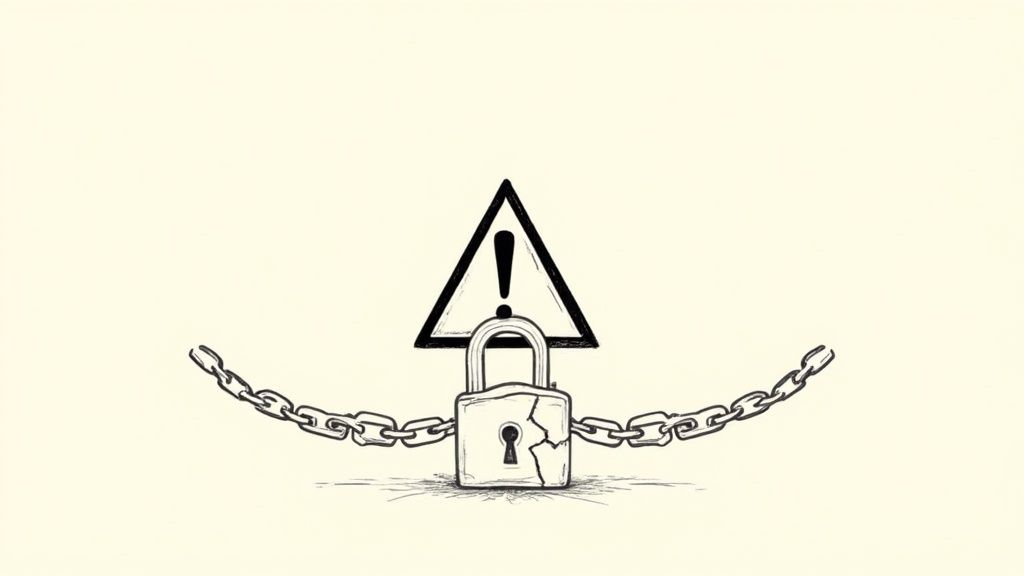
Smart contracts form the backbone of DeFi. These contracts are essentially lines of code, and code can have bugs. Think of it like a bank vault with a faulty lock – a skilled thief can find a way in. Hackers exploit these vulnerabilities, leading to substantial financial losses. Multi-million dollar losses have occurred due to exploitable bugs, making thorough code auditing and rigorous security practices vital.
Furthermore, programming errors can freeze funds, locking users out of their own money. These errors can be disastrous, underlining the need for thorough testing and verification before deploying smart contracts. This starkly demonstrates that while DeFi eliminates centralized control, it introduces new technological vulnerabilities.
The Private Key Predicament: Losing Your Keys, Losing Your Funds
In the world of DeFi, your private key is everything. It's the only way to access your funds. Losing your private key is like losing the combination to your safe – your money is essentially gone. There’s no central authority to recover it.
Many users have learned this lesson the hard way, demonstrating the critical importance of securely storing and managing private keys. Hardware wallets like Ledger and Trezor offer secure offline storage, which are crucial tools for mitigating this risk.
Market Volatility: Riding the DeFi Rollercoaster
DeFi markets are known for their volatility. The value of your investments can fluctuate dramatically in short periods, sometimes by as much as 20% in a single day. This volatility is an inherent part of the DeFi landscape. Investing in DeFi requires a strong stomach and a long-term perspective.
It’s essential never to invest more than you can afford to lose. Diversification and thoughtful risk management strategies are key to navigating this volatile environment.
Regulatory Uncertainty: The Looming Shadow
The regulatory landscape for DeFi is still under development. Governments worldwide are grappling with how to classify and regulate these new financial instruments. This uncertainty poses risks for both users and developers. Regulations could change rapidly, impacting the legality and function of DeFi platforms. Staying informed about regulatory developments is crucial for anyone participating in DeFi.
Managing Risks in the DeFi World: Practical Strategies
While DeFi has risks, you can take steps to mitigate them. Thorough research is paramount. Before investing in a protocol, understand how it works, the team behind it, and the potential risks. Starting small is another wise approach. Don’t invest all your funds at once. Begin with small amounts while you learn the intricacies of the platform.
Security best practices are also crucial. Use strong, unique passwords, enable two-factor authentication, and be vigilant against phishing scams. These precautions can significantly reduce your risk. Educating yourself about potential scams and security threats is also essential. By taking these practical steps, you can navigate the DeFi landscape safely and responsibly.
Your Practical Roadmap To Getting Started With DeFi
Ready to explore the world of decentralized finance? Think of it like planning a trip to a new and exciting country. You'll need the right tools and a clear itinerary to make the journey successful. This guide provides a practical, step-by-step approach, prioritizing safety and a gradual learning curve.
Setting Up Your Crypto Wallet: Your DeFi Passport
Your first essential step is setting up a crypto wallet. Consider it your digital passport for the DeFi world – a secure vault where you hold your digital assets, like Bitcoin or Ethereum. Popular choices include MetaMask, Trust Wallet, and Ledger.
Unlike traditional banks, you, and only you, control the keys to this vault. This ownership is the core of DeFi's promise of financial sovereignty.
This screenshot shows the MetaMask interface, a popular browser extension wallet. The clear layout simplifies interacting with DeFi applications. Notice how security features, like seed phrase backup and password management, are front and center. These are critical for protecting your funds.
We'll walk you through setting up MetaMask, emphasizing how to securely store your seed phrase. This phrase–a list of usually 12 or 24 words–is your master key. Lose it, and you lose access to your funds forever. Treat it like the most valuable document you possess.
Acquiring Your First Cryptocurrency: Fueling Your DeFi Journey
Next, you'll need to acquire some cryptocurrency. This is the fuel for your DeFi adventures. You can purchase crypto through reputable exchanges like Coinbase, Binance, or Kraken. Think of this like exchanging your local currency for the currency used in the DeFi world.
As you purchase, be aware of gas fees. These are small transaction fees required to power blockchain operations. Understanding these fees is important for managing your DeFi costs.
Exploring DeFi Platforms: Starting Small and Safe
Begin your DeFi journey with established, beginner-friendly platforms. For lending, consider Compound. Imagine Compound as a high-interest savings account. You deposit your crypto, and it earns interest automatically. For trading, explore Uniswap. Think of Uniswap as a currency exchange where you can swap different cryptocurrencies.
Start with small amounts of cryptocurrency while you're learning. It's like taking a test drive before buying a car. This lets you get a feel for the platform’s features and potential risks before committing larger investments.
Research and Community: Building Your DeFi Expertise
Continuous learning is key in the ever-evolving DeFi landscape. Before investing in new protocols, research them thoroughly. Understand their purpose, risks, and potential rewards. Think of it as due diligence before making any financial decision.
The DeFi community thrives on shared knowledge. Join online forums, follow trusted educators, and ask questions. This collaborative spirit accelerates learning and creates a supportive environment for newcomers.
Remember, never invest more than you can afford to lose, especially when starting. DeFi offers powerful tools, but it’s important to approach it with caution and a commitment to continuous learning. Interested in a career in DeFi? Check out DeFi jobs on Find Web3.
The Future of Finance: Where DeFi Is Heading Next
Imagine sending money across the globe as easily as firing off an email. That's the promise of decentralized finance (DeFi), and we're already seeing glimpses of this future. Traditional banks are dipping their toes into DeFi protocols, countries are exploring blockchain-based systems, and new technologies are tackling the current hurdles of speed and cost.
Bridging the Gap: Interoperability and Scalability
Think of different blockchains like isolated islands. Cross-chain bridges are the emerging bridges connecting these islands, creating a unified financial archipelago. This interoperability allows value to flow seamlessly between different blockchains, unlocking new possibilities for DeFi applications. Imagine an app that leverages the security of one blockchain and the speed of another – that's the power of interoperability.
Furthermore, innovative scaling solutions are addressing the bottlenecks of transaction speed and cost, paving the way for mainstream adoption. These solutions, like Layer-2 technologies, act like express lanes, processing transactions off the main blockchain highway to improve efficiency and reduce fees.
Institutional Adoption: A Vote of Confidence
Big players are taking notice. Major investors are recognizing DeFi's potential for efficiency and innovation, leading to a surge of capital flowing into the space. This institutional adoption isn't just about funding; it also brings expertise and legitimacy, further fueling DeFi's growth. It's like a seal of approval from established financial giants, signaling growing confidence in DeFi's future.
Regulatory Landscape: Navigating the Uncertain Terrain
However, rapid growth often comes with growing pains. Regulatory frameworks are still playing catch-up, creating uncertainty for both users and developers. Governments worldwide are grappling with how to understand and regulate this new financial landscape. Clear and balanced regulations will be essential for DeFi’s sustainable growth and user protection. This regulatory evolution is a crucial aspect to monitor in the years to come.
Addressing Environmental Concerns: Sustainability in DeFi
Another key challenge is the environmental footprint of blockchain technology. The energy consumption of some blockchains has raised valid concerns. However, the DeFi community is actively seeking solutions, exploring more energy-efficient consensus mechanisms and sustainable blockchain technologies. The shift towards Proof-of-Stake, like switching from a gas-guzzling car to an electric vehicle, is vital for the long-term viability of DeFi.
The projected growth of the DeFi market is nothing short of remarkable. By 2034, the market is expected to reach USD 1250.7 billion, expanding at a compound annual growth rate (CAGR) of 45.8%. This exponential growth underscores DeFi's potential to become a major force in the global financial sector. Learn more here. Entering the DeFi world might seem daunting, but understanding how grants work can be a valuable first step. Resources like this guide on how grants work can help you navigate the landscape.
Building a More Inclusive Financial Future
DeFi holds the power to revolutionize finance, creating a more inclusive and accessible financial system for everyone. As the technology matures and regulations become clearer, DeFi is poised to play an increasingly important role in the global economy. This evolution will empower individuals and businesses, opening up exciting new opportunities for financial growth and innovation.
Ready to dive into the world of Web3 and DeFi? Find Web3 is your portal to the future of finance. Discover thousands of job opportunities, keep up with the latest industry news, and gain valuable insights into the rapidly evolving Web3 ecosystem. Start your Web3 journey today!