
When you hear “digital asset jobs,” your mind probably jumps straight to cryptocurrency or NFTs. And while that’s part of the picture, the reality is so much bigger. This field is a fascinating blend of finance, technology, and pure creativity, and it's creating career opportunities that simply didn't exist a decade ago. It’s a whole new professional world opening up.
The New Career Frontier in Digital Assets

We're in the middle of a massive economic shift, not unlike the early days of the internet. It’s creating entirely new career paths that go far beyond just trading coins.
Think of the digital asset space like a new continent just being mapped. It’s not just for the trailblazing developers charting the unknown. It also needs the city planners, the communicators, the lawmakers, and the builders who turn that raw territory into a thriving society. This expansive world covers everything from non-fungible tokens (NFTs) that represent digital art to tokenized real-world assets, like a piece of real estate or a share in a company.
It's More Than Just Crypto Trading
The incredible growth here isn't just about market highs and lows; it's about building the fundamental infrastructure for a new kind of digital economy. This means digital asset jobs are surprisingly diverse and aren’t just for coders. Companies are desperate for professionals from all sorts of backgrounds.
There’s a huge demand for a wide range of skills. We're seeing a need for:
- Financial Analysts who can figure out how to value these new types of assets.
- Marketing Strategists skilled at building passionate communities around NFT projects.
- Legal and Compliance Experts to navigate the complex and ever-changing rules.
- Product Managers who can design decentralized apps (dApps) that people actually want to use.
The hunger for talent is real. In 2023, job postings for crypto and blockchain roles shot up by a massive 118% compared to the year before. And it's not slowing down. The need for blockchain developers, in particular, is expected to grow by 22%—way faster than the average for other tech jobs. If you want to dig into the numbers, RecruitBlock has some great insights on these hiring trends.
This isn't some niche corner of the tech world anymore. It's a rapidly maturing industry attracting serious money from both venture capital and major global corporations. That's a strong signal of long-term career stability and growth.
Why Is This Sector Booming?
The momentum is coming from one simple fact: digital assets solve real-world problems. Blockchain, the technology that powers most of them, brings a level of transparency, security, and efficiency that older systems just can't match.
For example, it can make international payments nearly instant, verify the authenticity of a luxury watch, or give artists a way to earn royalties every time their work is resold.
This practical, real-world usefulness is what’s attracting big institutional investment and creating sustainable digital asset jobs. As more industries wake up to this potential, the demand for people who can build, manage, and grow these solutions is only going to get more intense. It's a fantastic place to build a career right now.
Exploring the Most In-Demand Digital Asset Roles
When people think about jobs in crypto or digital assets, their minds often jump to two extremes: hoodie-clad developers coding in the dark or fast-talking traders glued to price charts. The reality is so much bigger and more interesting than that. This whole ecosystem is a complex machine, and it takes a huge variety of skilled people to keep it running.
To give you a clearer picture, it helps to group the roles into a few key areas. This image breaks down the main career paths you'll find out there.
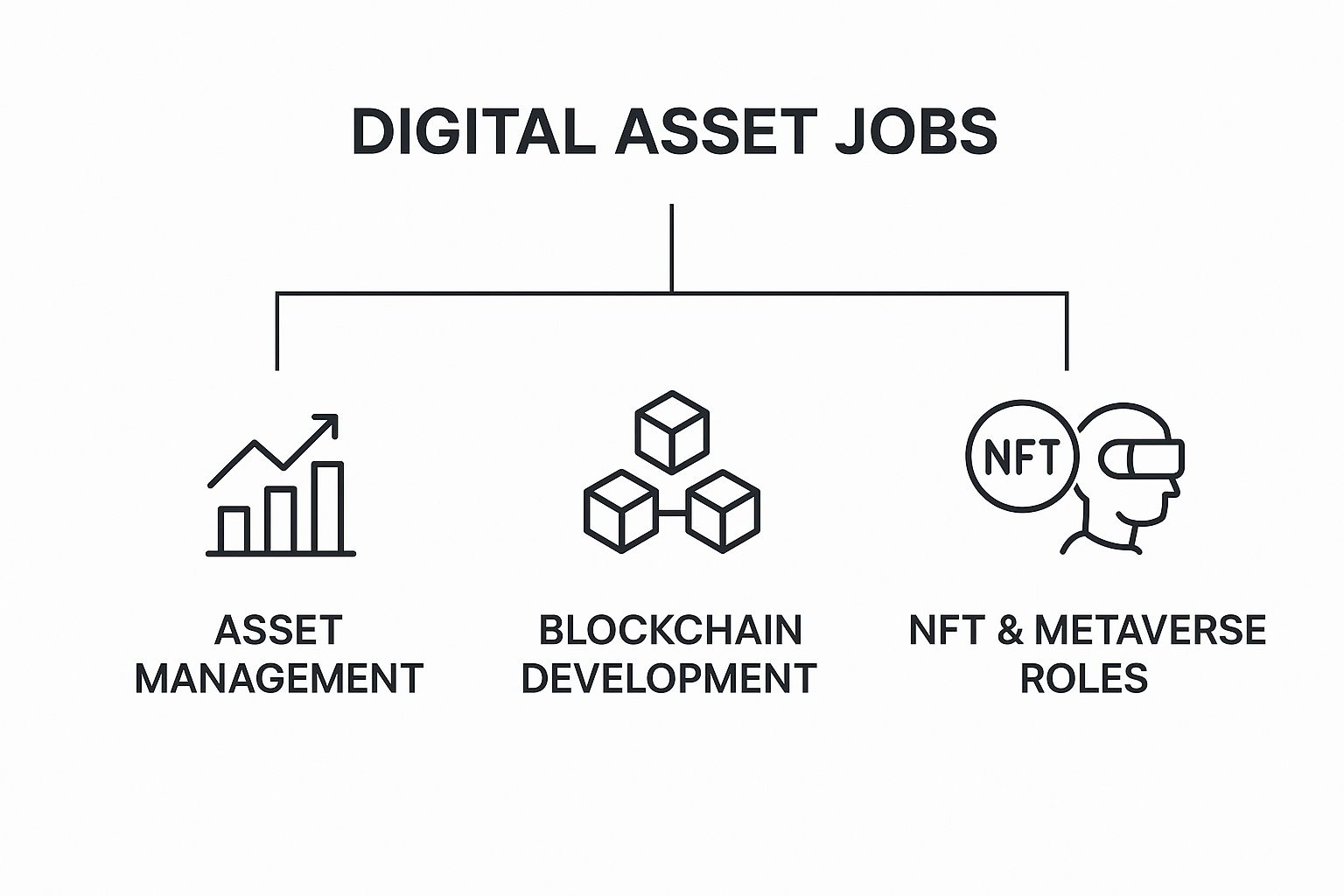
As you can see, the field branches out from core technical development into finance, creative strategy, and more, showing just how diverse the required skill sets have become.
Let's dig into some of the most sought-after positions to see what they're really all about.
The Architects: Blockchain Developers
At the very foundation of every digital asset, you'll find Blockchain Developers. These are the architects and engineers of this new digital world, designing the protocols and building the infrastructure that everything else runs on. Without them, none of this exists.
Their main focus is building secure and efficient decentralized applications (dApps) and protocols. This means they spend their days writing and rigorously testing smart contracts—code that automatically executes when certain conditions are met. One tiny bug in a smart contract can put millions of dollars at risk, so the job demands incredible attention to detail.
The Navigators: Digital Asset Analysts
If developers are the builders, then Digital Asset Analysts are the expert navigators and strategists. They dive deep into market data, project whitepapers, on-chain activity, and even community sentiment to figure out the real value and potential risks of different assets.
Their day-to-day work is far more than just looking at charts. A good analyst combines the sharp, quantitative mind of a traditional financial analyst with a deep, almost intuitive understanding of how technology, community, and market psychology all collide in Web3.
The Visionaries: NFT Strategists
The explosion of Non-Fungible Tokens (NFTs) carved out a brand-new career path for people who can mix creative vision with sharp business sense. An NFT Strategist is the mastermind behind a successful NFT launch for a brand, artist, or company.
This role goes way beyond just making cool art. A strategist maps out the entire project: the story behind the NFTs, the utility or perks for holders, the plan for building a loyal community, and the nuts and bolts of the launch itself. They are the essential link between a creative idea and the technical and marketing work needed to make it a reality. Many of these digital asset jobs often involve community-focused tasks, where you might explore various digital asset quests to engage users.
The Guardians: Web3 Compliance Specialists
As the digital asset world grows up, so does the need for rules and oversight. That’s where Web3 Compliance Specialists step in. Think of them as the guardians who help companies navigate the incredibly complex and constantly changing legal and regulatory maze.
They ensure projects follow crucial Anti-Money Laundering (AML) and Know Your Customer (KYC) rules, keep up with new government policies, and build frameworks to manage risk. This job is becoming absolutely essential for crypto exchanges, financial firms, and any serious project that wants to operate legitimately and build trust.
To tie it all together, here’s a quick summary of these key roles.
Top Digital Asset Job Roles and Core Responsibilities
This table breaks down some of the most popular career paths in the space, outlining what they do and the skills they need to succeed.
| Job Role | Primary Responsibility | Key Skills |
|---|---|---|
| Blockchain Developer | Designs, builds, and maintains the core blockchain architecture and smart contracts. | Solidity, Rust, Go, cryptography, data structures, security best practices. |
| Digital Asset Analyst | Researches and evaluates digital assets, protocols, and market trends to inform investment decisions. | Financial modeling, data analysis, tokenomics, on-chain analytics, market research. |
| NFT Strategist | Develops and executes the end-to-end strategy for NFT projects, from concept to community building. | Marketing, community management, brand strategy, project management, Web3 culture. |
| Web3 Compliance Specialist | Ensures a company operates within legal and regulatory frameworks, managing AML/KYC protocols. | Regulatory knowledge, risk management, legal analysis, policy development. |
These are just a few of the exciting roles available. The industry is constantly creating new specializations, so it's a great time to find a niche that fits your skills. For a live look at what's out there, you can always check out a dedicated platform like https://findweb3.com/jobs to see the latest openings.
Building Your Skillset for a Digital Asset Career

Landing one of the many exciting digital asset jobs isn’t a matter of luck. It’s about having the right tools in your toolbox. This industry demands a special blend of deep technical know-how and sharp, strategic soft skills.
Think of it like being an astronaut. You absolutely need to know how to fly the ship, but you also need the composure and critical thinking to navigate a sudden meteor shower.
Whether you're a coder, marketer, or financial analyst, your success hinges on this mix. On one side, you have the "hard skills"—the tangible, technical abilities that get your foot in the door. On the other, you have the "soft skills"—the people skills and mental agility that help you thrive in such a fast-moving space.
Let’s break down both sides to give you a clear roadmap of what companies are hunting for right now.
Mastering Essential Technical Skills
For many roles in the digital asset world, especially on the development and data side, technical skills are your foundation. This is your proof of work, showing a company you can jump in and contribute from day one. These are concrete, teachable skills that are in incredibly high demand.
Most of the top-tier engineering and development jobs, for instance, have a very specific shopping list of programming languages and tech-stack knowledge.
- Smart Contract Development: Getting fluent in languages like Solidity (the language of Ethereum) or Rust (big in the Solana ecosystem) is non-negotiable for developers building decentralized apps. It's how you write the rules that run on the blockchain.
- Blockchain Protocol Knowledge: You have to understand how different blockchains actually work. Knowing the fundamental difference between a Layer 1 protocol like Ethereum and a Layer 2 scaling solution like Polygon is table stakes.
- Data Analysis and On-Chain Analytics: For any analyst role, you’ll need to be handy with tools like Dune Analytics or Nansen. This is how you find the signal in the noise of public transaction data and turn it into real business intelligence.
The best way to build these skills is by doing. Don't just read about smart contracts—get your hands dirty and try building one. You’ll find tons of open digital asset jobs for engineers that list these exact requirements on job boards like Find Web3's engineering section.
Cultivating Strategic Soft Skills
While your tech skills might land you the interview, it's your soft skills that will ultimately get you the job and build a lasting career. The digital asset industry is famously volatile and often ambiguous. The people who truly succeed are the ones who can flourish in that controlled chaos.
The ability to learn, unlearn, and relearn is probably the single most important soft skill in this space. What was considered best practice six months ago might be totally obsolete today, making constant adaptation essential for survival.
Hiring managers are looking for people who bring more than just code or analysis to the table. They want a specific mindset that’s perfectly tuned for this unique ecosystem.
Key Soft Skills for Your Digital Asset Career
These are the soft skills that consistently make a candidate stand out from the crowd:
- Radical Adaptability: The entire industry can pivot on a dime because of a new tech breakthrough or a shift in the regulatory winds. You have to be comfortable with constant change and ready to adjust your strategy on the fly.
- Forward-Thinking Problem Solving: A lot of the challenges here are brand new. You can't just Google the answer. Success demands genuine creativity and the ability to design solutions for problems no one has ever solved before.
- Clear Communication: Can you explain a concept like "zero-knowledge proofs" to someone on the marketing team? The ability to translate incredibly complex ideas into simple, clear language is a superpower.
- Community-First Mindset: Many projects are built around passionate, decentralized communities. Knowing how to engage with, listen to, and build for that community is vital for roles in marketing, product, and management.
The only way to develop these skills is through practice. Dive into online communities, contribute to open-source projects, or start a blog to practice explaining complex topics. This kind of hands-on engagement will build the well-rounded profile that opens doors to the best digital asset jobs out there.
Understanding Compensation in Digital Asset Jobs
Figuring out pay in the world of digital asset jobs can be tricky. It's not like a traditional career path where a salary is the beginning and end of the story. Here, your paycheck is often just one part of a bigger, more dynamic picture.
Your base salary is the starting point, of course. But the full compensation package is often loaded with other elements that reflect the high-growth, high-risk nature of the Web3 space. The goal isn't just to pay you for your time; it's to make you a stakeholder with skin in the game.
More Than Just a Salary
Compensation in this industry is all about aligning incentives. The thinking is simple: if the project moons, everyone who helped build it should share in the rewards. This has led to some pretty unique pay structures you just don't see in a standard corporate gig.
- Token Grants: Many projects will offer you a piece of their native cryptocurrency as part of your compensation. Think of it as getting paid in a currency that could skyrocket in value if the network takes off.
- Equity Stakes: If you're joining a venture-backed startup, getting equity is common. This gives you a small slice of ownership in the company itself, much like stock options in a classic tech startup.
- Performance Bonuses: These are usually tied to hitting very specific, measurable goals. That could mean a successful mainnet launch, reaching a target for total value locked (TVL) in a DeFi protocol, or seeing an NFT collection sell out.
These extras can seriously amplify your earning potential, well beyond what a simple annual salary can offer. The flip side? They also bring volatility. The value of tokens and startup equity can swing wildly with the market.
How Experience and Specialization Impact Pay
As with any field, your experience level and area of expertise are the biggest factors determining your base salary. An entry-level Community Manager will be on a completely different pay scale than a Senior Protocol Developer who has spent five years deep in smart contract security.
Specialization is another huge piece of the puzzle. If you have deep knowledge in a high-demand niche like zero-knowledge proofs, DeFi yield strategies, or NFT gaming mechanics, you can command a serious premium. Companies are more than willing to pay top dollar for talent that gives them a competitive edge.
The rise of artificial intelligence is adding another layer to this. The intersection of AI and digital assets is opening up new possibilities and creating new demands. According to PwC's 2025 Global AI Jobs Barometer, workers with proven AI skills are already earning a wage premium of up to 25% over their peers. As AI gets more integrated with asset management, that gap is only expected to grow.
Realistic Salary Expectations
Even with all these moving parts, we can still get a pretty clear picture of what people are earning. While location matters, the widespread acceptance of remote work in Web3 means the salary gaps between different cities are often smaller than in traditional tech.
So, let's look at what you can realistically expect for some of the most common digital asset jobs.
Average Salary Ranges for Common Digital Asset Jobs
The table below breaks down estimated annual base salaries for several key roles in the digital asset industry. Keep in mind, these are just the base figures and don't include the potentially massive upside from tokens or equity.
| Job Title | Entry-Level Salary (USD) | Mid-Level Salary (USD) | Senior-Level Salary (USD) |
|---|---|---|---|
| Blockchain Developer | $90,000 – $130,000 | $130,000 – $180,000 | $180,000 – $250,000+ |
| Digital Asset Analyst | $70,000 – $95,000 | $95,000 – $140,000 | $140,000 – $200,000+ |
| Product Manager (Web3) | $100,000 – $140,000 | $140,000 – $190,000 | $190,000 – $260,000+ |
| Web3 Marketing Manager | $65,000 – $90,000 | $90,000 – $135,000 | $135,000 – $185,000+ |
| Compliance Specialist | $80,000 – $110,000 | $110,000 – $160,000 | $160,000 – $220,000+ |
When you're looking at a job offer, it's absolutely crucial to evaluate the entire package—salary, tokens, equity, and bonuses—to get a real sense of its long-term value.
So, you're ready to jump into the digital asset world. How do you actually get your foot in the door?
Breaking into the digital asset scene is a bit different from your typical corporate job hunt. It's less about a polished resume and much more about what you've actually done. Think of it as a "show, don't tell" environment. Hiring managers want to see that you're already part of the culture.
This means they're looking for people who are actively building, contributing, and learning out in the open. Have you joined a DAO? Built a small side project just for fun? That’s the kind of initiative that gets you noticed.
Your Resume and Portfolio: The Web3 Edition
Yes, you still need a resume, but it needs a Web3-specific tune-up. Ditch the corporate jargon and focus on tangible results and specific skills. Keep in mind that many companies use automated resume screening software, so hitting the right keywords matters.
But your portfolio is where you really make your case. It’s your proof of work.
- Developers: Your GitHub profile is everything. Feature your smart contract experiments, any contributions you've made to open-source projects, or dApps you’ve tinkered with.
- Marketers & Community Folks: Did you help a Discord server blow up? Grow a project's X (formerly Twitter) following? Show off those community growth stats and engagement numbers.
- Designers: Make sure your portfolio highlights Web3-specific work. This could be anything from the UI/UX for a new DeFi platform to the branding for an NFT launch.
Don't sweat it if you don't have paid experience yet. Personal projects born out of pure curiosity can be incredibly powerful. They signal that you're genuinely passionate about this space, not just chasing a salary.
Where the Real Jobs Are Hiding
You might spot a few Web3 roles on big sites like LinkedIn, but the goldmine is on niche platforms. This is where serious Web3 companies hunt for talent that genuinely gets it.
The best way to find a job is to be an active participant where the industry hangs out. Your next great opportunity is far more likely to spark from a thoughtful conversation on Discord than a cold application.
Your first stop should be job boards built specifically for this industry. They cut through the clutter and put you in direct contact with the right people. You can get a great feel for what's out there by browsing the crypto jobs on platforms like Find Web3 and seeing what's currently open.
Networking and Nailing the Interview
Networking here isn't about collecting business cards. It's about authentic engagement. Find projects you admire and jump into their Discord or Telegram channels. Don't just lurk—participate, ask smart questions, and build real connections.
When you do land an interview, get ready for a different kind of conversation. They're looking for a mix of hard skills and a genuine belief in the mission.
The Interview Gauntlet
- The Tech Test: If you're a developer, expect live coding exercises or a deep dive into system architecture. For analysts, this might be a take-home assignment where you have to assess a new token.
- The Portfolio Showcase: You'll be asked to walk them through a project you’re proud of. Be prepared to explain your thought process, the hurdles you overcame, and what you learned along the way.
- The Vibe Check: This is where your passion comes into play. They'll ask about your thoughts on decentralization, what dApps you use, and where you see the industry heading. They need to know you're not just a hired gun—you're a true believer.
At the end of the day, landing that first job is about proving your passion through your actions. Get in there, build something, contribute to the community, and engage. Your commitment will speak volumes more than any resume ever could.
What’s Next for Careers in Digital Assets?

The job market for digital assets isn't just expanding—it's evolving into some fascinating new territories. We're seeing careers emerge at the crossroads of several powerful technologies, creating roles that would have sounded like science fiction just a few years ago. This rapid evolution means that developing skills in this space is a smart bet on your long-term career.
Think about what happens when you mix blockchain with artificial intelligence or virtual reality. We're on the cusp of seeing roles like AI-driven DeFi strategists who can optimize investment protocols on the fly, or metaverse architects who build entire token-based economies for digital worlds. These aren't just hypotheticals; they're the natural next steps. This is all part of the much bigger picture of the future of work in the digital age.
Building a Stable Foundation for Growth
Beyond the exciting new tech mashups, a couple of key factors are bringing real stability to careers in digital assets.
- Better Regulatory Rules: The "wild west" days are fading as governments around the world start to provide clearer guidelines. This predictability reduces risk, which in turn encourages bigger, more established companies to jump in and create more secure, long-term jobs.
- Big Money is Pouring In: Major financial institutions like banks and hedge funds have moved from the sidelines to become active players. This flood of institutional capital is fueling ambitious new projects and creating a steady demand for people with the right skills.
This isn't just a niche industry anymore; it's becoming a fundamental piece of the global economy. That shift is creating a durable job market with serious potential for anyone ready to dive in and build the future.
This whole movement is part of a massive global trend. Projections suggest that the ongoing digital shift could spawn around 170 million new jobs worldwide in the coming decade. A huge number of those will require the exact skills that are foundational to the digital asset world.
Getting into digital asset jobs now isn't just about hopping on a trend. It's about placing yourself at the very center of a major economic transformation.
Have Questions About Digital Asset Jobs? We've Got Answers.
Jumping into a new field always brings up a ton of questions. If you're looking at a career in digital assets, you're probably wondering about the real requirements, what the job market is actually like, and how to get your foot in the door. Let's tackle some of the most common questions head-on.
Is a Computer Science Degree a Must-Have?
Honestly, no. While it's a huge plus for a pure Blockchain Developer role, it's definitely not a deal-breaker for many other jobs in the space. Roles in marketing, community management, legal, and design are crying out for people with specialized skills that have nothing to do with coding.
I’ve seen countless successful people pivot from finance, law, and marketing. A killer portfolio, a clear set of skills, and genuine passion for the industry will often get you much further with hiring managers than a specific degree.
How Can I Get Experience With No Experience?
This is the classic chicken-and-egg problem, right? The secret is to stop waiting for permission and start building. Tangible, hands-on experience—even from your own projects—speaks volumes.
- Build something small: Try writing a basic smart contract. Pull some public data and analyze crypto market trends. Mock up a UI for a theoretical decentralized app.
- Contribute to open source: Jump on GitHub and find Web3 projects that need help. Contributing is one of the best ways to get real-world experience and get your name noticed.
- Get involved: Join a hackathon, become an active voice in a project's Discord, or find an internship. Nothing beats the learning and connections you make by being in the trenches.
Are These Jobs Only at Small Startups?
That's a common myth, but the reality has changed dramatically. While nimble startups are still a huge part of the ecosystem, the big players have officially entered the game.
Big-name companies in finance like JP Morgan, tech giants like Google, and even major luxury brands are all building out their own digital asset and blockchain teams. This means you can find opportunities in scrappy, fast-moving startups or more structured corporate environments.
This shift gives you a much broader choice of company cultures and career trajectories, so you can find a fit that works for you.
Just How Volatile Is This Job Market?
It's true that the job market can feel the heat from crypto market cycles, but the underlying demand for the technology itself just keeps growing. The need for people who understand blockchain is weaving its way into more and more industries.
As sectors like supply chain, finance, and data security adopt this tech, the job market becomes far more stable and less tied to the daily price of Bitcoin. The foundation for these careers is getting wider and stronger, making digital asset jobs a solid long-term bet.
Ready to find your place in the future of work? Find Web3 aggregates thousands of roles from top companies in the space. Explore your next career move.