
Understanding What Web3 Careers Really Look Like
Forget the get-rich-quick narratives. Web3 isn't just about NFTs and meme coins. It's a whole lot more diverse than that, and honestly, way more interesting. Talking to hiring managers and people who've made the jump into Web3 paints a much clearer picture. There are roles you probably haven't even considered, like protocol economists designing tokenomics or community managers building vibrant user bases.
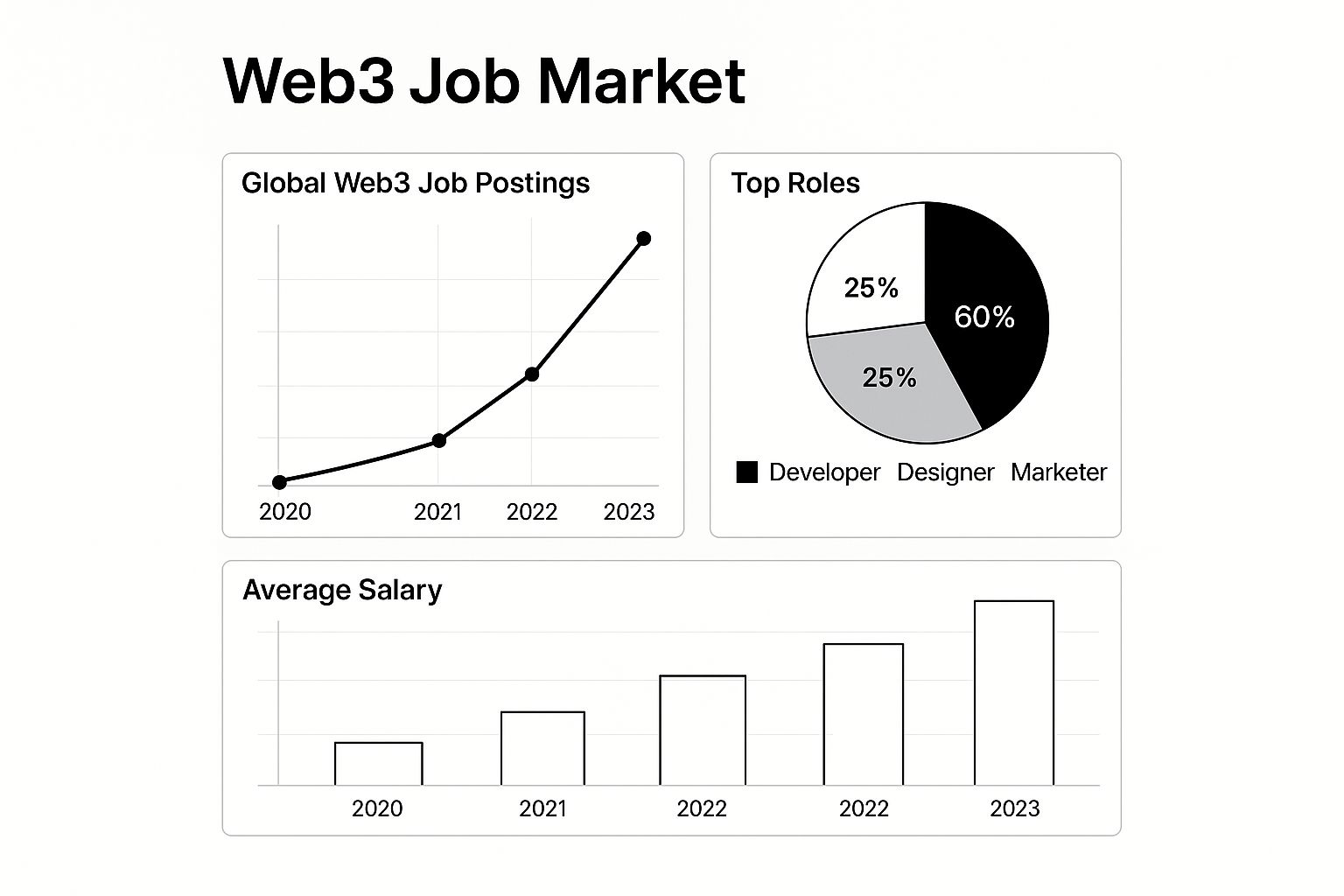
The infographic above gives you a snapshot of Web3 job growth, popular roles, and salary trends from 2020 to 2023. You can see developer roles are leading the charge, followed by design and marketing. That tells you where the immediate demand is. The upward trend in both job postings and salaries shows the sector’s continued growth. This means that now, more than ever, building in-demand skills is crucial for breaking into this space.
This growth is creating a ton of opportunity. The Web3 job market has recently exploded, driven by the expansion of blockchain technology. The global blockchain market is projected to reach $1.43 trillion by 2030, creating huge demand for Web3 professionals. This includes technical roles like Blockchain Developers and Crypto Analysts, but also plenty of non-technical positions such as UX/UI Designers and Community Managers. Want to delve deeper? Check out more insights about Web3 job growth: Discover more insights about Web3 job growth.
Beyond the Buzzwords: Real Web3 Roles
So, what are some actual Web3 jobs beyond the usual "developer" or "marketer" labels? Here are a few examples:
- DeFi Partnership Lead: I met a former investment banker who now connects traditional finance with decentralized protocols. They're essentially building bridges between two worlds, negotiating deals and fostering collaborations.
- Wallet Interface UX Designer: Think about the complexity of crypto wallets. A UX designer I know transitioned from fintech to focus on creating user-friendly interfaces for these wallets, making sure everyday users can interact with this tech seamlessly.
- Protocol Economist: With a background in economics, this role is all about designing tokenomics – finding the right balance between incentives and sustainability within a decentralized ecosystem.
- DAO Governance Specialist: DAOs, or Decentralized Autonomous Organizations, need people to help facilitate decision-making, ensuring transparency and community involvement. This role does just that.
The Global and Remote Advantage
Traditional job search strategies often don't cut it in Web3. It's a global, remote-first environment. This opens up a lot of possibilities. You could be working for a DAO based in Singapore while living in Canada. I know someone who went from working retail to managing social media for a metaverse project based in Europe – all from a small town in the US.
This remote-first culture not only expands your opportunities but also creates a unique work style. It's less about rigid hierarchies and more about shared passion and contribution. Getting this is key to landing a Web3 job. By understanding the real deal, you'll see opportunities others miss and position yourself for success in this exciting new field. It sets you up to navigate the next steps of your Web3 job hunt effectively.
To give you a better sense of potential career paths, let's look at the table below:
Web3 Job Categories and Growth Potential
Comparison of different Web3 job categories, their typical requirements, and growth prospects.
| Job Category | Experience Level | Average Growth Rate | Remote Availability |
|---|---|---|---|
| Blockchain Developer | Mid-Level to Senior | High | Very High |
| Smart Contract Developer | Mid-Level to Senior | High | Very High |
| Solidity Developer | Mid-Level to Senior | High | Very High |
| Frontend Developer | Junior to Senior | Medium | High |
| Backend Developer | Junior to Senior | Medium | High |
| Full Stack Developer | Mid-Level to Senior | Medium | High |
| UX/UI Designer | Junior to Senior | Medium | High |
| Community Manager | Junior to Senior | High | Very High |
| Content Creator/Marketer | Junior to Senior | Medium | High |
| Project Manager | Mid-Level to Senior | Medium | High |
| Business Development Manager | Mid-Level to Senior | Medium | Medium |
| Product Manager | Mid-Level to Senior | Medium | High |
| Data Scientist | Mid-Level to Senior | Medium | High |
This table offers a general overview and growth rates can fluctuate depending on market trends. The remote availability reflects the current tendency towards remote work in the Web3 space. Keep in mind, these are just a few examples, and the Web3 world is constantly evolving with new roles emerging all the time.
Building Skills That Actually Matter to Web3 Employers

Want to break into Web3? Here's a little secret: you don't need to be a coding wizard overnight. It's more about building the right skills, the ones employers actually look for. I've seen people from all sorts of backgrounds – consulting, traditional software development, even retail – successfully transition into this space.
Prioritizing Your Learning Journey
So, where do you even start? Instead of getting overwhelmed by endless online tutorials, focus on showing real commitment. Think respected online courses from platforms like Udacity or Coursera, actively participating in developer communities on Discord or Telegram, and contributing to open-source projects on GitHub.
For example, I know a marketing manager who learned the basics of Automated Market Makers (AMMs) to land a growth role at a Decentralized Exchange (DEX). They didn't become a developer, but they showed they understood the tech. That made all the difference.
Also, don't forget your soft skills. Web3 thrives on collaboration and community. Being able to communicate your ideas, work effectively in a decentralized team, and contribute to discussions is gold. Even a simple thing like clearly explaining a complex Web3 concept on Twitter can build your reputation. Want to boost your overall work performance? Check out some practical strategies here.
Showcasing Your Web3 Knowledge Authentically
Okay, so you've got some skills. Now, how do you show them off? Document your learning journey. Share what you're working on, what you’re learning, and your insights. Engage with the community.
Even for roles like design, understanding how things work is crucial. Take governance, for instance. Web3 projects are often community-governed, so a designer who gets that can build interfaces that actually help with community participation and decision-making.
This kind of real-world understanding makes you stand out. It shows you're not just chasing the hype, but genuinely interested in this space. Speaking of opportunities, check out the job board on Find Web3 to see what's out there and tailor your learning accordingly. It's a great way to stay focused and make sure you're building skills that are actually in demand. That's how you build a career in Web3, not just land a job.
Creating a Portfolio That Demonstrates Real Understanding

Your LinkedIn profile and traditional resume might get you through the door in other industries, but Web3? Different story. This space values what you can actually build over what you say you can build. Think of it this way: talk is cheap, but a working product? That's where the real value lies. So let's dive into building a portfolio that grabs attention.
Beyond the Resume: Showcasing Your Web3 Skills
Ditch the generic projects and filler content. Your portfolio needs to shout "I understand Web3!" Even a small contribution to a protocol's documentation can be more impactful than listing a computer science degree. Why? Because it proves you're actively involved in the real-world application of blockchain. You’re showing, not just telling.
Treat your learning projects like professional experience. Did you build a simple dapp? Fantastic! Document it thoroughly. Explain the code, the hurdles you faced, and the solutions you came up with. Did you experiment with DeFi yield farming? Awesome. Analyze your results and share your learnings. This demonstrates analytical thinking and a practical grasp of DeFi principles.
Where to Showcase Your Web3 Work
Picking the right platform to show off your work is crucial. Here are a few favorites for Web3 pros:
- GitHub: Your GitHub repo is your best friend. Make your projects public, clearly document them, and let your coding skills shine.
- Governance Forums: Contributing to discussions on platforms like Snapshot or Discourse shows you understand a project's direction and can engage with its community. This is especially valuable for roles in governance or community management.
- Personal Website/Blog: A dedicated space to showcase your projects, write about your Web3 journey, and share your insights is invaluable. Think of it as your central Web3 hub.
Looking for Web3 engineering roles specifically? You might find this helpful: exploring engineering jobs on Find Web3.
Highlighting Your Understanding Through Effective Communication
Simply having projects isn't enough. You need to explain them in a way that showcases both your technical chops and your business sense. Redesigning a DAO's voting interface, for example, isn't just about UX; it's about understanding how to improve decentralized decision-making. Documenting your design choices, the logic behind them, and the potential impact on the DAO’s operations shows you're thinking strategically. This blend of technical skills and strategic thinking? That's what Web3 employers crave. A well-crafted portfolio is your key to unlocking opportunities in this exciting field. It’s all about showcasing your genuine passion and understanding, proving you’re here for the long haul, not just the hype.
Networking and Building Your Web3 Reputation

Landing a Web3 job isn't about spamming applications. It's about forging real connections. Who you know matters, sure, but more importantly, it's about who knows you and the value you bring to the table. Forget the tired old LinkedIn connection requests; this is a whole different ball game. Let's dive into the art of Web3 networking.
Where the Real Conversations Happen
Ditch the awkward networking events. Real Web3 connections are made online. Think vibrant Discord servers, insightful conversations on Crypto Twitter, and contributing to governance discussions on various forums. These aren't just places to hang out; they're where reputations are built and opportunities appear organically.
For example, offering a well-thought-out comment on a protocol's upgrade proposal shows you understand the tech and can think critically. Even answering seemingly basic questions in a developer forum builds credibility and paints you as someone helpful. This type of genuine engagement trumps forced networking any day. Want to make your skills even more visible? Check out some creative portfolio website examples.
Building a Reputation Through Value
The secret sauce? Contribute value, not just noise. Don't just cheerlead for projects; offer real analysis. Critique governance proposals, share your take on market trends, or even help newbies grasp complex concepts. Web3 hiring is changing fast, with companies focusing on immediate needs. Want to stay on top of the latest trends? Check out this report: Discover more insights on Web3 hiring trends.
I once saw someone land a protocol design role simply because their in-depth critique of a governance proposal caught the core team's eye. They weren't even actively job hunting! Their valuable contribution spoke for itself. Looking for marketing roles? Find Web3 is a great resource.
Turning Connections into Opportunities
Connecting with potential employers should feel organic, not forced. Follow their work, comment on their posts, and join discussions they're involved in. This shows genuine interest and positions you as someone already engaged in their community. When you do reach out, personalize your message. Mention something specific you found insightful about their work. It shows you've done your homework and are genuinely interested.
Building a solid Web3 reputation takes time and effort, but it's the best way to unlock hidden opportunities and land that dream job. It's about becoming a recognized and respected member of the community, someone who adds value and contributes meaningfully to the conversation.
Mastering Web3 Applications and Interview Processes
Web3 interviews? They're in a league of their own. Think less traditional tech interview, more philosophical debate about decentralization while you’re coding. Seriously. You need to be ready for anything. This is where I come in. I'll walk you through the quirks of Web3 hiring, from applications that show you get it to acing interviews that test both your tech chops and your belief in the decentralized future.
Researching Web3 Companies Effectively
Forget just glancing at a company website. You need to go deep. Really understand their tokenomics, their governance structure, and what their community is all about. This shows genuine interest, and it pays off.
I've seen it firsthand. One candidate blew away a hiring manager by breaking down the company's token distribution and suggesting ways to make it even better. Another landed a job after offering improvements to the company's documentation – talk about initiative! These aren't just random examples; they highlight the power of digging deeper.
Navigating the Web3 Interview
Even for non-technical roles, Web3 interviews often throw curveballs. Don’t sweat it if you're not a blockchain whiz (yet!). Focus on showing your eagerness to learn and your ability to grapple with complex ideas. Asking smart questions about the company’s strategy, their hurdles, and their vision for the future shows you're not just along for the ride, you're thinking strategically about the whole space.
The screenshot below from Metana gives you an idea of potential salary ranges for Web3 developers in 2025. This isn't just about the money; it shows market demand and the value different Web3 roles bring to the table.
As you can see, specialized roles like senior smart contract engineers are in high demand, and the salaries reflect that. And then there's the potential for token compensation, which can add a whole other dimension to your earnings (but more on that later!). Speaking of which, brush up on token allocations and vesting schedules – those are key parts of the Web3 compensation conversation. Know the potential upside and the risks involved. And just to give you a ballpark, Web3 developers are among the top earners in tech. In 2025, salaries could run from $80,000 to upwards of $300,000, with senior engineers potentially pulling in $200,000 to $320,000. Want to dive deeper into the numbers? Check out more insights on Web3 developer salaries here. This wide range reflects the diverse roles out there, from junior devs to specialized experts. Even freelancers and DAO contributors can get in on the token compensation action.
Let's talk about what that compensation could look like. The table below provides a more detailed breakdown of potential salary ranges based on role and experience. Keep in mind, these are estimates, and actual compensation can vary depending on the specific company, location, and other factors. But it's a good starting point for understanding the landscape.
Web3 Salary Ranges by Role and Experience
| Role | Junior Level | Mid Level | Senior Level | Token Component |
|---|---|---|---|---|
| Smart Contract Engineer | $80,000 – $120,000 | $130,000 – $180,000 | $200,000 – $320,000 | Variable |
| Frontend Developer | $70,000 – $100,000 | $110,000 – $150,000 | $160,000 – $250,000 | Possible |
| Community Manager | $60,000 – $90,000 | $90,000 – $130,000 | $120,000 – $200,000 | Often |
| Project Manager | $75,000 – $110,000 | $120,000 – $170,000 | $170,000 – $280,000 | Sometimes |
The “Token Component” column highlights a unique aspect of Web3 compensation. While not always guaranteed, many companies offer a portion of compensation in their native tokens. This can be a significant upside, but it's also important to understand the risks involved.
Showcasing Cultural Fit
Technical skills are a must, but Web3 companies are also looking for people who believe in the decentralized ethos. Show your genuine interest in community-driven projects, open-source development, and how blockchain can shake up traditional industries.
Let your passion for Web3 shine through in your application and interviews. Be prepared to talk about your own vision for the future of Web3 and how you want to be a part of it. Mastering these things will set you up for success in this exciting world. It’s not just about landing a job, it's about being part of something big.
Creating Your Personal Web3 Career Action Plan
So, you're ready to dive into the exciting world of Web3? Great! Now, let's ditch the generic career advice and create a personalized action plan that actually works for you. I've seen a lot of successful transitions into Web3, and I'm happy to share some practical, time-bound steps you can start taking today.
Setting Realistic Learning Timelines
Learning is key, but trying to learn everything about Web3 at once will just burn you out. Instead, prioritize the skills that truly matter for the specific role you're targeting. Want to be a community manager? Focus on community building strategies, governance models, and how to communicate effectively in the Web3 space. Discord is a good example of a platform to explore. Solidity, on the other hand, might not be your top priority right now. If your dream is to become a smart contract developer, then yes, absolutely double down on Solidity, Rust, and other relevant programming languages.
Realistic timelines are your best friend. Break your learning goals into bite-sized pieces. Instead of saying "I'll master Solidity in three months," set a goal like "I'll finish a Solidity basics course in one month, and then build a simple dapp the next." This approach creates momentum and keeps you motivated. Trust me, consistent progress, even in small increments, beats sporadic bursts of intense learning any day.
Building Accountability and Tracking Progress
Accountability is huge. Find a learning buddy, join a study group, or even share your learning goals publicly – anything that keeps you on track. Tracking your progress is just as important. It's not just for motivation; it's a tangible way to show potential employers how you're growing. Use a spreadsheet, a project management tool like Trello or Asana, or even just a journal to keep track of what you're learning, the projects you're building, and the insights you're gaining.
This documented journey becomes a powerful story you can share. It shows initiative, dedication, and a real commitment to Web3. Think of it as a living portfolio that evolves along with your skills. For example, if you're learning about DeFi, document your yield farming experiments, even if they're small scale. It shows you’re not afraid to get your hands dirty and actually apply what you're learning.
Mindset Shifts for Long-Term Success
Landing a job in Web3 is a marathon, not a sprint. There will be frustrating moments, times when the pace of innovation feels overwhelming. That's completely normal. People who successfully transition into Web3 get this. They embrace the journey and see challenges as opportunities to grow, not as roadblocks.
Celebrating even small milestones is essential. Finished that Solidity course? Awesome! Share it with your network. Contributed to a protocol's documentation? Fantastic! Post about it on LinkedIn. These small wins fuel your motivation and reinforce your commitment. And remember, your Web3 journey is unique. There's no one-size-fits-all path. Embrace the process, adapt your strategy as you learn, and stay focused on your long-term goals.
Ready to start exploring Web3 opportunities? Find Web3 aggregates thousands of Web3 jobs, connecting you with companies looking for talent just like yours. Start your search today: Find Web3