
Demystifying the Mint NFT Meaning for Creators
For creators, understanding what minting an NFT means is crucial in the world of digital assets. "Minting" isn't about physical creation; it's the process of registering a digital file on a blockchain. This transforms the file into a unique, verifiable asset—a Non-Fungible Token (NFT). This process is fundamental to the value of NFTs.
Why Minting Matters
Minting establishes provable ownership. Think of it as a digital certificate of authenticity, permanently recorded on the blockchain's ledger. This permanent record allows ownership to be traced back to the creator, providing security and trust not possible with typical digital files.
Minting also creates digital scarcity. While digital images can be easily copied, only one person can own the original NFT representing that image. This scarcity, combined with verifiable ownership, is what drives the value of NFTs, particularly in the art world. Previously, digital art could be endlessly reproduced. Now, the original file has provable ownership on a public ledger, thanks to NFTs. Learn more about this and other Web3 concepts in our Web3 terms article.
This process has gained significant traction with the rise of digital art platforms. In 2021, the digital art market saw explosive growth, highlighted by Beeple's sale of "Everydays: The First 5000 Days" for $69 million. This sale underscored the growing demand for NFTs. You can explore this topic further here.
How Minting Creates Value
Minting underpins the value of NFTs in several key ways:
- Establishes Authenticity: Minting confirms the NFT as the genuine, original creation.
- Enables Scarcity: It guarantees the NFT's uniqueness, even if the digital file is copied.
- Facilitates Trading: Minting allows NFTs to be bought, sold, and traded on marketplaces.
- Grants Control to Creators: Creators can embed royalties into their NFTs, receiving a percentage of each future sale.
Minting: A Bridge Between Creators and Collectors
Minting connects creators and collectors. It empowers artists, musicians, and other digital creators to monetize their work directly. By cutting out intermediaries, creators establish a stronger connection with their audience. This allows artists to sell digital copies while retaining ownership of the original digital file represented by the NFT. You can learn more about navigating the NFT space in our guide on How to master NFTs. For collectors, minting provides a way to invest in unique digital assets, supporting creators and potentially benefiting from future value appreciation. Minting has become a crucial tool for digital ownership in the evolving digital art world.
Behind the Scenes: How NFT Minting Actually Works
Minting an NFT might sound like a complicated process, but it's essentially transforming a digital file into a unique, verifiable asset on a blockchain. This process gives NFTs their value, setting them apart from regular digital files. Let's explore how this transformation takes place.
Preparing Your Digital Asset
The first step is preparing the digital file you want to mint. This could be a piece of artwork, music, a collectible trading card, or any other digital creation. The file type, size, and resolution requirements will depend on the minting platform you choose. To improve discoverability, consider the principles of SEO content. Optimizing your digital asset for search engines can significantly boost its visibility.
Connecting to the Blockchain
Next, you'll need a digital wallet that's compatible with your chosen blockchain. This wallet serves as your digital identity. It holds the cryptocurrency required for transaction fees and stores your newly minted NFT. Connecting your wallet initiates the interaction with the blockchain network.
Recording on the Ledger
The minting process itself involves recording your digital file on the blockchain. This creates a unique identifier for your NFT, much like a digital fingerprint. Minting NFTs has become increasingly accessible, allowing both established and emerging creators to participate in this market. Platforms like Ethereum, with its ERC-721 token standard, have played a significant role in this democratization, enabling the creation of unique digital assets. Learn more about NFT minting here.
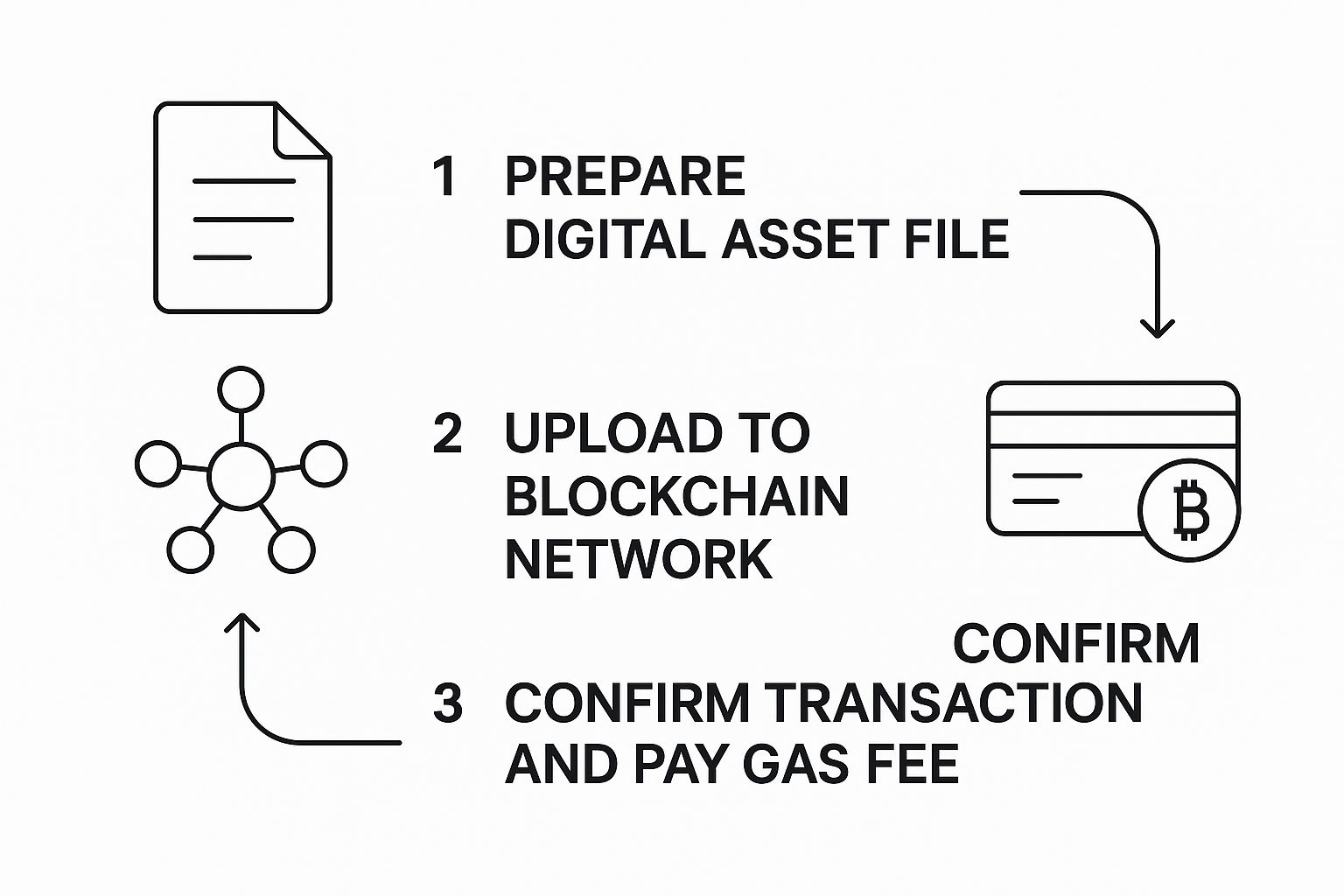
This infographic simplifies the minting process into three key steps: preparing your file, uploading it to the blockchain, and confirming the transaction with its associated fees. The process is linear, starting with the digital file and culminating in a confirmed NFT on the blockchain.
Smart Contracts and Royalties
Smart contracts often play a crucial role in minting. These self-executing contracts have terms written directly into code. Smart contracts automate the minting process, ensuring security and transparency. They also enable creators to set royalties, receiving a percentage of each subsequent sale of their NFT. This provides creators with a continuing income stream tied to their work's success.
Before we delve further into the process, let's compare some popular NFT minting platforms:
Popular NFT Minting Platforms Comparison
This table compares widely used platforms for minting NFTs, highlighting their key features, associated costs, supported file types, and blockchain networks.
| Platform | Blockchain Networks | Gas Fees | File Types Supported | Special Features |
|---|---|---|---|---|
| OpenSea | Ethereum, Polygon, Klaytn | Variable, depends on network congestion | Images, videos, audio, 3D models | Largest NFT marketplace, easy-to-use interface |
| Rarible | Ethereum, Flow | Variable, depends on network congestion | Images, videos, audio, GIFs | Community-governed platform, creator royalties |
| SuperRare | Ethereum | Variable, depends on network congestion | Images, videos | Curated platform for high-quality digital art |
| Foundation | Ethereum | Variable, depends on network congestion | Images, videos, 3D models | Invite-only platform for established artists |
| Mintable | Ethereum, Zilliqa | Variable, depends on network congestion | Images, videos, audio, documents | Gasless minting options available |
As you can see, different platforms offer various features and cater to different needs. Choosing the right one depends on your specific requirements and preferences.
Finalizing Your NFT
Once the transaction is confirmed and the gas fees are paid, your NFT is officially minted and recorded on the blockchain. It becomes a unique, tradable asset with verifiable ownership and a documented history. You can then list your NFT on marketplaces, trade it with other collectors, or simply hold it as a valuable asset in your digital collection.
Unlocking Real Value Through NFT Minting
Minting an NFT is more than just clicking a button; it's a powerful tool for creators and businesses to unlock new opportunities. Understanding what minting an NFT means opens doors to generating real value. Let's explore how this process helps creators build sustainable income and connect more deeply with their audience.
NFTs: Empowering Creators Through Royalties and Direct Sales
One of the most significant advantages of NFTs is the ability for creators to earn through initial sales and ongoing royalties. Artists, for example, can set a royalty percentage to receive a portion of the sale price every time their NFT is resold on secondary markets. This creates a continuous revenue stream, ensuring creators benefit from their work's long-term value. Direct sales also cut out the middleman, allowing creators to keep a larger share of the profits and forge direct relationships with their collectors.
This shift is particularly impactful for digital content, where traditional monetization methods often fall short. This has fueled the remarkable growth of the NFT market. By the end of 2021, global NFT sales surpassed $23 billion, a substantial increase from the previous year. This growth is propelled by the increasing adoption of blockchain technology and the availability of accessible minting platforms. For more detailed statistics, check out this resource: Minting NFT Statistics.
Transforming Customer Relationships Through NFTs
Beyond individual creators, businesses are using NFT minting to revolutionize customer relationships. Brands are creating exclusive experiences, cultivating passionate communities, and offering unique rewards to loyal customers through NFTs. While NFT minting centers around digital asset ownership, the broader context of digital asset markets is also worth exploring: Web3 Naming Markets.
Strategic Minting for Maximum Impact
Understanding what content to mint, how to structure royalties, and how to best use blockchain technology is crucial for maximizing the value of your NFTs. Limited edition digital artwork, exclusive music releases, and membership access to online communities can all be represented as NFTs, offering tangible value to collectors. This insightful article offers further guidance: How to Master NFTs and Find Key NFT Stats. Careful planning can help both creators and businesses unlock the full potential of NFTs and build a strong presence in the evolving digital world.
From Concept to Collection: Your First NFT Mint
Ready to turn your digital creation into a unique, verifiable asset? This section walks you through minting your first NFT, from initial idea to a successful launch. We'll cover everything from prepping your artwork to promoting your newly minted NFT.
Preparing Your Digital Content
Before minting, ensure your digital file is ready. This means choosing the right file format, resolution, and size. Common formats include JPEG, PNG, GIF, and MP4 for images and videos. The best resolution and size depend on the platform you choose, so check their guidelines.
Also, consider your NFT's metadata. This includes the title, description, and any unique attributes. Good metadata helps collectors understand your work and improves discoverability on marketplaces.
Choosing the Right Marketplace
Selecting the right marketplace is crucial. Different platforms cater to different niches and have varying fee structures. Research and compare platforms like OpenSea, Rarible, and SuperRare to find the best fit. Consider factors like audience, supported blockchains, and reputation.
Some platforms, like Kaleido, let users mint without gas fees, making it easier to create NFTs. The growth of NFTs has also led to new models like generative art, where algorithms create unique digital art collections. Learn more about NFT minting here.
Setting Up Your Wallet
You'll need a crypto wallet compatible with your chosen marketplace and blockchain. This wallet holds the cryptocurrency for gas fees, the transaction costs of minting. Popular options include MetaMask and Trust Wallet. Ensure your wallet is secure and you know how to manage your private keys.
Minting Your NFT
With your file, marketplace, and wallet ready, you can mint. Most platforms have a simple interface to guide you. This typically involves uploading your file, adding metadata, and confirming the transaction.
Pricing and Promotion
Pricing your NFT can be tricky. Consider your work's perceived value, market trends, and other creators' pricing. After minting, promote your NFT on social media, engage with your community, and explore collaborations.
Troubleshooting Common Challenges
Minting can have roadblocks. Be aware of issues like failed transactions, high gas fees, and metadata errors. Most platforms have troubleshooting resources and support.
To help you understand the costs involved, let's look at a detailed breakdown. The following table, "NFT Minting Costs Breakdown," outlines the potential expenses associated with minting NFTs.
| Cost Type | Price Range | Frequency | Variables Affecting Cost | Cost Reduction Strategies |
|---|---|---|---|---|
| Gas Fees | Variable | Per transaction | Network congestion, blockchain used | Mint during off-peak hours, use Layer-2 solutions like Polygon |
| Platform Fees | 0-15% | Per sale | Marketplace chosen | Research different platforms, factor fees into pricing |
| Listing Fees | Variable | Per listing | Marketplace chosen | Consider free listing options, bundle NFTs |
This table highlights the variability of costs, particularly gas fees, which fluctuate depending on network activity and the blockchain used. Platform and listing fees also vary significantly between marketplaces. Employing cost reduction strategies, such as minting during less congested periods and researching platform fees, can help manage expenses.
By understanding these steps and potential challenges, you can confidently mint and launch your first NFT collection. Creating and promoting NFTs is an ongoing process. Keep learning, experimenting, and engaging with the NFT community.
Overcoming Common NFT Minting Roadblocks
Minting your first NFT is an exciting venture, but the journey isn't always straightforward. Several common roadblocks can present challenges, even for seasoned creators. This section explores those challenges and offers practical solutions to help you navigate the minting process more effectively.
Technical Hurdles and Their Solutions
One of the most frequent issues encountered is failed transactions. This can be caused by network congestion or insufficient funds in your digital wallet. To prevent this, always double-check your wallet balance before initiating a transaction. Consider minting during off-peak hours when gas fees, the cost of processing transactions on the blockchain, are typically lower. Fluctuating gas fees are another common concern, as they can greatly influence the overall minting cost. Strategically planning your minting schedule can help mitigate these expenses.
Metadata Errors and Verification Requirements
Metadata, the descriptive information attached to your NFT, plays a crucial role in its value and marketability. Issues like incorrect file formats or missing information can significantly impact its appeal. Thoroughly review and validate your metadata before minting to ensure accuracy and completeness. It's also important to be mindful of verification requirements on major NFT marketplaces like OpenSea. These requirements can sometimes be intricate and time-consuming. Researching these requirements in advance can save you valuable time and prevent potential frustration. For those interested in pursuing a career in the NFT space, exploring NFT Jobs can be a great starting point.
Strategic Challenges and Solutions
Choosing the appropriate minting platform and carefully timing your NFT release are crucial strategic decisions. Different platforms cater to various niches and communities. Selecting the right platform is essential for effectively reaching your target audience. Similarly, the timing of your release can greatly impact its visibility and success. Consider market trends and community engagement when planning your launch strategy. As of 2023, high-profile NFT collections like the Bored Ape Yacht Club, often endorsed by celebrities, have demonstrably influenced the market. Learn more about the intricacies of NFT minting and its impact on the current landscape.
Recovering from Minting Errors
Despite meticulous planning, errors can still occur. Knowing how to recover from these errors is vital. Most platforms offer support resources and troubleshooting guides. Understanding how to rectify metadata problems is especially crucial, as these errors can sometimes have lasting consequences for your NFT.
Best Practices for Smooth Minting
Here’s a summary of best practices to ensure a smoother, more successful minting experience:
- Double-check your wallet balance and gas fees.
- Thoroughly review your metadata.
- Research platform requirements and fees.
- Optimize your minting schedule.
- Familiarize yourself with troubleshooting resources.
By understanding these potential roadblocks and implementing these practical solutions, you can navigate the NFT minting process with greater confidence, minimizing potential risks and maximizing your NFT’s potential.
The Evolution of NFT Minting: What Creators Need to Know
The NFT space is constantly changing, offering exciting opportunities and new challenges for creators. Staying up-to-date on these changes is essential for creative and financial success. Let's explore key advancements that are reshaping how NFTs are created and distributed.
Energy-Efficient Minting: Addressing Environmental Concerns
A major development is the shift towards sustainable minting practices. The energy used by some blockchains like Ethereum has sparked environmental concerns. Many platforms are now switching to energy-efficient alternatives like Proof-of-Stake blockchains or Layer-2 scaling solutions. This translates to a lower environmental impact and potentially lower minting costs for creators.
These changes allow for a more environmentally responsible approach to NFT creation.
Cross-Chain Compatibility: Expanding Your Reach
Another significant trend is cross-chain compatibility. This allows NFTs created on one blockchain to be easily moved and traded on another. This expands your potential audience, opening new markets and opportunities.
Imagine creating an NFT on a smaller blockchain, then seamlessly moving it to a larger marketplace like OpenSea for greater visibility. This interconnectedness creates a more vibrant and accessible NFT ecosystem.
Evolving Metadata Standards: Supporting Complex Applications
Metadata standards are evolving to support richer and more complex NFT uses. Improved metadata lets creators embed more details about their work, such as provenance, licensing, and interactive features. This unlocks new creative possibilities, enabling creators to tell compelling stories and build more engaging experiences.
For instance, imagine an NFT of a song that also includes unlockable behind-the-scenes footage, lyrics, and bonus material.
Focusing on Relevant Innovations
With so much rapid technological advancement, it's crucial for creators to focus on impactful innovations. While understanding the technical details is helpful, focusing on how these developments enhance your creative process and audience connection is more important. For example, understanding how royalties are implemented for ongoing revenue is more critical than the intricacies of different smart contract standards. This empowers creators to make informed decisions and effectively use the technology.
By understanding these evolutionary trends, creators can benefit from positive developments and minimize potential disruptions. Adaptability and staying informed are key to thriving in the dynamic NFT space.
Are you ready to explore the vast potential of Web3? Discover exciting career opportunities in the blockchain, NFT, and metaverse sectors at Find Web3. Whether you're a seasoned developer, a creative designer, or a marketing specialist, Find Web3 connects you with the top companies shaping the future of the internet. Start your Web3 career journey today!