
Level Up Your DApp Development: Essential Blockchain Development Tools
Building robust decentralized applications (DApps) requires more than just a great idea; it demands the right blockchain development tools. This listicle provides a curated selection of 12 essential tools, covering everything from smart contract languages like Solidity to comprehensive development frameworks like Truffle Suite and Hardhat. Whether you’re building on Ethereum, Hyperledger Fabric, or exploring other blockchain ecosystems, this resource equips you with the knowledge to choose the best tools for your project.
This list goes beyond simple feature overviews. We’ll dive deep into practical use cases, exploring when and why each tool excels. We'll also highlight potential limitations and implementation considerations based on real-world development experience. Selecting the right tools is crucial for DApp development. You can find a curated list of blockchain development tools from webarc.day for further exploration.
This curated list will cover the following blockchain development tools:
- Solidity: The go-to language for Ethereum smart contracts.
- Truffle Suite: A comprehensive development environment for Ethereum.
- Hardhat: An Ethereum development environment focusing on task automation and extensibility.
- Remix IDE: A browser-based IDE perfect for rapid prototyping and learning Solidity.
- Ganache: A personal blockchain for local development and testing.
- Ethers.js: A lightweight library for interacting with the Ethereum blockchain.
- Web3.js: A JavaScript library for connecting to Ethereum nodes.
- OpenZeppelin: A library of secure and reusable smart contracts.
- Hyperledger Fabric: An enterprise-grade blockchain framework for permissioned networks.
- Corda: A blockchain platform specifically designed for financial institutions.
- Substrate: A modular framework for building custom blockchains.
- Chainlink: A decentralized oracle network for connecting smart contracts to real-world data.
By the end of this article, you’ll have a deeper understanding of these essential blockchain development tools and be equipped to make informed decisions for your next DApp project. We'll explore real-world scenarios and offer practical insights to help you navigate the complexities of blockchain development.
1. Solidity
Solidity is the undisputed champion of smart contract development on the Ethereum Virtual Machine (EVM). Its JavaScript, Python, and C++ influenced syntax makes it relatively accessible for developers already versed in these languages. Solidity empowers developers to build self-executing contracts that automate agreement execution and enforcement. This makes it a cornerstone of blockchain development tools.
Key Features and Practical Applications
Solidity offers powerful features like user-defined types (structs and mappings) for complex data structures and inheritance/libraries for efficient code reuse. Static typing contributes to code reliability, while built-in security features mitigate common vulnerabilities. The compatibility with various EVM-compatible blockchains extends its reach beyond Ethereum.
I've used Solidity to build everything from simple ERC-20 tokens to complex decentralized exchanges (DEXs). The language's flexibility allows for intricate logic implementation crucial for decentralized applications. When considering how to integrate your DApp with traditional finance, it's worth researching different cryptocurrency payment gateways to bridge the gap. Tools like these, highlighted in resources like Top Cryptocurrency Payment Gateways for Businesses 2025 from Flash, become increasingly important as blockchain interacts with existing financial systems.
Pros and Cons From Real-World Use
Solidity boasts extensive community support and comprehensive documentation, making it easier to find solutions and learn the ropes. The continuous updates and improvements ensure the language stays relevant and secure.
However, the learning curve can be steep for blockchain newcomers. Security remains a critical concern, requiring meticulous coding practices to avoid potentially devastating vulnerabilities. Even experienced developers need to stay vigilant against evolving attack vectors.
Getting Started with Solidity
Solidity's official website (https://soliditylang.org) is an excellent starting point. You'll find comprehensive documentation, tutorials, and community resources. Remix, a browser-based IDE, offers a convenient environment for writing, compiling, and deploying Solidity contracts.
While Solidity is powerful, remember that secure coding practices are paramount in the blockchain world. Thorough testing and auditing are essential before deploying any smart contract.
2. Truffle Suite
Truffle Suite is an essential framework for Ethereum developers, streamlining the process of building, testing, and deploying smart contracts. Its suite of tools simplifies the development workflow, allowing developers to focus on the core logic of their decentralized applications (dApps). Truffle integrates seamlessly with other blockchain development tools, making it a powerful asset in any developer's toolkit.
Key Features and Practical Applications
Truffle boasts automated contract testing with Mocha and Chai, enabling developers to write robust tests for their Solidity code. When working with Solidity, it's also important to write effective documentation. Refer to this article on Solidity code documentation. Its scriptable deployment and migrations framework ensures predictable and repeatable deployments to various Ethereum networks. The interactive console provides direct contract communication for debugging and interaction. Local blockchain simulation with Ganache allows for efficient testing and development.
I've found Truffle invaluable for managing complex dApp projects. Its structured approach simplifies development and promotes best practices. The ability to easily switch between different Ethereum networks is crucial for testing and deployment.
Pros and Cons From Real-World Use
Truffle Suite benefits from a large and active community, providing ample support and extensive documentation. This comprehensive suite covers the entire development lifecycle, from writing smart contracts to deploying and interacting with them on the blockchain. It fosters best practices in smart contract development, improving code quality and security.
However, Truffle can be resource-intensive, particularly for larger projects. There's a learning curve for beginners, especially those new to blockchain development.
Getting Started with Truffle Suite
The Truffle Suite website (https://trufflesuite.com) is the best place to start. It offers comprehensive documentation, tutorials, and community resources. Installing Truffle is straightforward, and numerous online resources can help you get started with your first dApp.
3. Hardhat
Hardhat is a development environment for Ethereum that focuses on enhancing the developer experience through flexible and extensible tooling. It provides a local Ethereum network designed specifically for development and testing, paired with a robust plugin ecosystem. This makes it a powerful choice for building and deploying decentralized applications (dApps). Hardhat streamlines the process from initial coding to final deployment, making it a valuable addition to any blockchain developer's toolkit.
Key Features and Practical Applications
Hardhat offers a built-in task runner, allowing developers to automate common workflows like compiling contracts, running tests, and deploying to various networks. The comprehensive testing framework, integrating seamlessly with Mocha and Chai, facilitates writing unit and integration tests. Support for Solidity debugging with detailed stack traces simplifies identifying and resolving issues. The plugin system expands Hardhat's functionality, allowing developers to integrate with other tools and services. The ability to fork mainnet for testing purposes provides a realistic environment for simulating real-world scenarios. Curious about the broader context of Hardhat and Web3 development? Learn more about Hardhat and web3 statistics.
Pros and Cons From Real-World Use
From my experience, Hardhat's customizability and extensibility are major advantages. The debugging capabilities significantly improve the development process, simplifying error identification and resolution. The active community and regular updates ensure the tool remains relevant and secure.
However, configuring Hardhat for highly complex projects can be demanding. Its ecosystem, while growing rapidly, is still smaller than alternatives like Truffle. This can sometimes limit available plugin options for specific tasks.
Getting Started with Hardhat
The official Hardhat website (https://hardhat.org) is an excellent starting point. Detailed documentation and tutorials provide clear guidance for setting up and using the tool. The documentation covers various topics, from basic installation to advanced configurations, making it easy for both beginners and experienced developers to get started. While the initial setup might involve some learning, Hardhat's advantages in terms of developer experience and testing capabilities quickly become apparent in real-world usage.
4. Remix IDE
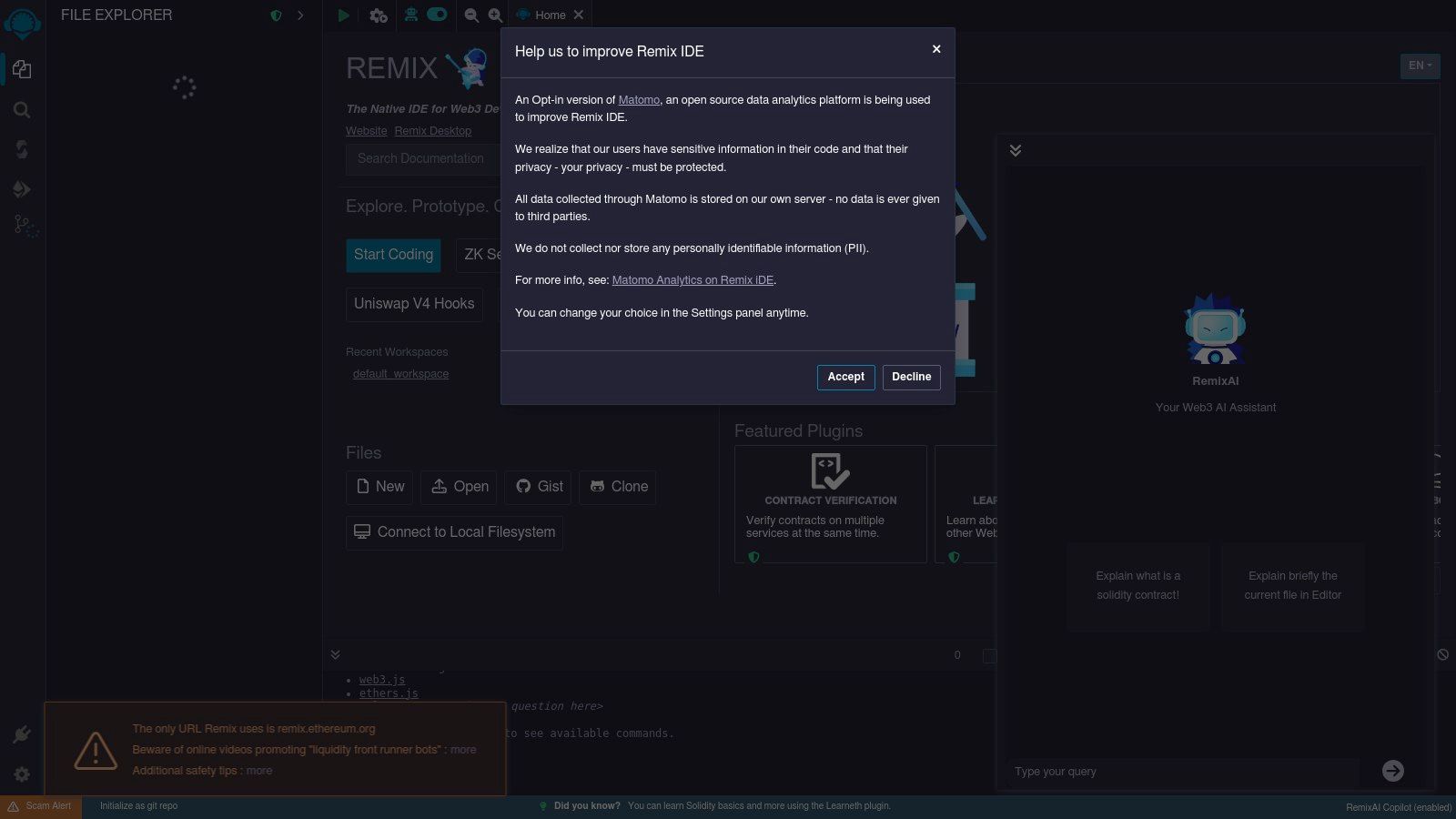
Remix IDE stands as a prominent browser-based Integrated Development Environment (IDE) specifically designed for crafting Ethereum smart contracts. Its user-friendly interface simplifies writing, testing, and deploying Solidity contracts directly within your browser, eliminating the need for complex local setups. This accessibility makes it an essential tool for both novice and experienced blockchain developers.
Key Features and Practical Applications
Remix IDE offers real-time code analysis and linting, catching errors early in the development process. Its integrated debugger allows for stepping through contract execution, simplifying the identification and resolution of issues. Support for multiple Solidity compiler versions ensures compatibility with various projects. The plugin system extends functionality, and the ability to deploy contracts to different networks streamlines the transition from development to production. I've found Remix invaluable for rapid prototyping and quick testing of contract logic, particularly when experimenting with new Solidity features. Its accessibility makes it perfect for workshops and educational settings.
Pros and Cons From Real-World Use
The biggest advantage of Remix IDE is its zero-setup requirement. It’s accessible from any browser, making it perfect for quick development and collaboration. The active community and ongoing development mean continuous improvements and readily available support. However, compared to dedicated desktop IDEs, Remix offers more limited functionality. Browser limitations can occasionally impact performance, particularly with larger projects.
Getting Started with Remix IDE
Getting started with Remix IDE is incredibly simple. Navigate to the official website (https://remix.ethereum.org/) and you're ready to begin coding. The platform offers tutorials and documentation to guide you through the basics of smart contract development. While Remix excels at rapid prototyping and learning, consider transitioning to a more robust desktop IDE for larger or more complex projects.
5. Ganache
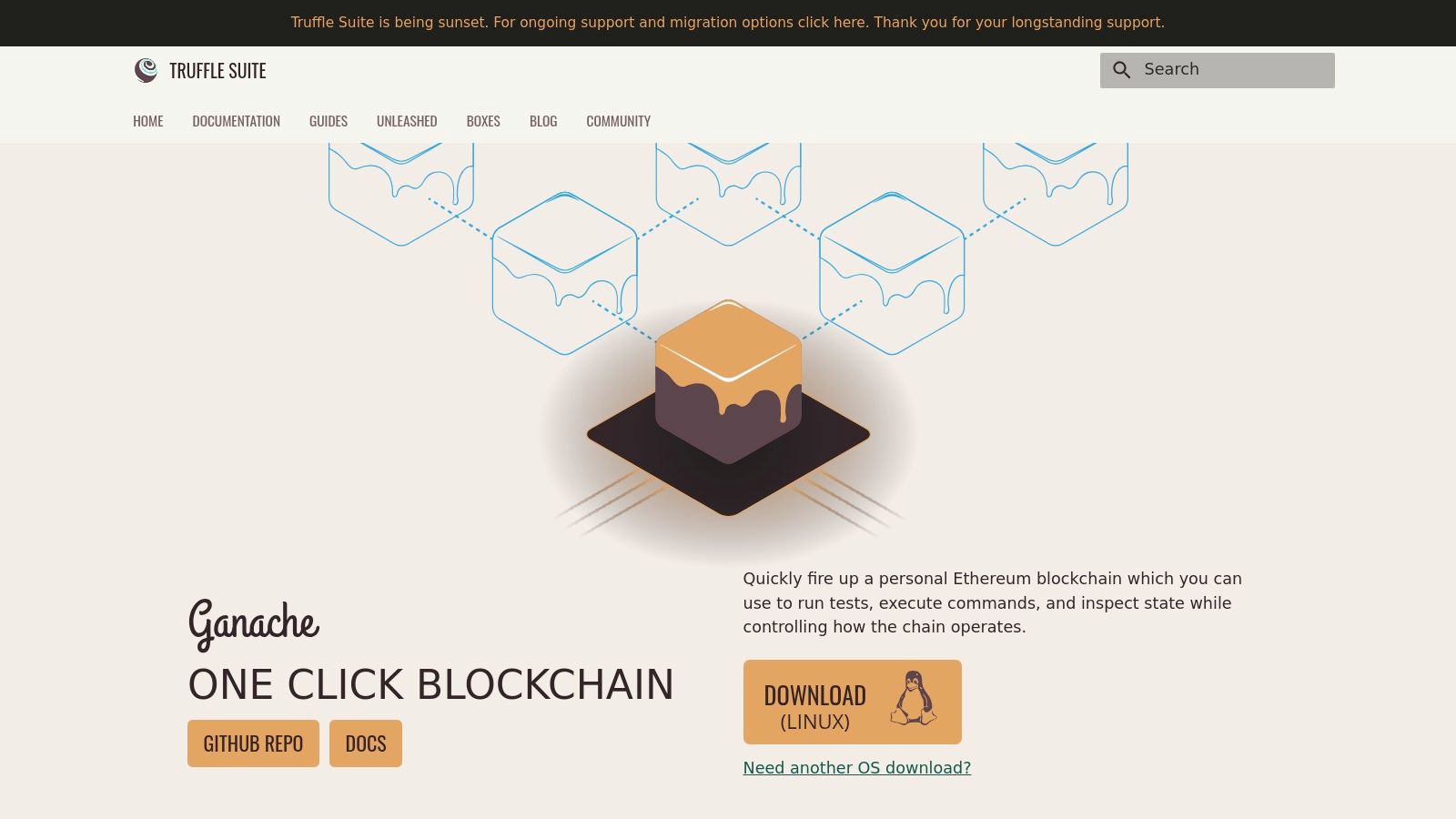
Ganache is an invaluable tool for blockchain developers, providing a personal Ethereum blockchain for local development and testing. It allows you to deploy contracts, develop applications, and run tests in a safe, controlled environment without incurring real-world costs or network latency. This rapid prototyping capability makes it a crucial tool in any blockchain developer's arsenal.
Key Features and Practical Applications
Ganache offers instant transaction mining, allowing for quick feedback during development. Configurable block times simulate different network conditions for robust testing. Comprehensive logging provides valuable insights into blockchain activities. A user-friendly GUI simplifies blockchain state monitoring. Moreover, Ganache seamlessly integrates with the Truffle Suite, further enhancing its utility within the development workflow.
I've used Ganache extensively when developing decentralized applications (DApps). Its ability to quickly deploy and test smart contracts significantly accelerates the development cycle. The clear visibility into transaction details and blockchain state is essential for debugging and optimization. This streamlined workflow frees developers to focus on core application logic.
Pros and Cons From Real-World Use
Ganache's user-friendly interface and seamless Truffle integration make it a joy to use. The ability to rapidly prototype and debug smart contracts is a significant advantage. The control over the blockchain environment allows for simulating various scenarios, ensuring application robustness.
However, Ganache is not suitable for testing network-specific features due to its isolated nature. It is primarily a local development tool, limiting its applicability for testing interactions within a larger network environment.
Getting Started with Ganache
Download Ganache from the Truffle Suite website (https://trufflesuite.com/ganache). The installation is straightforward. Once running, you can quickly deploy contracts and begin testing. The intuitive interface makes it easy to monitor transactions and manage your local blockchain. Remember that while Ganache facilitates efficient development, testing on a testnet or mainnet is essential before production deployment.
6. Ethers.js
Ethers.js is a lightweight and modular JavaScript library designed for seamless interaction with the Ethereum blockchain. It provides a comprehensive toolkit for various Ethereum development needs, from wallet management and contract interaction to efficient transaction handling. Its compact nature and focus on essential functionalities make it a popular choice among developers.
Key Features and Practical Applications
Ethers.js is fully TypeScript ready, offering static typing for enhanced code reliability. Comprehensive documentation and practical examples facilitate a smooth learning curve. The library supports all standard Ethereum JSON-RPC methods, ensuring broad compatibility. Built-in utilities simplify handling Ethereum data formats, streamlining development workflows.
I've used Ethers.js extensively for frontend development, particularly when integrating decentralized applications (DApps) with web interfaces. Its lightweight nature minimizes overhead, contributing to faster loading times and improved user experience. The library's ease of use makes it ideal for rapid prototyping and development of blockchain-based applications.
Pros and Cons From Real-World Use
Ethers.js is known for its user-friendly API and excellent documentation, making it relatively easy to learn and implement. Active development and strong community support ensure continuous improvements and prompt assistance when needed. Compatibility with both browser and Node.js environments provides flexibility for diverse development scenarios.
While generally robust, Ethers.js may lack some advanced features available in larger libraries like Web3.js. Its smaller ecosystem, although growing rapidly, might present some limitations in terms of available plugins and extensions.
Getting Started with Ethers.js
The official Ethers.js website (https://ethers.org) offers comprehensive documentation, tutorials, and community resources. Its modular design allows you to include only the necessary components, minimizing the overall footprint of your application. Exploring the provided examples is a great way to quickly grasp the core functionalities and start building your own blockchain projects. While straightforward, be mindful of secure coding practices, especially when handling sensitive data like private keys.
7. Web3.js
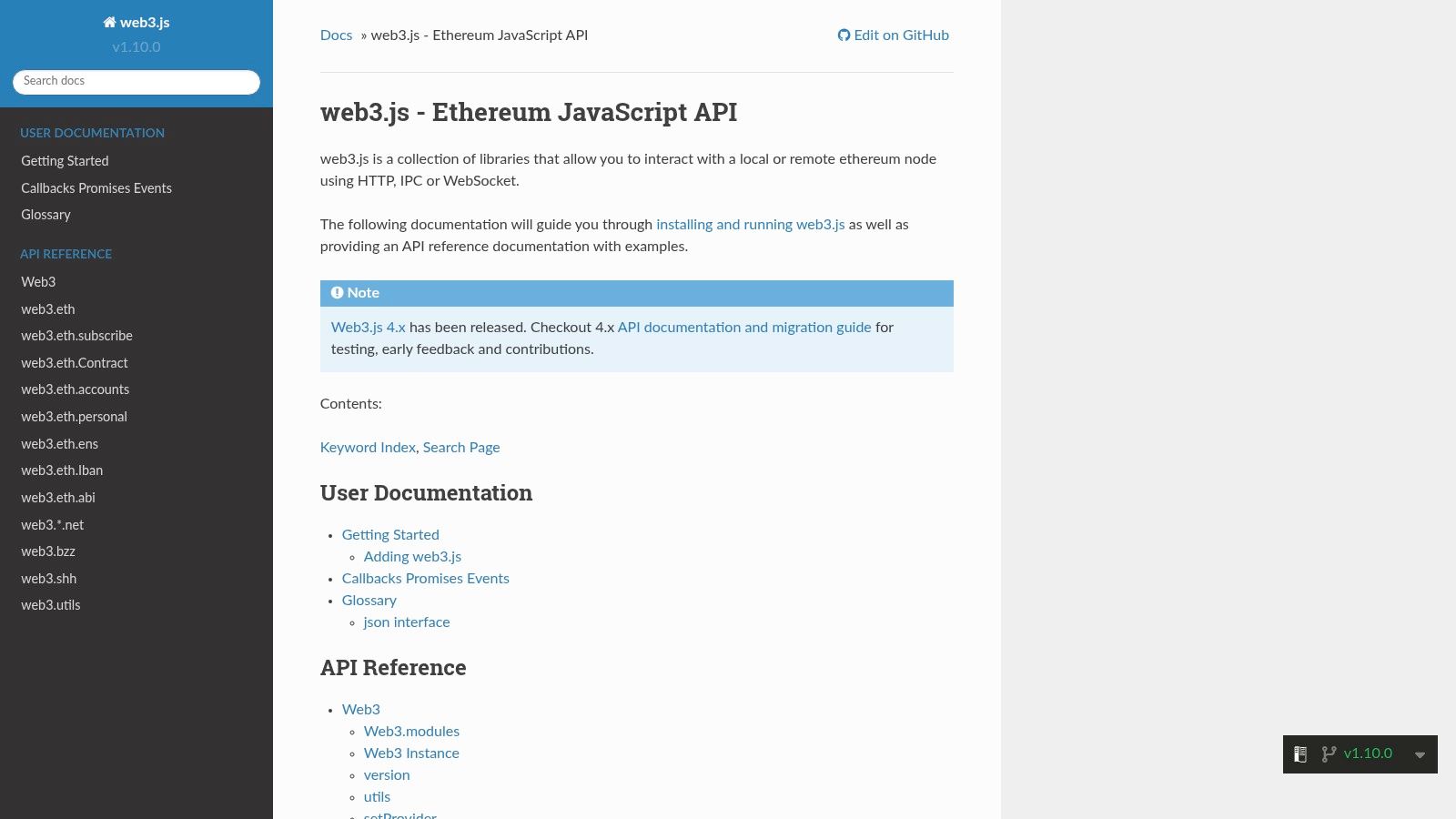
Web3.js is a cornerstone for blockchain developers working with Ethereum. This collection of JavaScript libraries empowers developers to interact seamlessly with Ethereum nodes, whether local or remote, using HTTP, IPC, or WebSocket. It acts as a bridge, enabling interaction with smart contracts, management of transactions, and subscription to events, making it a crucial tool for building decentralized applications (dApps).
Key Features and Practical Applications
Web3.js provides a robust API for interacting with the Ethereum blockchain. It supports both synchronous and asynchronous calls, giving developers flexibility in how they structure their code. The ability to subscribe to real-time events is essential for creating dynamic and responsive dApps. Built-in support for personal wallet management further simplifies development workflows. Its compatibility across various Ethereum networks ensures wide applicability. To understand the nuances of the technology, learn more about Web3.js.
I've personally used Web3.js for various projects, from integrating with existing smart contracts to building entirely new dApps. The library's comprehensive functionality simplifies complex tasks like sending transactions and fetching blockchain data.
Pros and Cons From Real-World Use
Web3.js benefits from a mature ecosystem, backed by extensive community support and comprehensive documentation. Regular updates and active maintenance ensure its reliability and compatibility with the evolving Ethereum landscape.
However, the library's size can be a drawback, especially for projects where minimizing bundle size is a priority. Some methods might feel less intuitive compared to newer libraries like Ethers.js, particularly for developers new to blockchain development.
Getting Started with Web3.js
The official Web3.js documentation (https://web3js.readthedocs.io) provides an excellent starting point. Numerous tutorials and community resources are readily available online. Pairing Web3.js with a framework like React or Angular streamlines frontend development for dApps. When starting, focus on understanding core concepts like connecting to a node, sending transactions, and interacting with contracts.
8. OpenZeppelin
OpenZeppelin stands as a cornerstone in the Ethereum development ecosystem, offering a robust library of secure and community-reviewed smart contracts. It provides developers with reusable and modular components, adhering to best practices and significantly streamlining the development of secure decentralized applications (dApps). This makes it an invaluable tool in any blockchain developer's arsenal.
Key Features and Practical Applications
OpenZeppelin offers standard implementations of widely used token standards like ERC-20 and ERC-721. It also provides crucial access control mechanisms such as Ownable and Roles, along with modules for creating pausable and upgradable contracts. These features are essential for building robust and adaptable dApps. I've personally leveraged OpenZeppelin contracts to rapidly prototype and deploy secure tokenized systems, saving weeks of development time. Its comprehensive security audits and community reviews provide an added layer of confidence, ensuring the reliability of your smart contracts.
Pros and Cons From Real-World Use
The most significant advantage of using OpenZeppelin is the enhanced security derived from employing battle-tested contracts. Leveraging pre-built, audited components reduces the risk of introducing vulnerabilities. The reusable nature of these components also significantly speeds up development. However, some customization might be necessary to adapt the contracts to specific project requirements. There's also a learning curve, particularly for developers new to contract inheritance and modularity.
Getting Started with OpenZeppelin
The official OpenZeppelin website (https://openzeppelin.com) offers comprehensive documentation and tutorials, providing a great starting point for newcomers. The platform provides clear examples and guides for integrating their contracts into your projects. While OpenZeppelin simplifies many aspects of development, understanding fundamental Solidity concepts is crucial for effective utilization. Remember, even with pre-audited contracts, thorough testing and independent audits of your final implementation remain critical for ensuring security.
9. Hyperledger Fabric
Hyperledger Fabric stands out as a permissioned blockchain framework developed by the Linux Foundation, specifically designed for enterprise applications. Its modular architecture and pluggable components offer a high degree of customization, catering to diverse business needs where privacy and security are paramount. This makes it a compelling choice for blockchain development tools geared towards enterprise solutions.
Key Features and Practical Applications
Hyperledger Fabric's permissioned nature enhances privacy and security by controlling network access. Its modularity allows for pluggable consensus protocols and supports smart contracts (chaincode) written in Go, Java, and Node.js. This flexibility is key for tailoring the framework to specific use cases. I've utilized Fabric to build supply chain management solutions where data integrity and controlled access were critical. The scalable and high-performance transaction processing ensures efficient operation even with complex workflows.
Pros and Cons From Real-World Use
Hyperledger Fabric's enterprise focus is its greatest strength. The fine-grained control over permissions and data access makes it ideal for sensitive business applications. The strong community and corporate backing ensure ongoing development and support.
However, this robust framework comes with a steep learning curve. The complex setup and significant resource requirements for deployment and maintenance can be challenging. Careful planning and dedicated resources are essential for successful Fabric implementations.
Getting Started with Hyperledger Fabric
The official Hyperledger Fabric documentation (https://www.hyperledger.org/use/fabric) provides a comprehensive starting point. Tutorials and community forums offer valuable resources for navigating the complexities of this powerful framework. While Fabric's complexity presents a challenge, its flexibility and enterprise-grade features make it a compelling option for permissioned blockchain development.
10. Corda
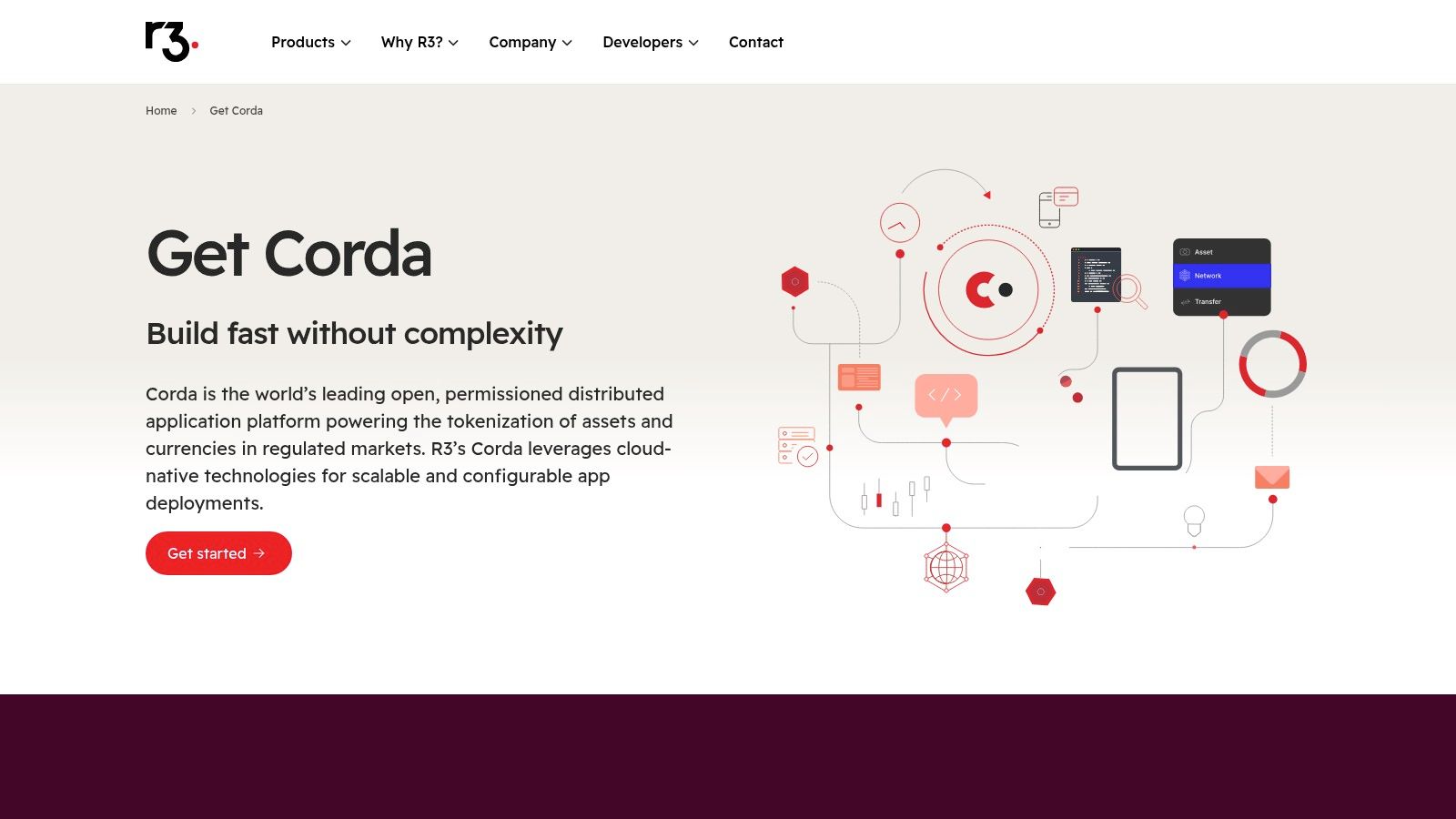
Corda is an open-source blockchain platform specifically designed for businesses. Its core strengths lie in its focus on privacy and scalability, making it well-suited for regulated industries. Corda enables businesses to transact directly and privately using smart contracts, ensuring data confidentiality. This makes it a powerful tool for blockchain development in sectors demanding strict data control.
Key Features and Practical Applications
Corda uses Kotlin, a JVM-compatible language, for smart contract development. This allows developers familiar with Java to quickly adapt to Corda's development environment. Its permissioned network structure and notary services ensure data privacy and prevent double-spending. Corda's interoperability with existing business systems makes integration smoother. I've found it particularly useful for building applications requiring robust privacy and regulatory compliance, such as supply chain management and trade finance solutions.
Pros and Cons From Real-World Use
Corda's strength in privacy and security is a major advantage for enterprise applications. Its active development and growing enterprise adoption suggest a promising future. However, the limitation to permissioned networks might restrict its applicability for some decentralized use cases. The developer community, while active, is smaller than that of Ethereum, which can sometimes limit available resources and support.
Getting Started with Corda
The official Corda website (https://www.corda.net) provides comprehensive documentation and tutorials. Several online resources and community forums can also assist developers in getting started. While Corda's focus on permissioned networks might not suit all blockchain projects, its robust privacy features and enterprise-grade design make it a compelling choice for specific business applications. Exploring Corda is worthwhile for developers targeting the financial and enterprise blockchain space.
11. Substrate
Substrate is a powerful modular framework designed for building custom blockchains. Developed by Parity Technologies, it provides a flexible and extensible architecture, allowing developers to create blockchains tailored to specific needs. This makes it a valuable tool in the arsenal of any serious blockchain developer. It empowers developers to go beyond simply deploying smart contracts on existing chains and create entirely new blockchain ecosystems.
Key Features and Practical Applications
Substrate offers modular components for consensus, networking, and runtime logic. This modularity simplifies development by allowing developers to swap out different components as needed. Support for multiple consensus algorithms offers flexibility in optimizing for performance or security. Built-in support for WebAssembly (Wasm) smart contracts extends its functionality beyond basic transactions. The interoperability with the Polkadot network opens doors for cross-chain communication and collaboration.
I've used Substrate to prototype various blockchain solutions, from supply chain management systems to decentralized identity platforms. The framework's customizability allows for fine-grained control over the blockchain's behavior. The ability to rapidly iterate and experiment with different configurations makes it ideal for exploring new blockchain concepts.
Pros and Cons From Real-World Use
Substrate's highly customizable nature is its biggest strength. It allows developers to tailor the blockchain to specific use cases, optimizing for performance and scalability. The active community and ecosystem growth provide valuable support and resources.
However, Substrate does have a steeper learning curve compared to other blockchain frameworks. It requires familiarity with the Rust programming language, which can be a barrier to entry for some developers. While the documentation is comprehensive, mastering the framework's complexities requires dedicated effort.
Getting Started with Substrate
The official Substrate website (https://substrate.io) provides comprehensive documentation, tutorials, and community resources. Parity also offers various workshops and training programs to accelerate the learning process. While challenging, the power and flexibility of Substrate make it a worthwhile investment for developers seeking to push the boundaries of blockchain technology. Remember that building a blockchain requires careful consideration of security, governance, and economic incentives.
12. Chainlink
Chainlink is a decentralized oracle network that allows smart contracts to securely interact with real-world data and services residing outside the blockchain. This capability is crucial because blockchains themselves are deterministic and isolated environments, unable to directly access off-chain information. Chainlink bridges this gap, providing reliable, tamper-proof inputs and outputs for complex smart contracts, enabling a vast array of new possibilities for decentralized applications (dApps).
Key Features and Practical Applications
Chainlink's core functionality revolves around providing secure and reliable data feeds. This enables smart contracts to trigger actions based on real-world events, such as price fluctuations, weather data, or the outcome of sporting events. I've used Chainlink to build decentralized prediction markets and automated insurance contracts, leveraging its robust oracle network for secure data retrieval. Its decentralized nature significantly enhances the security and reliability of data feeds, mitigating risks associated with single points of failure. For blockchain developers seeking specialized engineering roles related to oracle development, exploring platforms like FindWeb3 Jobs for Blockchain can be beneficial.
Pros and Cons From Real-World Use
One of Chainlink's biggest strengths is its extensive network of independent node operators, ensuring data integrity and resilience against manipulation. The platform's modular architecture allows developers to customize their oracle solutions to fit specific needs. However, integrating Chainlink can be complex, requiring a solid understanding of blockchain concepts and smart contract development. The cost of using Chainlink's services can also be a factor, especially for high-frequency data requests.
Getting Started with Chainlink
Chainlink's official documentation provides comprehensive guides and tutorials for developers (https://chain.link/). The Chainlink Network is supported by various development tools and libraries, facilitating integration with different blockchain platforms. Experimenting with the provided example code and exploring the community forums are effective ways to grasp the intricacies of Chainlink's functionality. Remember, thorough testing and security audits are crucial when integrating any external data source into your smart contracts.
Top 12 Blockchain Dev Tools Comparison
| Tool/Language | Core Features ✨ | User Experience ★★★★☆ | Value Proposition 💰 | Target Audience 👥 | Unique Selling Points 🏆 |
|---|---|---|---|---|---|
| Solidity | Static typing, inheritance, EVM compatible | ★★★★☆ Steep learning curve | 💰 High – Widely adopted | Blockchain devs, smart contract devs | Robust type system, wide platform support |
| Truffle Suite | Testing, deployment framework, Ganache integration | ★★★★☆ Comprehensive but resource-heavy | 💰 Moderate – All-in-one tools | Ethereum dApp developers | Full lifecycle tools, scriptable deployment |
| Hardhat | Task runner, debugging, plugin system, mainnet fork | ★★★★☆ Customizable, extensible | 💰 Moderate – Flexible tooling | Advanced Ethereum devs | Superior debugging, mainnet forking support |
| Remix IDE | Browser-based, real-time linting, multi-compiler | ★★★★☆ No setup, ideal for prototyping | 💰 Free tool | Beginners, quick dev/testing | Browser accessibility, instant use |
| Ganache | Local blockchain, instant mining, GUI monitoring | ★★★★☆ User-friendly, fast testing | 💰 Free tool | Developers testing smart contracts | Rapid local testing, Truffle-compatible |
| Ethers.js | Lightweight JS lib, TypeScript ready | ★★★★☆ Easy to use, well-documented | 💰 Free, lightweight | JS developers, dApp devs | Lightweight, minimal dependencies |
| Web3.js | Full Ethereum API, event subscriptions | ★★★★☆ Mature but bulkier | 💰 Free, extensive features | JS devs needing broad blockchain API | Mature, extensive community support |
| OpenZeppelin | Secure, reusable contracts, security audits | ★★★★☆ Reliable but requires understanding modules | 💰 Free, accelerates development | Security-conscious devs | Battle-tested security contracts |
| Hyperledger Fabric | Permissioned blockchain, modular, scalable | ★★★☆☆ Enterprise-level complexity | 💰 Enterprise-grade | Enterprises needing privacy & scalability | Permissioned, pluggable consensus |
| Corda | Permissioned, Kotlin smart contracts, notary services | ★★★☆☆ Enterprise focus, smaller dev community | 💰 Enterprise-grade | Financial enterprises, regulated sectors | Strong privacy, business interoperability |
| Substrate | Modular blockchain framework, Wasm smart contracts | ★★★☆☆ Steep Rust learning curve | 💰 Flexible, customizable | Blockchain builders, Rust devs | Highly customizable, Polkadot interoperability |
| Chainlink | Decentralized oracles, secure external data | ★★★★☆ Reliable real-world data feeds | 💰 Specialized service | Smart contract devs needing oracles | Tamper-proof data for smart contracts |
Building the Future with Blockchain Development Tools
This comprehensive guide has explored a range of essential blockchain development tools, from foundational languages like Solidity to robust frameworks like Truffle Suite and Hardhat. We've delved into the nuances of local development environments with Ganache and Remix, examined the power of JavaScript libraries like Ethers.js and Web3.js, and explored the security enhancements offered by OpenZeppelin. Furthermore, we've considered enterprise-grade platforms like Hyperledger Fabric and Corda, along with the flexible Substrate framework and the crucial role of oracles like Chainlink.
Choosing the Right Tool for the Job
Navigating the diverse landscape of blockchain development tools requires a strategic approach. Selecting the appropriate tools depends heavily on your project's specific needs. Consider the following factors:
- Project Scope: Are you building a simple DApp or a complex decentralized application? For smaller projects, Remix and Ganache might suffice. Larger projects often benefit from the structured environment provided by Truffle Suite or Hardhat.
- Platform Compatibility: Does your DApp target a specific blockchain platform like Ethereum, or are you building a cross-chain solution? Your choice of tools will depend on the underlying platform.
- Programming Language Proficiency: Are you comfortable with JavaScript, Solidity, or other languages supported by different tools? Choosing tools that align with your existing skillset can streamline the development process.
- Security Considerations: Security is paramount in blockchain development. Leveraging tools like OpenZeppelin can help mitigate vulnerabilities and ensure the integrity of your smart contracts.
- Community and Support: A strong community and readily available documentation can be invaluable during the development journey. Consider the level of support offered for each tool.
Key Takeaways and Implementation Considerations
Developing successful blockchain applications requires careful planning and execution. Keep these takeaways in mind:
- Thorough Testing: Rigorous testing is crucial for identifying and addressing vulnerabilities before deployment. Utilize testing frameworks and platforms like Truffle and Hardhat to ensure the reliability of your DApp.
- Security Best Practices: Implement security best practices from the outset. Leverage tools like OpenZeppelin to enhance the security of your smart contracts.
- Stay Updated: The blockchain space is constantly evolving. Stay informed about the latest advancements in blockchain development tools and adapt your strategies accordingly.
Practical Applications and Future Trends
The tools discussed in this article empower developers to build a wide range of blockchain applications, from decentralized finance (DeFi) platforms and non-fungible token (NFT) marketplaces to supply chain management solutions and secure voting systems. As the blockchain ecosystem continues to mature, we can expect further advancements in development tools, driving innovation and expanding the possibilities of this transformative technology.
The future of blockchain development hinges on accessible, powerful, and secure tools. By carefully considering the factors outlined in this guide, you can choose the blockchain development tools that best suit your project’s needs and contribute to the growth of the decentralized web. Need expert help bringing your blockchain vision to life? Connect with skilled blockchain developers at Find Web3 and accelerate your DApp development journey. Find Web3 specializes in connecting Web3 projects with the talent they need, offering a streamlined approach to building your ideal development team.