
From decentralized finance (DeFi) protocols to non-fungible tokens (NFTs), the engine driving innovation is code. But which code? The choice of a programming language is one of the most critical decisions a developer or a team can make, directly impacting a project's security, performance, scalability, and even its ability to attract talent. Selecting the right tool isn't just a technical preference; it's a strategic move that defines what you can build and how effectively you can build it. This guide is designed to cut through the noise and provide a clear, comprehensive overview of the essential programming languages blockchain developers are using today.
We will explore the foundational languages that power the most robust networks, from the battle-tested Solidity that dominates the Ethereum ecosystem to the performance-oriented Rust gaining traction for next-generation chains. We'll also examine versatile languages like Go and C++ that have found a home in core blockchain infrastructure. As you delve into the programming languages that power this revolution, it's insightful to consider the broader landscape of the evolving blockchain industry and the problems these technologies aim to solve.
This article is more than just a list. It’s a practical resource for developers, product managers, and recruiters alike. For each language, you will find:
- Core Features: What makes the language unique and suited for blockchain development.
- Primary Use Cases: Real-world examples of its application in popular protocols and platforms.
- Strengths & Weaknesses: A balanced look at where each language excels and where it falls short.
- Developer Ecosystem: An overview of the tools, libraries, and community support available.
Our goal is to equip you with the specific knowledge needed to compare your options, understand the trade-offs, and make an informed decision for your next Web3 project or career move. Let’s dive into the code that’s building the future of the decentralized web.
1. Jobs – Engineering on Find Web3
For developers mastering various programming languages for blockchain development, translating those skills into a meaningful career is the ultimate goal. Find Web3's specialized Engineering Jobs page serves as a critical bridge in this journey, establishing itself as a premier destination for connecting technical talent with pioneering Web3 companies. It’s more than just a job board; it’s a comprehensive career ecosystem designed specifically for the builders of the decentralized future.
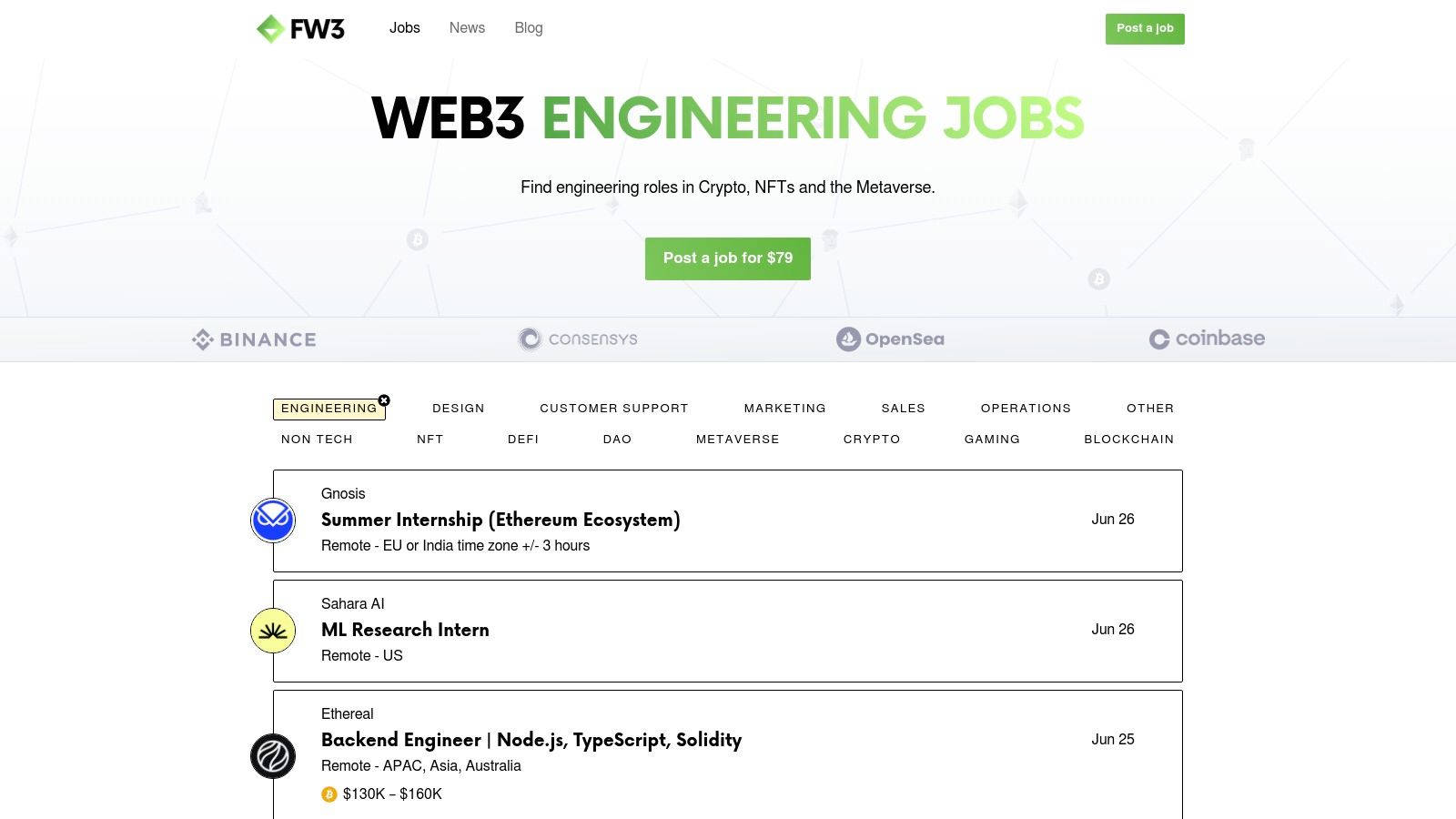
This platform excels by aggregating thousands of engineering-focused roles from the entire Web3 spectrum, including DeFi, NFTs, the metaverse, and core blockchain infrastructure. Its highly specialized nature ensures that every listing is relevant, saving developers from sifting through countless irrelevant positions on generalist job sites. The user interface is clean and purpose-built, prioritizing functionality and efficient navigation.
Why It’s a Featured Choice
Find Web3's Engineering Jobs page is our top pick because it directly addresses the nuanced needs of blockchain developers. It recognizes that a Solidity developer has different career requirements than a Rust engineer working on Layer-1 protocols. This deep understanding is reflected in its powerful and granular filtering capabilities, which set it apart from competitors.
The platform's true strength lies in its ability to empower developers with data and precision. Instead of a generic search, you can narrow your hunt based on highly specific criteria that matter most in the Web3 space.
- Technology Stack: Filter for roles demanding specific languages like Solidity, Rust, Go, or C++.
- Specialization: Pinpoint opportunities in niche fields like cryptography, smart contract auditing, or protocol engineering.
- Compensation: Transparent salary ranges are often provided, removing ambiguity and facilitating better negotiation.
- Flexibility: Easily find remote, hybrid, or on-site positions across the globe.
Key Insight: The platform's value isn't just in the quantity of its listings, but in the quality of its curation and the power of its search filters. It transforms a broad, often chaotic job search into a targeted, strategic career move.
Practical Use Cases for Developers
The platform is engineered to support various career stages and specializations. A developer proficient in multiple programming languages for blockchain can leverage the site to identify which of their skills are currently in highest demand.
For instance, a mid-level engineer skilled in both Solidity and JavaScript can search for front-end roles at DeFi companies that require smart contract integration knowledge. A senior Rust developer can filter exclusively for high-paying, remote-first positions at Layer-1 foundation teams. Students and recent graduates aren't left out either, with dedicated filters for internships that provide a crucial entry point into the industry. This level of specificity makes the job search process incredibly efficient.
For those looking to explore a broader range of opportunities, you can delve deeper into blockchain job listings on findweb3.com.
A Closer Look at the Platform
Here is a breakdown of what makes the Find Web3 Engineering Jobs page a standout resource:
| Feature | Analysis & Benefit |
|---|---|
| Comprehensive Aggregation | Gathers thousands of engineering roles exclusively from the Web3 sector, ensuring high relevance and saving time for job seekers. |
| Advanced Filtering | Allows users to drill down by location, remote flexibility, experience level, and even specific technical specialties like cryptography or smart contracts. |
| Salary Transparency | Many listings include salary ranges, empowering candidates with crucial data for making informed career decisions and negotiations. |
| Career Growth Support | Features dedicated sections for internships and entry-level roles, providing clear pathways for newcomers to enter the Web3 space. |
| Industry Integration | Connects job listings with industry news and trends, helping candidates stay informed about the evolving market and in-demand skills. |
While the platform requires clicking through to external sites for full job descriptions, this is a minor tradeoff for the immense value provided by its aggregation and powerful filtering tools. Its specialized focus is its greatest strength, making it an indispensable resource for any engineer serious about building a career in the Web3 ecosystem.
Platform Access: The website is free to use for job seekers.
Link: Jobs – Engineering on Find Web3
2. Ethereum.org
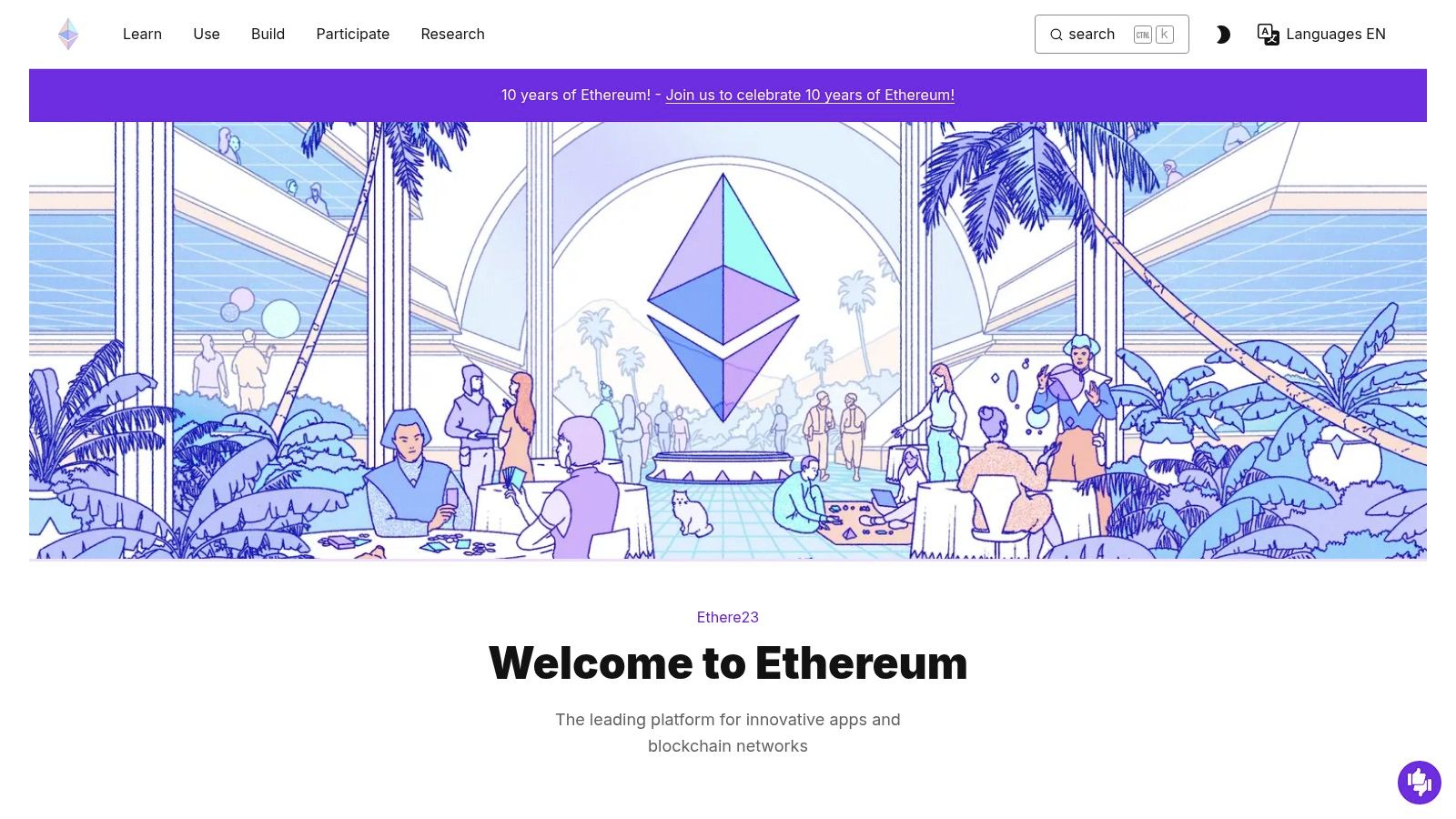
For anyone serious about diving into the world of decentralized application (dApp) development, Ethereum.org serves as the foundational, authoritative resource. Maintained by the Ethereum Foundation, this platform is less a commercial product and more an open-source public good. It is the official gateway to understanding and building on Ethereum, the blockchain that pioneered smart contract functionality and remains the largest ecosystem for dApps. Its core purpose is to educate and empower developers, making it an indispensable starting point.
The website's primary value lies in its comprehensive and meticulously curated documentation. It offers deep dives into the core concepts of Ethereum, from the Ethereum Virtual Machine (EVM) to the intricacies of gas fees and network upgrades. For developers focused on programming languages blockchain, this is the definitive source for learning Solidity and Vyper, the two primary languages for Ethereum smart contracts.
Key Offerings and User Experience
Ethereum.org is structured as a learning portal. The user interface is clean, modern, and organized into logical sections for different user levels: individuals, developers, and enterprises. Navigating the site is intuitive, with clear pathways to documentation, tutorials, and developer tools. All resources on the platform are completely free, upholding the open-access ethos of the blockchain community.
What Makes It Stand Out:
- Official Documentation: Get authoritative information on Solidity, smart contract development, and Ethereum clients directly from the source.
- Structured Learning Paths: The "Developer" section provides curated learning paths, guiding beginners from foundational knowledge to advanced dApp development.
- Tooling and Libraries: Access a comprehensive list of developer tools, from local development environments like Hardhat and Truffle to essential libraries like Web3.js and Ethers.js.
Expert Tip: Don't just read the documentation. Use the integrated "Studio" feature on tutorial pages. This allows you to experiment with Solidity code directly in your browser, providing an interactive way to learn without setting up a local environment initially.
Pros and Cons Analysis
| Pros | Cons |
|---|---|
| Authoritative, up-to-date information | Content can be overwhelming for total beginners |
| Completely free access to all resources | Heavily focused on the Ethereum ecosystem |
| Active community support via forums | Does not cover non-EVM compatible blockchains |
While its exclusive focus on Ethereum could be seen as a limitation, it is also its greatest strength. By concentrating solely on its own ecosystem, Ethereum.org provides a level of depth and accuracy that multi-platform educational sites cannot match. It is the canonical reference for anyone aiming to build a career developing for the largest and most established smart contract platform.
Official Website: https://ethereum.org
3. CryptoZombies
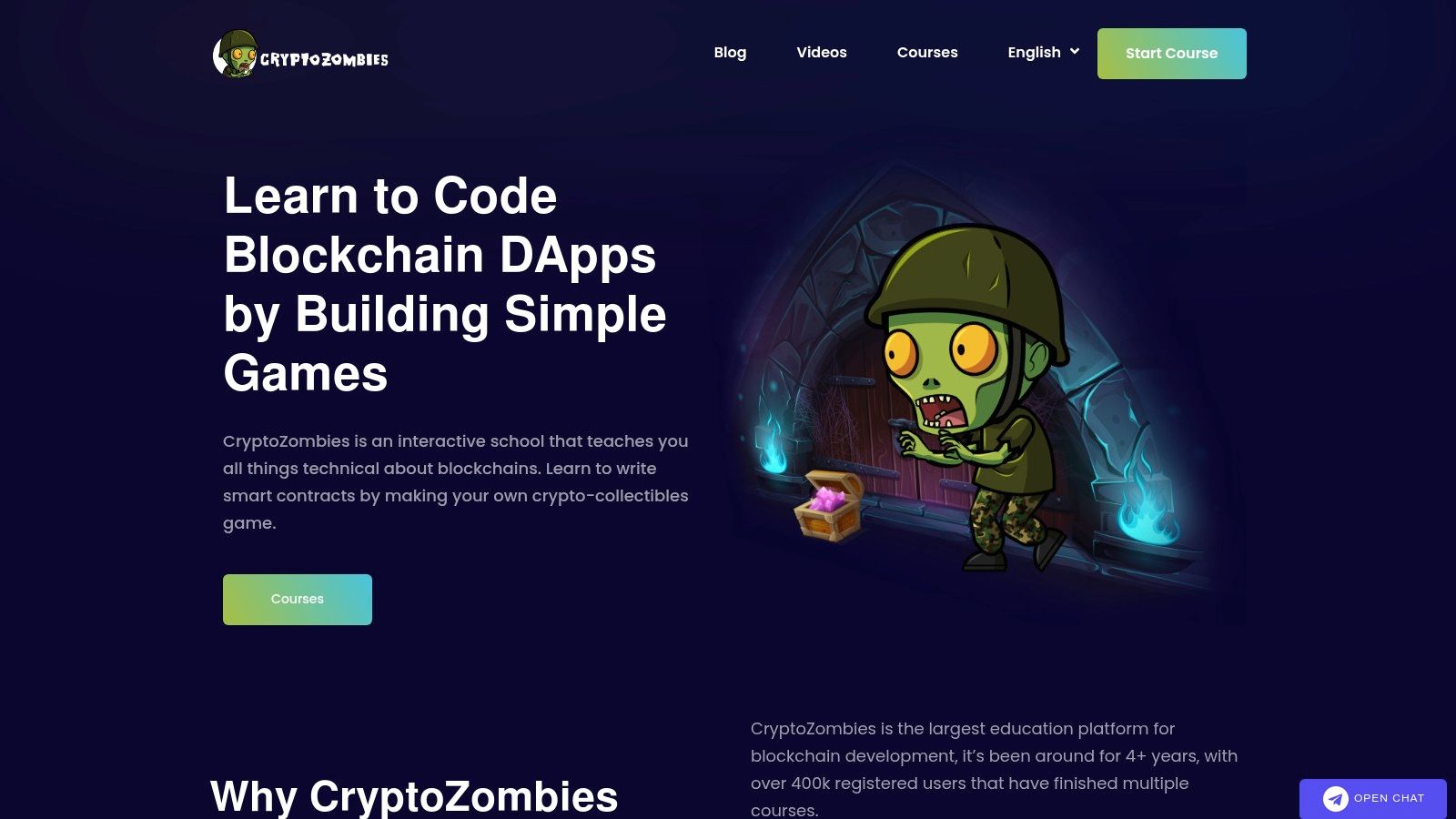
For those who find traditional documentation dense or intimidating, CryptoZombies offers a uniquely engaging and interactive alternative. This platform gamifies the learning process, teaching the fundamentals of Solidity through the creation of a zombie-themed collectible game. It brilliantly transforms what could be a steep learning curve into an enjoyable, step-by-step adventure. The core mission is to make smart contract development accessible, especially for those with little to no prior coding experience, establishing itself as a premier entry point for aspiring blockchain developers.
The platform's value is rooted in its hands-on, "learn by doing" methodology. Instead of just reading about concepts, users immediately apply them by writing real Solidity code in a browser-based editor. This practical approach demystifies complex topics like smart contract structure, state variables, and functions. As a resource focused on programming languages blockchain, CryptoZombies excels at building a strong foundational understanding of Solidity, the most widely used language on Ethereum and other EVM-compatible chains.
Key Offerings and User Experience
CryptoZombies is designed as an interactive coding school. The user interface is clean and purpose-built, splitting the screen between lesson instructions and a live code editor with a console. This setup provides instant feedback, allowing users to see the results of their code immediately. The entire course is completely free, removing any financial barriers for those looking to enter the Web3 space.
What Makes It Stand Out:
- Gamified Learning: The entire curriculum is framed around building a zombie factory game, which makes learning complex programming concepts fun and memorable.
- Interactive In-Browser IDE: Users write, test, and check their Solidity code directly in the browser, eliminating the need for complex local environment setup.
- Progressive Difficulty: Lessons are broken down into small, manageable chapters that build upon one another, ensuring a smooth learning curve from beginner to intermediate topics.
Expert Tip: Don't rush through the lessons. After completing a chapter, try to modify the code in small ways to see what happens. Experimenting with function visibility or data types on your own will solidify your understanding far more than simply following the instructions.
Pros and Cons Analysis
| Pros | Cons |
|---|---|
| Engaging and fun approach to learning Solidity | Limited to Solidity and the Ethereum ecosystem |
| Completely free access to all lessons | Does not cover advanced or complex Solidity patterns |
| No prior programming experience required | The core curriculum has not been updated in a while |
While its focus is solely on Solidity, this specialization makes CryptoZombies an unparalleled starting point. It excels at building confidence and a solid grasp of core principles before a developer moves on to more advanced resources. For a clear introduction to the essential terminology of Web3 and smart contracts, this platform remains one of the most effective and enjoyable tools available.
Official Website: https://cryptozombies.io
4. Udemy
For learners who prefer a structured, video-led approach to education, Udemy stands as a colossal marketplace of online courses. Unlike official documentation sites, Udemy offers a diverse, instructor-driven ecosystem where industry professionals package their expertise into comprehensive curricula. It is a go-to platform for aspiring developers looking to gain practical, project-based skills in various programming languages blockchain, from Solidity for Ethereum to Rust for Solana, all within a single, familiar interface.
The platform's strength is its sheer volume and variety. You can find courses tailored to absolute beginners who have never written a line of code, as well as advanced masterclasses on complex topics like smart contract security auditing or decentralized finance (DeFi) protocol development. This makes it a flexible resource that can serve a developer throughout their learning journey.
Key Offerings and User Experience
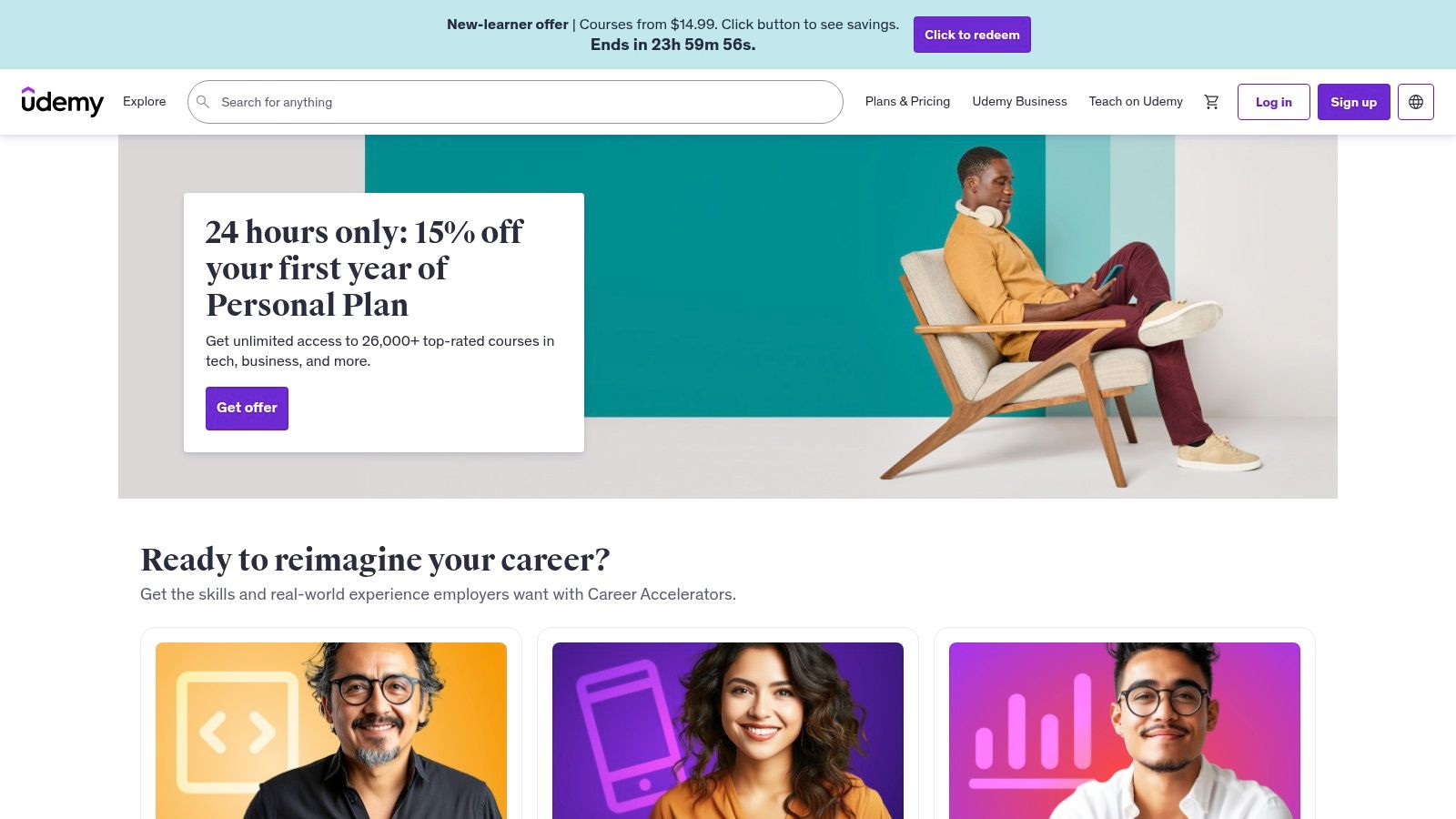
Udemy operates on a per-course purchase model, offering lifetime access once a course is bought. The user experience is straightforward, with powerful search and filtering tools to help users find courses by topic, level, and user rating. Most blockchain courses are priced affordably, and the platform is famous for its frequent and significant sales, making high-quality education highly accessible.
What Makes It Stand Out:
- Broad Ecosystem Coverage: Find courses on not just Ethereum and Solidity, but also on other major blockchains like Solana (Rust), Cardano (Haskell/Plutus), and Polkadot (Substrate).
- Project-Based Learning: The best courses emphasize building real-world projects, such as creating an NFT marketplace, a decentralized exchange, or a voting dApp.
- Instructor Q&A and Community: Most courses feature a Q&A section where students can ask the instructor and teaching assistants questions, fostering an interactive learning environment.
Expert Tip: Before purchasing a course, meticulously review the curriculum, check the "last updated" date, and read recent student reviews. The blockchain space evolves rapidly, so ensure the content is current. Also, use the preview feature to watch a few free lectures to get a feel for the instructor's teaching style.
Pros and Cons Analysis
| Pros | Cons |
|---|---|
| Huge variety of courses for all skill levels | Course quality can be inconsistent; reviews are crucial |
| Self-paced learning with lifetime course access | Content can become outdated if not maintained by the instructor |
| Often includes practical projects and assignments | Not a source of official, canonical documentation |
While the variable quality requires users to be discerning, Udemy’s value proposition is undeniable. It democratizes access to specialized knowledge, allowing anyone with an internet connection to learn from experienced developers. For those who thrive with guided, video-based instruction and want to build a portfolio of projects, Udemy is an essential resource for mastering the programming languages of blockchain.
Official Website: https://www.udemy.com
5. freeCodeCamp
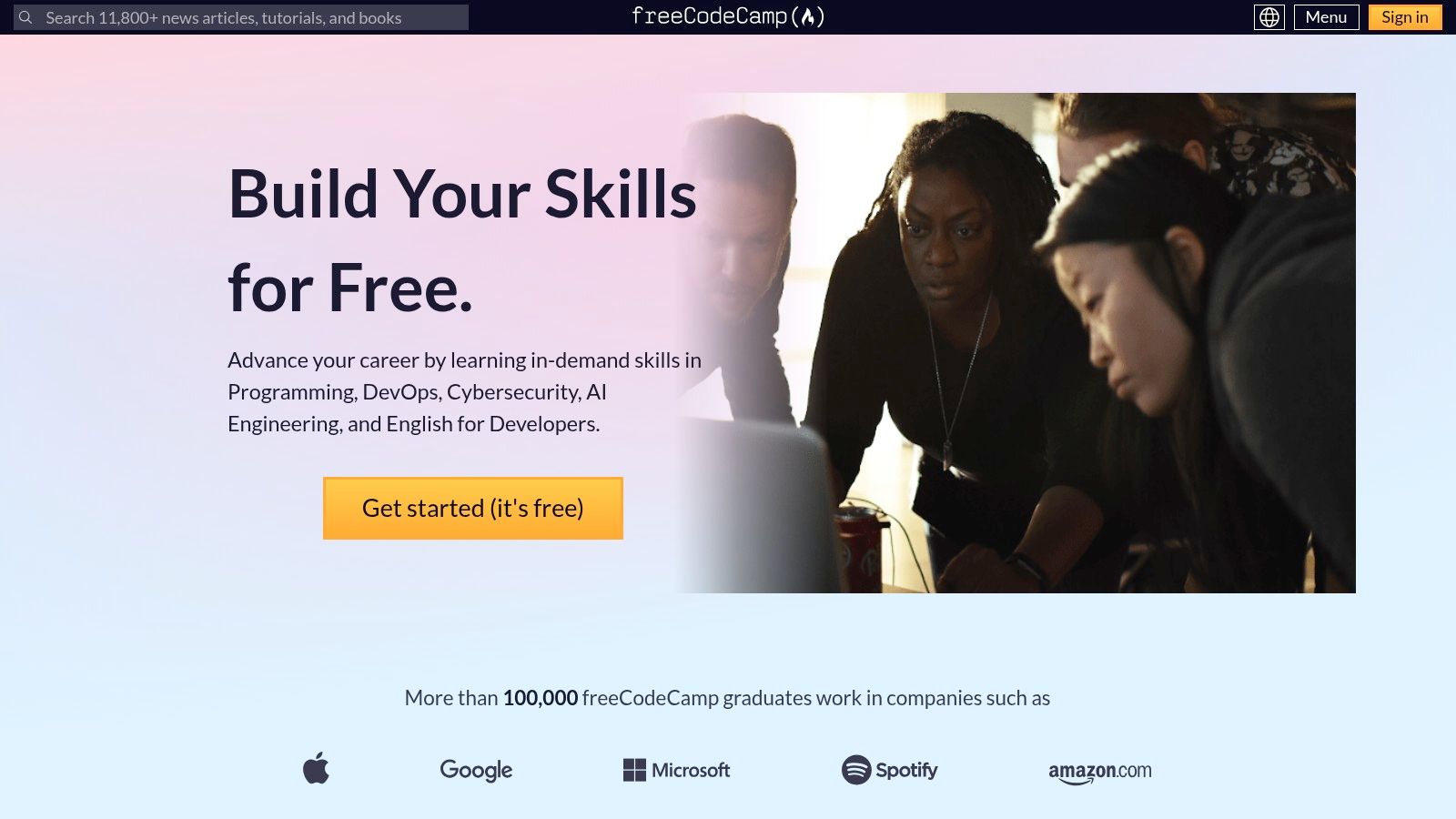
For aspiring developers seeking to enter the blockchain space without a significant financial investment, freeCodeCamp is an unparalleled resource. This nonprofit organization has built a global reputation for providing high-quality, completely free educational content across a vast spectrum of technology. Its mission is to make learning to code accessible to everyone, and this extends robustly into the world of Web3 and blockchain development. The platform is ideal for beginners who need a structured, hands-on path to learn the fundamentals of programming languages blockchain.
freeCodeCamp’s primary strength is its project-based curriculum. Instead of focusing solely on theory, it immerses learners in practical application from the very beginning. Its blockchain courses, often presented as comprehensive, multi-hour video tutorials on YouTube and integrated with articles, guide users through building and deploying real dApps. This approach ensures that students not only understand concepts like Solidity and smart contracts but also gain the tangible skills needed to build a portfolio and prove their competence to potential employers.
Key Offerings and User Experience
freeCodeCamp operates on a simple, no-frills user interface that prioritizes content and learning. The platform is entirely self-paced, allowing individuals to learn around their own schedules without deadlines or pressure. Navigation is straightforward, with clear certifications and course paths laid out for learners. Crucially, every single course, tutorial, and certification is available for free, a core tenet of the organization's philosophy. This is particularly significant in the Web3 space, where the rapid growth has led to many high-priced courses.
What Makes It Stand Out:
- Comprehensive Video Courses: Offers some of the most in-depth, long-form video tutorials on Solidity, Hardhat, and full-stack dApp development available anywhere, often taught by industry professionals.
- Project-Based Certifications: Learners build five required projects to earn each certification, ensuring they have a solid portfolio of work upon completion.
- Massive Community: Provides access to a huge and active community via forums and chat groups, which is invaluable for troubleshooting and peer support.
Expert Tip: Don't just watch the video tutorials. Actively code along with the instructor, pausing to experiment and break things. When you encounter a problem, try to solve it yourself first before turning to the community forums. This struggle is a critical part of the learning process and solidifies your understanding.
Pros and Cons Analysis
| Pros | Cons |
|---|---|
| Completely free access to all resources | Self-paced nature requires high self-discipline |
| Strong emphasis on practical, portfolio-building projects | Lacks personalized mentorship or one-on-one feedback |
| Covers a wide range of technologies beyond just blockchain | Content quality can vary between different courses |
While the lack of direct mentorship might be a challenge for some, the platform's extensive community often fills that gap effectively. For self-motivated individuals, freeCodeCamp offers one of the most effective and cost-efficient pathways to becoming a skilled blockchain developer. Its impact is undeniable, with countless developers attributing their start in the industry to this invaluable resource, a trend reflected in the growing demand for Web3 talent. You can learn more about this trend by reviewing key Web3 statistics.
Official Website: https://www.freecodecamp.org
6. Buildspace
For developers who learn best by doing, Buildspace offers a refreshing, project-based alternative to traditional documentation and theory-heavy courses. It operates on a simple, powerful premise: the fastest way to learn Web3 development is to build real, functional products. This hands-on platform has quickly become a favorite in the developer community for its engaging, cohort-based learning experiences that guide users from an idea to a deployed application. It's an ideal environment for those looking to apply their knowledge of programming languages blockchain in a practical setting.
The platform's core philosophy is to demystify Web3 by focusing on tangible outcomes. Instead of just reading about smart contracts, users write and deploy them. Instead of theorizing about DAOs, they build one. This approach makes complex concepts accessible and gives learners a portfolio of projects they can showcase to potential employers.

Key Offerings and User Experience
Buildspace is designed to feel less like a school and more like a collaborative workshop. The user interface is clean, modern, and highly motivating, with a clear focus on the projects themselves. All courses, or "builds," are completely free, removing any financial barrier to entry. The platform thrives on its vibrant Discord community, where learners can collaborate, get help, and network with peers and instructors.
What Makes It Stand Out:
- Practical, Project-Based Learning: Focuses on building real-world applications like NFT collections, Web3 apps with Solana, or decentralized autonomous organizations (DAOs).
- Supportive Community: Gain access to a massive and active Discord community for real-time support, feedback, and collaboration.
- Portfolio-Worthy Projects: Finish each course with a deployed, functional project that you can add to your professional portfolio.
Expert Tip: Fully engage with the Discord community for your cohort. Many a "blocker" has been solved in minutes by a helpful peer. Also, attend the live sessions and office hours when available; they provide direct access to experienced developers and invaluable insights that go beyond the written content.
Pros and Cons Analysis
| Pros | Cons |
|---|---|
| Hands-on learning with real-world projects | Course selection is more limited than on larger platforms |
| Engaging community for networking and support | May require some prior programming knowledge |
| Completely free access to all courses and resources | Focus is primarily on project execution, less on deep theory |
While Buildspace may not offer the encyclopedic depth of a platform like Ethereum.org, its strength lies in its ability to get developers building and shipping quickly. It bridges the critical gap between theoretical knowledge of a programming language and the practical skills needed to create a Web3 application. For developers eager to turn concepts into code, Buildspace is an unparalleled starting point.
Official Website: https://buildspace.so
7. ConsenSys Academy
For learners seeking a structured, university-like approach to blockchain education, ConsenSys Academy is an elite training ground. As the educational arm of ConsenSys, a leading Ethereum software company, the Academy offers professional-grade training designed to transform enthusiasts into job-ready blockchain developers. Its core mission is to bridge the talent gap in the Web3 space by providing in-depth, expert-led programs that go beyond surface-level tutorials.
The platform's main appeal for those studying programming languages blockchain is its focus on practical, career-oriented skills. It offers comprehensive courses that cover the entire Ethereum development stack, with a strong emphasis on Solidity, smart contract security, and building full-fledged decentralized applications (dApps). The curriculum is designed to simulate real-world development environments, ensuring students gain hands-on experience that is directly applicable to professional roles.

Key Offerings and User Experience
ConsenSys Academy functions like a specialized online bootcamp. The user experience is professional and course-centric, guiding learners through a structured curriculum with clear milestones and objectives. While some introductory materials might be free, its flagship programs, like the Blockchain Developer Bootcamp, are paid courses. This investment grants access to a wealth of resources, including live expert instruction and direct mentorship.
What Makes It Stand Out:
- Structured Curriculum: Offers a comprehensive, end-to-end program that covers everything from blockchain fundamentals to advanced dApp deployment and security audits.
- Expert Mentorship: Provides direct access to industry veterans and experienced developers for guidance, feedback, and live Q&A sessions.
- Real-World Projects: Students build a portfolio of demo projects that mirror real-world use cases, preparing them for technical interviews and on-the-job challenges.
Expert Tip: Fully engage with the mentorship and community aspects. Don't be a passive learner. Use the live workshops and office hours to ask targeted questions about your code and career path. The networking opportunities within your cohort can be as valuable as the technical skills you acquire.
Pros and Cons Analysis
| Pros | Cons |
|---|---|
| Comprehensive, job-focused curriculum | Premium courses require a significant financial investment |
| Direct access to industry experts and mentors | Focuses almost exclusively on the Ethereum ecosystem |
| Excellent networking opportunities with peers | Less suitable for casual learners not seeking a career change |
While the cost and Ethereum-centric nature may be drawbacks for some, ConsenSys Academy's strength lies in its focused, high-quality instruction. It is not just a place to learn a programming language; it is a platform designed to launch a professional career in the Ethereum ecosystem, offering a level of depth, support, and career focus that few other resources can match.
Official Website: https://consensys.net/academy
7-Platform Comparison for Blockchain Programming
| Item | Implementation Complexity 🔄 | Resource Requirements ⚡ | Expected Outcomes 📊 | Ideal Use Cases 💡 | Key Advantages ⭐ |
|---|---|---|---|---|---|
| Jobs – Engineering | Moderate – Browsing and filtering job listings | Low – Mainly browsing online | High – Access to specialized Web3 roles | Engineering jobs seekers in blockchain/Web3 | Comprehensive role aggregation; transparent salaries; up-to-date market insights |
| Ethereum.org | High – Requires understanding blockchain dev | Low – Online access, free | High – Strong foundation in Ethereum dev | Developers building dApps/smart contracts | Authoritative resources; community support; official developer tools |
| CryptoZombies | Low – Interactive and gamified learning | Low – Free, browser-based | Medium – Basic to intermediate Solidity | Beginners learning Solidity programming | Engaging, fun, no prior coding required |
| Udemy | Variable – Depends on chosen course | Medium – Paid courses | Medium to High – Skill certification | Learners at all levels wanting structured courses | Wide course variety; practical projects; flexible learning |
| freeCodeCamp | Moderate – Self-paced learning with challenges | Low – Free access | Medium – Practical coding skills | Self-motivated learners building portfolios | Free access; project-based curriculum; strong community support |
| Buildspace | Moderate – Project-based practical learning | Low – Free access | High – Real-world Web3 app experience | Developers seeking hands-on Web3 projects | Free courses; real projects; supportive community |
| ConsenSys Academy | High – Structured and in-depth learning | Medium to High – Paid options | High – Professional Ethereum development | Aspiring Ethereum developers needing mentorship | Expert mentorship; real-world demos; focused Ethereum curriculum |
Choosing Your Path and Launching Your Web3 Career
Embarking on a journey into Web3 development is an exciting frontier, filled with immense opportunity and constant innovation. Throughout this guide, we've explored a powerful arsenal of resources designed to take you from a curious novice to a proficient blockchain developer. We’ve covered everything from foundational documentation on Ethereum.org to interactive learning with CryptoZombies, structured courses on Udemy, and hands-on, project-based learning via Buildspace. Each platform offers a unique pathway into the world of decentralized applications.
The central takeaway is that there is no single "best" way to learn the programming languages of blockchain. The ideal path is the one that aligns with your personal learning style, career aspirations, and existing skill set. Your mission is to now synthesize this information and forge a customized learning plan that propels you toward your goals.
Synthesizing Your Learning Strategy
To move from learning to earning, you need a deliberate strategy. Avoid passively consuming content; instead, actively build and apply your knowledge. Here's a structured approach to selecting the right resources and building momentum.
1. Define Your Core Objective:
Start with the end in mind. Are you aiming to become a smart contract security auditor, a DeFi protocol engineer, or a full-stack dApp developer? Your answer will dictate which programming languages and platforms to prioritize.
- For Smart Contract Focus: Prioritize Solidity and platforms like CryptoZombies, ConsenSys Academy, and the in-depth documentation on Ethereum.org.
- For High-Performance Chains: If you're interested in ecosystems like Solana or Polkadot, you'll need to look at Rust. Use resources like freeCodeCamp and Udemy to find specialized courses on this language.
- For Full-Stack dApp Development: Combine Solidity knowledge with front-end skills (JavaScript/TypeScript, React). Buildspace is an exceptional resource for this, as it encourages building complete, portfolio-ready projects.
2. Create a Project-Based Curriculum:
Theory alone won't land you a job. The most effective way to master programming languages for blockchain is by building.
- Start Small: Begin with a simple project, like creating your own ERC-20 token or a basic voting dApp.
- Escalate Complexity: Progress to more advanced projects. Replicate a simple feature from a popular DeFi protocol or build an NFT minting website. This hands-on experience is what hiring managers want to see.
Key Insight: A portfolio of 2-3 well-documented, functional dApp projects is far more valuable than a dozen course completion certificates. Focus on creating tangible proof of your skills.
3. Document and Showcase Your Journey:
Your learning process itself is a valuable asset. As you build projects, document your challenges, solutions, and code on platforms like GitHub. This not only reinforces your learning but also creates a compelling narrative for potential employers. When you're ready to apply for roles, presenting this work effectively is crucial. To effectively launch your Web3 career, crafting a strong resume that highlights these projects is essential, and a dedicated resume builder can streamline this process, ensuring your skills and experience are showcased professionally.
Final Thoughts: From Code to Career
The transition into a Web3 career is a marathon, not a sprint. The field of blockchain programming languages is dynamic, with new tools, standards, and best practices emerging constantly. Embrace a mindset of continuous learning and community engagement. Participate in hackathons, contribute to open-source projects, and connect with other developers. Your ability to adapt and grow alongside the technology will be your greatest asset. The resources we've detailed are your launchpad; the trajectory you take is now in your hands. Build, learn, iterate, and become an architect of the decentralized future.
Ready to put your new skills to the test? Find Web3 is the premier job board dedicated exclusively to the Web3 ecosystem, connecting talented developers with innovative companies. Browse curated opportunities in DeFi, NFTs, DAOs, and more to find the perfect role to launch your blockchain career. Start your search today on Find Web3