
Decoding the Decentralized Future: Web3 and Blockchain
Web3 and blockchain are often confused, yet understanding their differences is crucial for navigating the decentralized future. This listicle clarifies seven key distinctions between Web3 and blockchain, outlining their unique roles in the evolving internet landscape. Learn how these technologies differ in architecture, functionality, and impact, covering decentralization paradigms, technical architectures, smart contracts vs. dApps, tokenization, governance, identity systems, and interoperability frameworks. Gain the clarity you need to excel in the Web3 space.
1. Decentralization Paradigms
Understanding the core difference between Web3 and blockchain often starts with grasping their respective approaches to decentralization. While frequently used interchangeably, they represent distinct yet interconnected concepts. Blockchain serves as the foundational technology, a distributed ledger system enabling decentralized record-keeping. Web3, on the other hand, encompasses a broader vision of a decentralized internet ecosystem built upon this foundation. Think of blockchain as the engine and Web3 as the car – the engine powers the vehicle, but the car offers a complete transportation solution. Blockchain primarily focuses on decentralizing specific functions, particularly transaction verification, ensuring transparency and immutability. Web3 leverages this capability to decentralize the entire internet infrastructure, impacting everything from applications and data storage to identity management. This distinction is crucial for anyone navigating the Web3 landscape.
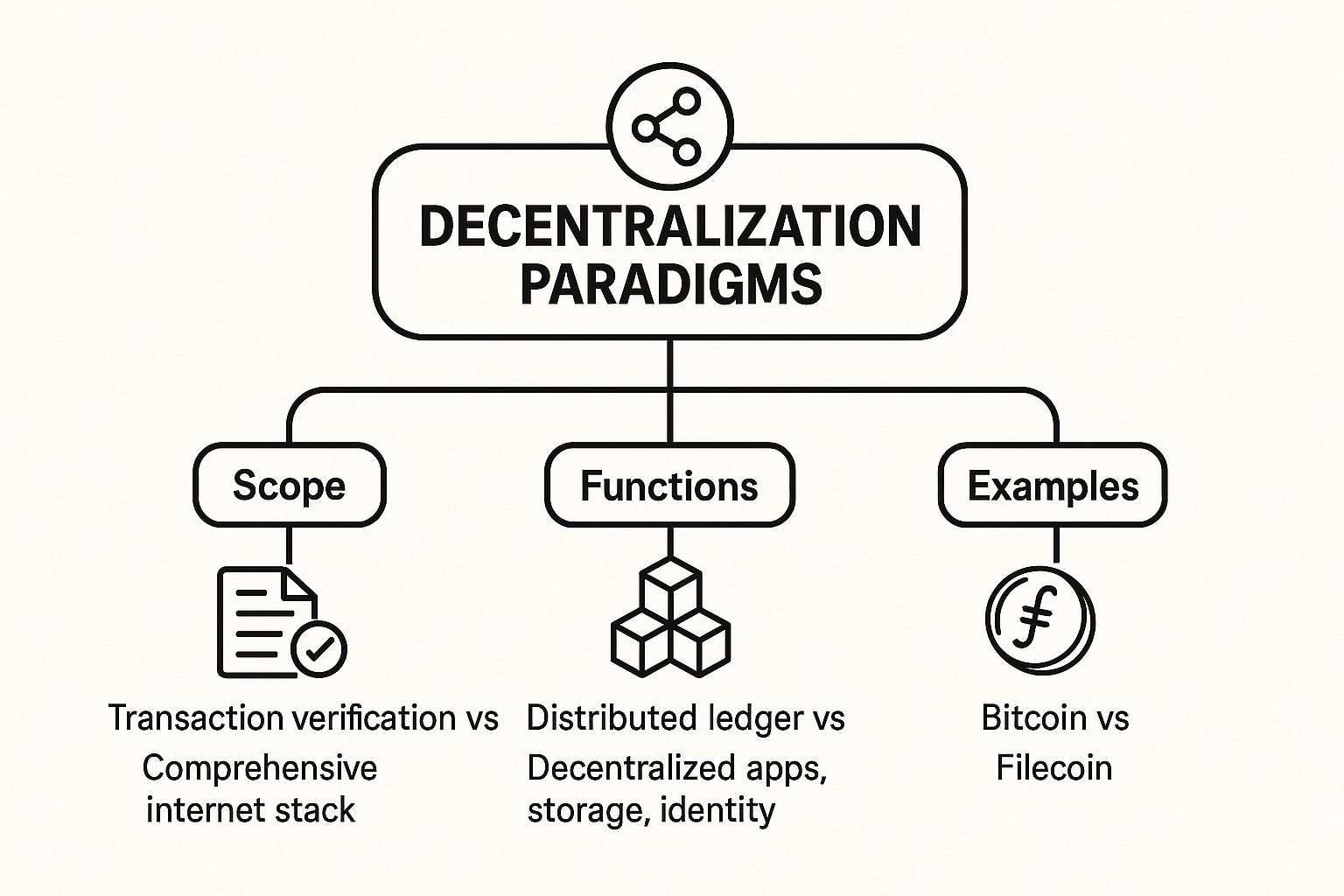
The infographic visualizes the relationship between blockchain and Web3, positioning blockchain as the foundational technology and Web3 as the overarching decentralized internet ecosystem. It highlights the expansion from decentralized transactions (blockchain's core function) to the broader decentralized services encompassed by Web3, including storage, computation, and identity.
This paradigm shift from centralized to decentralized systems offers significant advantages. Reducing central points of failure enhances network resilience, while increased censorship resistance empowers users and protects free speech. Decentralization also grants users greater ownership and control over their data and digital assets, minimizing the need to trust intermediaries. However, full decentralization presents its own set of challenges. It can compromise efficiency and introduce complex governance issues. Technical barriers, including scalability limitations, hinder mass adoption and require ongoing innovation.
Features:
- Blockchain: Distributed ledger technology, Primary focus on transaction verification
- Web3: Comprehensive decentralized internet stack, Encompasses broader decentralized services including storage, computation, and identity
Pros:
- Reduces central points of failure
- Increases censorship resistance
- Provides users with greater ownership and control
- Minimizes trust requirements
Cons:
- Full decentralization often compromises efficiency
- Complex governance challenges
- Technical barriers to mass adoption
- Scalability limitations
Examples:
- Blockchain: Bitcoin network, Ethereum network
- Web3: Filecoin for decentralized storage, Polkadot ecosystem (Web3 interoperability)
Popularized By:
- Satoshi Nakamoto (Bitcoin)
- Vitalik Buterin (Ethereum)
- Gavin Wood (coined 'Web3')
- Juan Benet (IPFS/Filecoin)
Actionable Tips:
- For developers: Explore blockchain platforms like Ethereum and frameworks for building decentralized applications (dApps).
- For designers and product professionals: Focus on user experience in Web3 applications, considering the unique challenges and opportunities presented by decentralized systems.
- For marketing, sales, and customer support: Understand the core values of decentralization and community ownership to effectively communicate with the Web3 audience.
- For HR and recruiters: Identify and attract talent with expertise in blockchain development, smart contracts, and decentralized governance.
- For students and recent graduates: Gain foundational knowledge of blockchain and Web3 through online courses, hackathons, and community involvement.
This understanding of decentralization paradigms is essential for anyone seeking to understand the landscape of Web3 vs. blockchain. It provides a framework for evaluating projects, understanding technological advancements, and ultimately contributing to the evolution of this decentralized future. By grasping the distinct roles of blockchain and Web3, individuals can strategically position themselves for success in this emerging technological landscape.
2. Technical Architecture Comparison
Understanding the architectural differences between blockchain and Web3 is crucial for anyone venturing into this space. This comparison clarifies how these technologies relate and distinguishes their respective roles in the evolving digital landscape. This is a foundational element for anyone looking to understand the "web3 vs blockchain" landscape.
At its core, blockchain is a specific type of distributed ledger technology (DLT). It's a data structure that maintains a continuously growing list of records, called blocks, secured and linked together using cryptography. This chain of blocks forms a verifiable and tamper-proof record of transactions. Think of it as a digital ledger replicated across multiple computers, ensuring transparency and security.
Web3, on the other hand, leverages blockchain as a foundational technology but expands its scope significantly. It envisions a new internet infrastructure built upon decentralized technologies, including blockchain, peer-to-peer networking, and decentralized storage. Web3 aims to create a more democratic and user-centric internet where users have greater control over their data and online interactions.
Here's a breakdown of their key technical features:
Blockchain:
- Chain of cryptographically linked blocks: Each block contains a timestamp and a link to the previous block, creating an immutable chain of records.
- Consensus mechanisms for validation: Mechanisms like Proof-of-Work (PoW) or Proof-of-Stake (PoS) ensure the integrity and validity of transactions added to the blockchain.
Web3:
- Layered architecture with protocols for various functions: Web3 utilizes different protocols for different functionalities, such as data storage, identity management, and decentralized applications (dApps).
- Composable protocols for different services: These protocols can interact and integrate with each other, creating a flexible and evolving ecosystem.
Pros:
- Blockchain: Verifiable transaction history provides transparency and trust.
- Web3: Modular and upgradable components allow for greater flexibility and innovation.
- Web3: Offers greater application versatility, enabling a wider range of decentralized applications and services.
Cons:
- Blockchain: Throughput limitations can lead to scalability challenges.
- Web3: Increased complexity creates development difficulties.
- Web3: Integration challenges between different protocols can hinder interoperability.
Examples:
- Blockchain: Bitcoin's proof-of-work system is a classic example of blockchain technology in action.
- Web3: Chainlink provides decentralized oracles, bridging the gap between real-world data and smart contracts.
- Web3: Arweave offers permanent storage solutions for decentralized applications.
- Web3: The Graph indexes blockchain data, making it easier for dApps to access and query information.
Tips for Developers and Builders:
- Consider trade-offs between decentralization and performance: Highly decentralized systems can sometimes compromise on performance. Finding the right balance is crucial.
- Design with modular components in Web3 stacks: This approach promotes flexibility and allows for easier upgrades and integration.
- Plan for cross-chain interoperability: As the Web3 ecosystem grows, ensuring interoperability between different blockchains and protocols will be essential.
Why this comparison matters:
This comparison is essential because it clarifies the relationship between blockchain and Web3. Blockchain serves as the foundational layer, providing security and transparency, while Web3 builds upon this foundation to create a more decentralized and user-centric internet. Understanding this distinction is key for developers, entrepreneurs, and anyone seeking to participate in the evolving digital landscape. Popularized by organizations like the Ethereum Foundation, Web3 Foundation, ConsenSys, and a16z crypto, these technologies are rapidly changing how we interact online. This knowledge equips individuals across various roles – from developers and designers to marketers and HR professionals – to effectively navigate and contribute to the Web3 revolution.
3. Smart Contracts vs. Decentralized Applications (dApps)
When discussing Web3 vs. blockchain, it's crucial to understand the distinction between smart contracts and decentralized applications (dApps). Smart contracts are self-executing programs residing on a blockchain, automatically enforcing predefined conditions when specific events trigger them. They form the foundational logic for many Web3 applications. Think of them as the automated "if-then" statements that govern interactions within a decentralized environment. Decentralized applications (dApps), on the other hand, are more sophisticated applications built on top of blockchains. They leverage the power of multiple smart contracts, often integrating with decentralized storage, various protocols, and user-friendly frontend interfaces to offer comprehensive user experiences. This relationship is crucial in understanding how Web3 leverages blockchain technology.
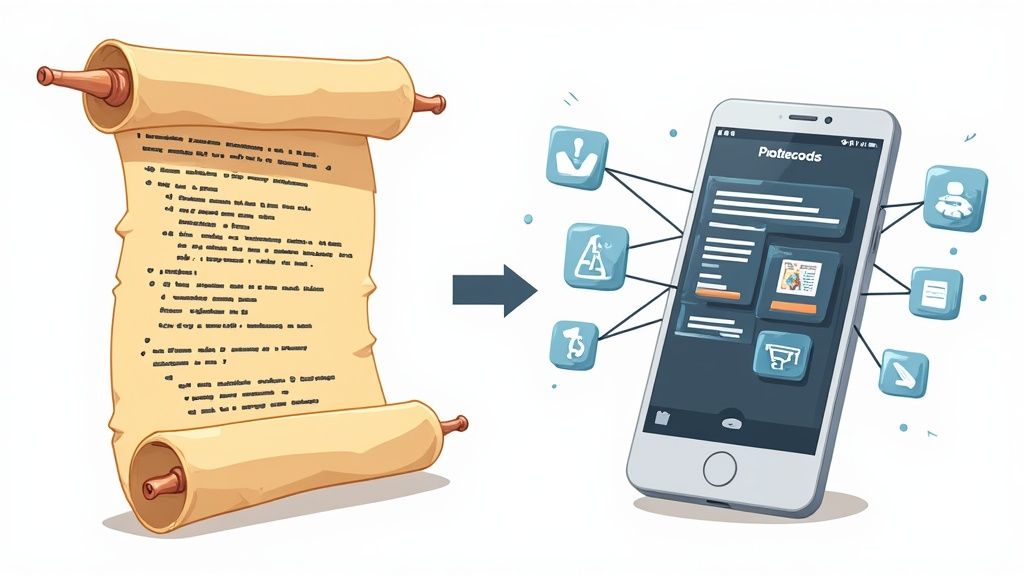
Smart contracts are generally designed for a single purpose, such as facilitating a token swap or executing a specific agreement. dApps, in contrast, are multi-functional and provide rich user interfaces similar to traditional web or mobile applications. Features like user authentication, data management, and interactive displays are common in dApps. For instance, a smart contract might handle the logic for lending and borrowing cryptocurrency, while a dApp like Aave builds a complete user interface around this functionality, allowing users to interact with the protocol seamlessly. Learn more about Smart Contracts vs. Decentralized Applications (dApps)
Features:
- Smart contracts: Automated execution of terms, usually single-purpose.
- dApps: Full applications with frontend and backend components, multi-functional with user interfaces.
Pros:
- Smart contracts: Reduce the need for intermediaries, increase transparency.
- dApps: Provide enhanced user experiences, increase transparency and reduce trust requirements.
- Both: Enhance transparency and reduce reliance on centralized authorities.
Cons:
- Smart contracts: Vulnerabilities in the code can be exploited.
- dApps: Face UX/UI challenges and can be more complex to develop compared to traditional apps.
- Both: Can face scalability limitations depending on the underlying blockchain.
Examples:
- Smart Contracts: Uniswap's smart contracts for automated token swaps.
- dApps: Aave for decentralized lending, OpenSea for trading NFTs, Decentraland for navigating a virtual world. These platforms exemplify how Web3 utilizes blockchain and smart contracts to create decentralized and interactive experiences.
Tips for Developers and Entrepreneurs:
- Security Audits: Conduct rigorous security audits for smart contracts before deployment to mitigate potential vulnerabilities.
- Progressive Decentralization: Consider implementing a progressive decentralization strategy for dApps, starting with a more centralized approach and gradually transitioning to full decentralization.
- User Experience Simplification: Focus on simplifying the user experience for dApps. Web3 applications often have a steeper learning curve compared to traditional web2 applications. Prioritizing intuitive design and user-friendliness is paramount for broader adoption.
Popularized By:
- Smart contracts (concept): Nick Szabo
- dApps and protocols: Uniswap team, MakerDAO contributors, Compound team
This distinction between smart contracts and dApps is fundamental to understanding the architectural landscape of Web3 and how it leverages blockchain technology to build decentralized and user-centric applications. They represent different layers within the Web3 ecosystem, working together to create a more transparent, secure, and user-empowered internet experience.
4. Tokenization Models
Tokenization is a core component of both blockchain and Web3, and understanding the nuances of its application in each context is crucial when comparing the two. While both leverage tokens, their purpose and functionality differ significantly. In blockchain, tokens primarily serve as a medium of exchange and a representation of ownership, similar to how Bitcoin functions as digital gold. Web3 expands upon this foundation, utilizing tokens for a much broader range of functionalities, including governance rights, access permissions, identity verification, and incentivizing network participation. This expanded utility fosters new economic models and unique organizational structures within Web3 ecosystems.
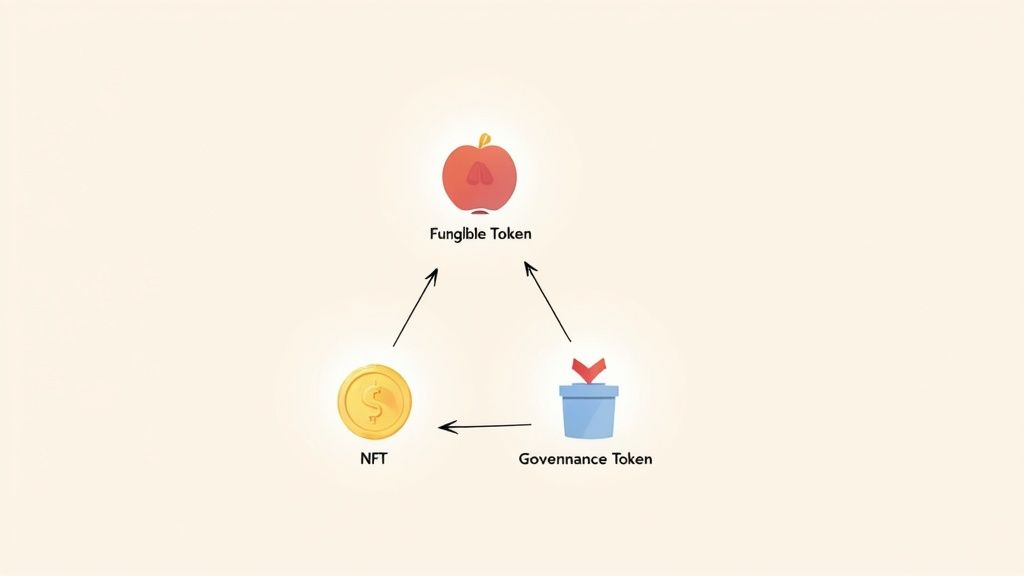
This distinction earns tokenization a key place in the "Web3 vs blockchain" discussion. Delving deeper, we see several token standards emerge within Web3. Fungible tokens, adhering to standards like ERC-20, facilitate the exchange of value and are often used for in-app currencies or utility tokens. Non-fungible tokens (NFTs), following standards like ERC-721 and ERC-1155, represent unique digital assets, opening up possibilities in digital art, collectibles, and even virtual real estate. Furthermore, governance tokens grant holders voting rights in decentralized protocols, showcasing Web3's emphasis on community ownership and decision-making. Utility tokens provide access to specific services or features within a platform.
Examples of successful token implementations highlight these differences. Bitcoin (blockchain) serves primarily as a store of value and medium of exchange. In contrast, Ethereum's native token, ETH, not only functions as a currency but also fuels transactions and smart contracts on the network. Uniswap's UNI token grants governance rights, allowing holders to influence the platform's development. Axie Infinity demonstrates the "play-to-earn" model, utilizing tokens to reward players and create a player-owned economy. These examples illuminate how Web3 tokenization moves beyond basic value transfer to become a powerful tool for building decentralized communities and incentivizing participation.
For developers and entrepreneurs building in the Web3 space, carefully designing token economics is paramount. A sustainable model needs to balance incentives across various stakeholder groups, ensuring long-term value and network stability. Learn more about Tokenization Models for further insights into the job market within the decentralized finance (DeFi) sector, a prime example of tokenization in action.
Pros of Web3 Tokenization:
- Enables fractional ownership of assets
- Creates alignment between users and protocols
- Facilitates new economic models
- Provides incentives for network participation
Cons of Web3 Tokenization:
- Regulatory uncertainty in many jurisdictions
- Price volatility affects utility
- Token distribution challenges
- Speculation often overshadows utility
Tips for Implementing Tokenization:
- Design token economics with long-term sustainability in mind.
- Consider regulatory implications early in the development process.
- Balance incentives across different stakeholder groups (users, developers, investors).
The evolution of tokenization, driven by figures like Vitalik Buterin, CZ (Binance), Sam Bankman-Fried (formerly FTX), and Hayden Adams (Uniswap), represents a significant leap from the simpler transaction-focused models of early blockchain implementations. For those navigating the Web3 landscape, understanding these diverse token models is essential for success.
5. Governance Systems: A Key Differentiator in Web3 vs Blockchain
Governance is a critical aspect differentiating Web3 from its foundational technology, blockchain. While blockchain traditionally focuses on protocol-level governance — determining technical upgrades and network parameters — Web3 expands this to encompass the management of entire ecosystems, inter-protocol coordination, and the emergence of decentralized autonomous organizations (DAOs). Understanding these nuanced governance systems is crucial for anyone navigating the Web3 landscape, from developers to HR professionals.
In the context of Web3 vs Blockchain, blockchain governance often resembles a more traditional corporate structure. Core developers and maintainers propose changes, and the community, often through miners or validators, votes on these proposals. Web3, however, aims for a more decentralized and participatory model. This is where DAOs come in. DAOs operate without centralized management, leveraging smart contracts and token-based voting to automate decision-making and execution. This allows for a more democratic and transparent process. Learn more about Governance Systems for potential career opportunities in this rapidly growing field.
Here’s a breakdown of key features within Web3 governance systems:
- On-chain vs. Off-chain Governance: While blockchain often employs off-chain governance for less critical decisions, Web3 leverages on-chain governance for increased transparency and immutability. This means voting and execution are recorded directly on the blockchain.
- Token-weighted Voting Mechanisms: Tokens often represent voting rights within a DAO, allowing stakeholders to influence decisions proportionally to their holdings.
- Proposal and Implementation Frameworks: Structured processes for submitting, discussing, and implementing proposals ensure organized decision-making.
- Multi-signature Security: Enhanced security measures like multi-signature wallets require multiple parties to approve transactions, mitigating risks of unauthorized actions.
Pros of Web3 Governance:
- Enables stakeholder participation in decision-making: Gives a voice to token holders and community members.
- Reduces central points of control: Distributes power and minimizes the risk of censorship or manipulation.
- Creates transparent governance processes: All actions are recorded on the blockchain, fostering accountability.
- Allows for community-directed evolution: Projects can adapt and evolve based on the collective will of the community.
Cons of Web3 Governance:
- Voter apathy and low participation: Not all token holders actively participate in governance, potentially leading to skewed outcomes.
- Plutocracy risks with token-weighted voting: Large token holders can exert disproportionate influence, creating a potential for plutocracy.
- Governance attacks: Malicious actors can exploit vulnerabilities in the governance system to manipulate outcomes.
- Slow decision-making processes: Reaching consensus can be time-consuming, hindering rapid responses to critical issues.
Successful Implementations:
- Tezos's on-chain governance: Allows token holders to directly vote on protocol upgrades.
- MakerDAO's governance system: Manages the DAI stablecoin through a complex system of voting and collateralization.
- Compound's Governor Alpha and Bravo: Manage the lending and borrowing protocol through token holder voting.
- ENS DAO governance: Oversees the Ethereum Name Service, demonstrating decentralized management of a critical Web3 infrastructure component.
Tips for Implementing Web3 Governance:
- Implement delegation mechanisms to improve participation: Allows token holders to delegate their voting rights to more active participants.
- Start with simplicity and add complexity as needed: Avoid overly complex systems that can discourage participation.
- Consider quadratic voting to balance power: Reduces the influence of large token holders.
- Create clear governance documentation: Ensures transparency and understanding for all participants.
Popularized By:
Platforms like Aragon, DAOstack, Gnosis, and Moloch DAO have been instrumental in developing and popularizing DAO frameworks and tools, making it easier for projects to implement Web3 governance systems.
This decentralized approach to governance is a key differentiator for aspiring Web3 professionals, including blockchain and crypto developers, designers working on NFTs and metaverse experiences, marketing and sales specialists, HR teams, and students looking to enter this exciting new field. Understanding the complexities and opportunities within Web3 governance is essential for navigating this evolving space.
6. Identity and Authentication Systems
Identity and authentication are fundamental components of any online system. In the comparison of web3 vs blockchain, this area reveals a key distinction. While blockchain relies on cryptographic key pairs to control addresses, representing a basic form of identity linked to ownership, web3 takes this concept much further. Web3 aims to establish comprehensive decentralized identity frameworks where users control their own credentials, reputation, and data across multiple services. This approach is a significant departure from traditional, centralized identity systems.
In a blockchain context, your identity is essentially your public key, which acts like an address on the blockchain. You prove control over the assets linked to this address by using your corresponding private key. This is a powerful system for securing ownership, but it's limited in its scope. It doesn't allow for nuanced identity management or the selective sharing of information.
Web3 expands on this basic model through self-sovereign identity (SSI) systems. These systems leverage features like public key cryptography, verifiable credentials, and decentralized identifiers (DIDs) to empower users with greater control. Verifiable credentials are digital representations of real-world credentials, like driver's licenses or university degrees, that can be cryptographically verified. DIDs, on the other hand, are globally unique identifiers that are independent of any centralized authority. Together, these technologies allow users to selectively disclose information to different services without relying on centralized identity providers. For example, you could prove your age without revealing your full date of birth or prove you hold a certain professional certification without sharing all your educational history.
This shift in how we manage identity online has profound implications. Web3's decentralized identity systems are also impacting how we think about digital ownership and creator rights. New approaches are emerging that leverage blockchain technology to establish provenance and control over digital assets.
Several successful implementations of decentralized identity systems are already in use. Ethereum Name Service (ENS) allows users to replace complex alphanumeric addresses with human-readable names, simplifying user experience and identity representation on the Ethereum blockchain. Ceramic Network provides a decentralized data network for building portable, verifiable, and mutable data streams that can be used to manage decentralized identities. Spruce ID and Polygon ID are other examples of platforms building decentralized identity solutions, offering tools and infrastructure for developers to integrate SSI into their applications.
Pros:
- User control of personal data: Individuals regain control over their own data, reducing reliance on third parties and minimizing the risk of data breaches.
- Reduced dependency on centralized identity providers: Eliminates single points of failure and censorship associated with centralized systems.
- Cross-platform identity portability: Identity becomes portable across different platforms and applications, streamlining user experience.
- Selective disclosure capabilities: Allows users to share only the necessary information, enhancing privacy and security.
Cons:
- Key management complexity and recovery challenges: Managing private keys is crucial and losing them can lead to irreversible loss of access.
- Interoperability issues between standards: Different SSI standards are still evolving, and ensuring seamless interoperability between them remains a challenge.
- Regulatory compliance challenges: The regulatory landscape surrounding decentralized identity is still developing, posing potential compliance hurdles.
- Adoption barriers: Widespread adoption of decentralized identity systems requires overcoming technical and user experience challenges.
Tips for implementation:
- Implement social recovery mechanisms: Enable users to recover access to their accounts using trusted contacts, mitigating the risk of losing access due to lost keys.
- Use standards-based approaches for interoperability: Prioritize standards like DIDs and verifiable credentials to ensure compatibility and cross-platform functionality.
- Consider progressive identity adoption strategies: Implement decentralized identity features incrementally to allow users to gradually adapt to new systems.
Pioneering projects like uPort, Sovrin Foundation, Microsoft ION, and the Ethereum Foundation have been instrumental in popularizing and developing decentralized identity solutions. These efforts are paving the way for a future where individuals have greater control over their digital identities, promoting a more secure, private, and user-centric web3 ecosystem. This fundamental difference in identity management is a key factor when considering web3 vs blockchain, showcasing how web3 builds upon the foundation of blockchain to create more complex and user-empowering systems.
7. Interoperability Frameworks: Bridging the Gap Between Web3 and Blockchain
A key distinction between Web3 and blockchain lies in their approach to interoperability. While blockchain often focuses narrowly on asset transfers between different chains, Web3 aims for a much broader vision. This section explores the concept of interoperability frameworks and why it's a crucial differentiator in the "web3 vs blockchain" discussion.
Interoperability in the Web3 context refers to the seamless interaction and data exchange between various decentralized protocols. Imagine a decentralized ecosystem where information and value flow freely, unrestricted by the isolated nature of individual blockchains. This is the promise of Web3 interoperability. It enables the creation of composable applications that leverage the strengths of multiple protocols, fostering innovation and efficiency. This stands in stark contrast to many current blockchain implementations, which often exist as siloed ecosystems.
How it Works:
Web3 interoperability leverages several key technologies:
- Cross-chain bridges: These bridges facilitate the transfer of tokens and data between different blockchains, enabling inter-chain communication and asset portability.
- Layer-0 protocols: These protocols act as a foundational layer beneath multiple blockchains, allowing them to interact seamlessly.
- Middleware solutions: These solutions provide standardized interfaces and services for different decentralized applications to communicate and share data.
- API standardization: Standardized APIs enable developers to build applications that can easily interact with various Web3 protocols, promoting interoperability and code reusability.
Features and Benefits:
- Reduces siloed blockchain ecosystems: Breaks down barriers between different blockchains, allowing for a more interconnected and collaborative ecosystem.
- Enables greater application functionality: Developers can leverage the unique features of multiple protocols to build more powerful and versatile applications.
- Improves capital efficiency: Facilitates the seamless transfer of assets, optimizing capital utilization across different blockchains.
- Facilitates specialization of different protocols: Allows individual blockchains to focus on specific functionalities, contributing to a more specialized and efficient ecosystem.
Examples of Successful Implementation:
- Polkadot's parachain ecosystem: Polkadot uses parachains, specialized blockchains connected to a central relay chain, to achieve interoperability.
- Cosmos IBC (Inter-Blockchain Communication): A standardized protocol for cross-chain communication and token transfers.
- Chainlink as oracle infrastructure: Provides reliable real-world data to various blockchain applications, enabling interoperability with off-chain systems.
- LayerZero cross-chain messaging: Enables lightweight message passing between different blockchains.
Pros and Cons:
| Pros | Cons |
|---|---|
| Reduced siloed blockchain ecosystems | Increased attack surface |
| Enables greater application functionality | Security vulnerabilities in bridges |
| Improves capital efficiency | Complexity increases development costs |
| Facilitates specialization of protocols | Potential for cascading failures |
Actionable Tips for Developers:
- Implement strict security measures for bridges, including thorough audits and robust monitoring.
- Consider eventual consistency models for cross-chain interactions to improve scalability and resilience.
- Start with limited cross-chain interactions and expand gradually to manage complexity and risk.
When and Why to Use This Approach:
Interoperability frameworks are essential for any Web3 project that aims to interact with multiple protocols or leverage the broader decentralized ecosystem. This approach is crucial for:
- Decentralized finance (DeFi) applications: Enables cross-chain asset swaps, lending, and borrowing.
- Non-fungible token (NFT) marketplaces: Facilitates the transfer and trading of NFTs across different blockchains.
- Metaverse platforms: Enables interoperability between different virtual worlds and digital assets.
Popularized By: Gavin Wood (Polkadot), Jae Kwon and Ethan Buchman (Cosmos), Sergey Nazarov (Chainlink), Parity Technologies
This area of development is crucial for the future of Web3. It addresses a core limitation of individual blockchains, paving the way for a truly interconnected and powerful decentralized ecosystem. This focus on comprehensive interoperability is a defining characteristic in the "web3 vs blockchain" comparison, demonstrating the evolutionary leap Web3 represents.
7-Aspect Web3 vs Blockchain Comparison
| Concept | Implementation Complexity 🔄 | Resource Requirements ⚡ | Expected Outcomes 📊 | Ideal Use Cases 💡 | Key Advantages ⭐ |
|---|---|---|---|---|---|
| Decentralization Paradigms | Medium – Complex governance and scalability issues | High – Distributed infrastructure demands | Decentralized control, reduced censorship, user ownership | Broad decentralization (internet, apps, storage, identity) | Resilient networks, trust minimization, censorship resistance |
| Technical Architecture Comparison | High – Layered and modular but integration complex | High – Requires multi-protocol support | Verifiable data integrity, modular app ecosystems | Designing scalable, interoperable decentralized stacks | Modularity, upgradability, versatile decentralized services |
| Smart Contracts vs. dApps | Medium – Smart contracts simpler; dApps more complex | Medium – Smart contracts need blockchain resources | Automated execution vs full user experience apps | Automated processes (contracts) and user-facing apps (dApps) | Transparency, trust reduction, enhanced UX (dApps) |
| Tokenization Models | Medium – Token design and regulatory compliance | Medium – Network usage, token distribution logistics | Asset fractionalization, incentives, governance rights | Asset representation, governance, incentives | New economic models, user alignment, network incentives |
| Governance Systems | High – Multi-level and token-based voting systems | Medium – Protocol and community participation costs | Transparent, stakeholder-driven protocol evolution | Decentralized protocol and ecosystem management | Community control, transparency, reduced central authority |
| Identity and Authentication Systems | Medium – SSI and verifiable credentials standards | Medium – Key management, identity protocol support | User-controlled identity, privacy, cross-platform use | Decentralized identity, selective info disclosure | User data control, decentralization, privacy enhancement |
| Interoperability Frameworks | High – Cross-chain bridges and protocols complexity | High – Secure bridges and middleware infrastructure | Seamless multi-protocol interactions, asset and data flow | Cross-chain communication and multi-protocol integration | Ecosystem connectivity, capital efficiency, specialization |
Navigating the Web3 and Blockchain Landscape
Understanding the nuances of "web3 vs blockchain" is paramount for anyone venturing into this transformative digital frontier. This article has explored key distinctions, from the decentralized paradigms underpinning both to the technical architecture that sets them apart. We've delved into the functionalities of smart contracts and dApps, compared various tokenization models, and examined the governance and identity systems shaping the future of the internet. Mastering these concepts is not just about understanding technology; it's about unlocking the potential of a more democratic, secure, and user-centric online experience. From developers building the infrastructure to marketers crafting compelling narratives, a deep understanding of how Web3 leverages blockchain is crucial for success in this rapidly evolving space. The interplay between Web3 and blockchain will continue to redefine industries, creating unprecedented opportunities for innovation and growth. By grasping the core principles outlined here, you can position yourself to be a leader in this exciting technological revolution.
Ready to take the next step in your Web3 journey? Find Web3 offers a curated selection of Web3 jobs, insights, and industry updates to help you navigate the "web3 vs blockchain" landscape and find the perfect opportunity. Explore the latest listings and connect with leading companies building the future of the internet at Find Web3.