
Understanding What You Actually Need in Blockchain Talent
Hiring blockchain developers isn't about chasing the latest buzzwords. It's about pinpointing the exact expertise needed to tackle your specific business challenges. I’ve seen firsthand how companies get caught up in the hype, hiring for impressive-sounding skills only to realize later they missed the mark entirely. Think you absolutely need a Solidity expert? Maybe you actually need someone who understands supply chain logistics and can build a permissioned ledger system. That kind of mismatch happens more often than you'd think, and it's a costly mistake.
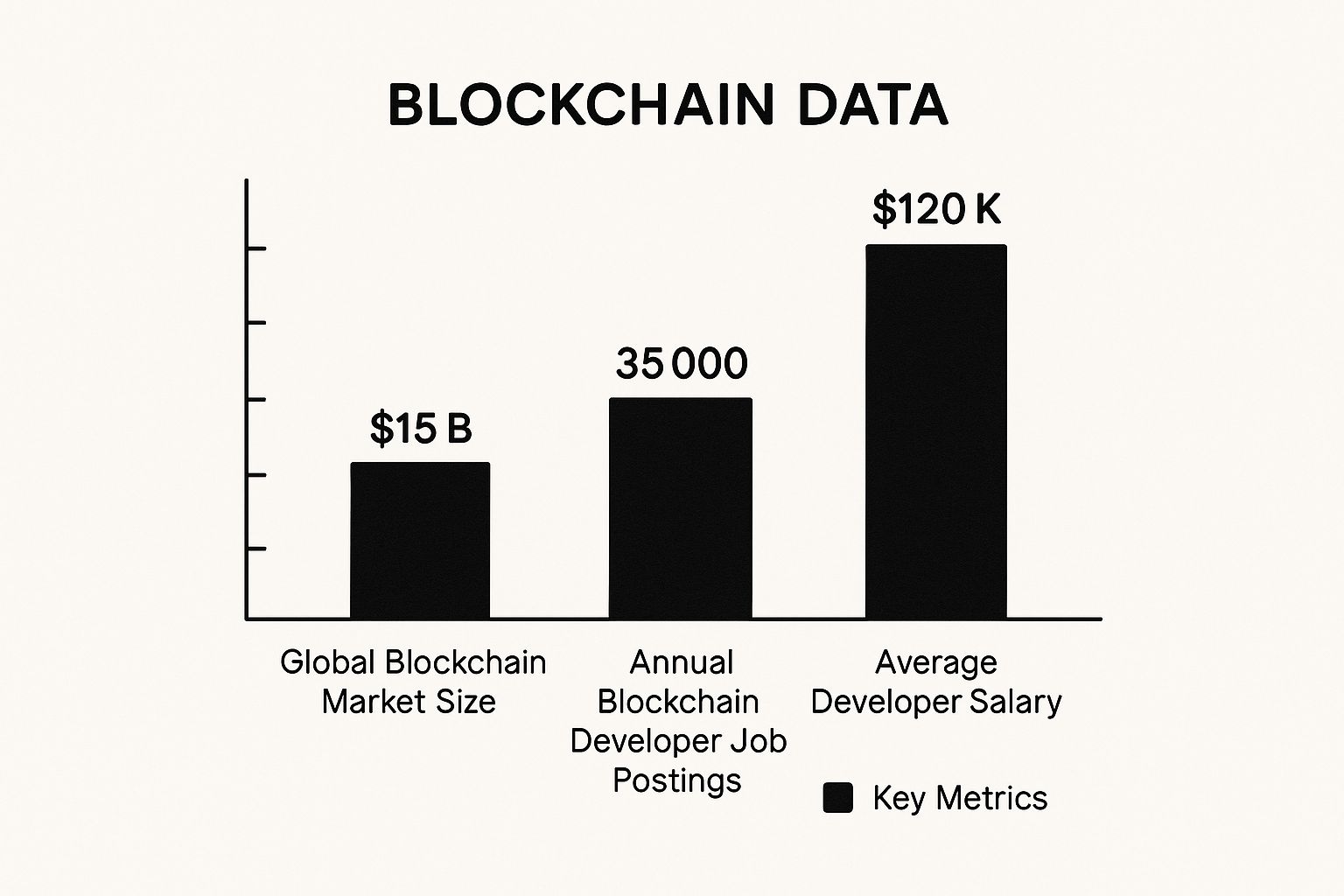
This infographic highlights key market data, including global market size, annual job postings, and average developer salaries. It paints a clear picture of the blockchain sector's significant growth and the high demand for skilled professionals, which naturally leads to competitive salaries. Attracting and retaining top talent means understanding the nuances of different developer roles and their specific skill sets. Knowing where to find these talented individuals is also essential. Nearshore Business Solutions is a great starting point.
Different Types of Blockchain Developers and Their Specialties
When building your blockchain team, it’s crucial to understand the different specializations within this field. There's no such thing as a generic "blockchain developer," just like there's no single "software developer" in traditional software development. A Smart Contract Developer skilled in Solidity or Rust is essential for building decentralized applications (dApps). However, their expertise might not translate well if you're integrating blockchain with your existing systems. In that scenario, a Blockchain Architect or a Backend Blockchain Developer experienced in bridging legacy systems and distributed ledgers would be a much better fit.
To help illustrate the different roles and required skills, I’ve put together this comparison table:
Blockchain Developer Roles and Key Skills Comparison
| Developer Type | Primary Focus | Key Technologies | Average Experience Needed |
|---|---|---|---|
| Core Blockchain Developer | Blockchain protocol development, consensus mechanisms, network architecture | C++, Go, Python, cryptography | 5+ years |
| Smart Contract Developer | Designing, developing, and testing smart contracts | Solidity, Rust, Vyper, Web3.js | 3+ years |
| Blockchain Architect | Designing and implementing overall blockchain solutions, integrating with existing systems | Hyperledger Fabric, Corda, Ethereum, cloud platforms | 7+ years |
| Backend Blockchain Developer | Connecting blockchain with backend systems, APIs, databases | Node.js, Python, Java, REST APIs | 4+ years |
| Cryptocurrency Developer | Developing and maintaining cryptocurrencies, wallets, exchanges | Bitcoin Core, C++, cryptography, blockchain security | 5+ years |
This table gives you a quick overview of the diverse roles within blockchain development. Each specialization requires a unique blend of skills and experience.
The demand for blockchain developers is only expected to grow. Projections suggest a 22% increase by 2025, surpassing the average growth for other tech roles. You can find more details on this trend here. This increasing demand means you need to hire not only for your current needs but also for future growth and adaptability within the evolving blockchain landscape. Thinking ahead will save you headaches down the road. Find Web3 Jobs can also be a valuable resource.
Understanding the different blockchain roles will allow you to focus your search effectively and avoid costly hiring mishaps. It's the foundation for building a successful blockchain team that can achieve your long-term objectives.
Finding Hidden Gems in the Blockchain Community
Forget the usual suspects like LinkedIn and Indeed. If you're after truly exceptional blockchain developers, you've got to think outside the traditional job board box. The real talent is immersed in the blockchain ecosystem itself – they’re building protocols, contributing to open-source projects, and actively participating in communities you might not even know exist. It's like searching for rare gemstones – you won't find them in a department store; you have to go where they're mined.
Beyond the Resume: Identifying True Blockchain Talent
Building a strong team starts with the right talent acquisition strategies. Talent Acquisition can be a great resource. But instead of fixating on resumes, focus on a developer’s contributions. Look for active GitHub repositories showcasing innovative projects, participation in hackathons, and insightful contributions to technical discussions on platforms like Twitter. These are the unofficial portfolios that reveal a developer's true passion and capabilities.
Just look at the numbers: in 2023 alone, blockchain-related job roles (developers, smart contract auditors, crypto marketing specialists, etc.) saw a 70% increase. Platforms like Glassdoor mirrored this surge with a 118% year-over-year increase in crypto-related job postings. You can dig deeper into these trends here. This intense competition makes finding talent off the beaten path even more critical.
Engaging Authentically in Web3 Communities

Navigating Web3 communities requires a genuine approach. Don't just parachute into a Discord server and start blasting job ads. Engage in real conversations, contribute to discussions, and show a genuine interest in the community's projects. Building relationships takes time and effort. It's just like networking at a conference – you wouldn't just shove your business card at everyone and expect miracles. You’d build connections through meaningful conversations.
Why Technical Credibility Trumps Salary (Sometimes)
Often, top blockchain developers prioritize interesting technical challenges and the chance to contribute to impactful projects over a fat paycheck. They're driven by the technology's potential and want to work with companies that share that vision.
So, how do you attract them? Showcase your company's technical credibility. Highlight your existing blockchain projects, open-source your code, and actively participate in the development community. This builds trust and attracts developers genuinely interested in what you're doing. For instance, showcasing a complex smart contract architecture you've developed can be way more attractive than just advertising a high salary. That kind of thing resonates with developers passionate about pushing the boundaries of blockchain technology.
Evaluating Skills That Actually Matter
When hiring blockchain developers, many companies trip up by focusing on superficial knowledge instead of practical skills. From my experience working with seasoned developers and hiring managers, the best way to evaluate a candidate is to see how they think, not just what facts they've memorized. Ditch the rote syntax tests and prioritize architectural thinking. Don't be swayed by someone who can parrot blockchain buzzwords but can't debug a real problem.
Assessing Real-World Blockchain Skills
Let's say you're building a decentralized exchange. You wouldn't want a developer who can only define a Merkle tree. You'd need someone who can anticipate vulnerabilities and design secure smart contracts. This takes a deep understanding of gas optimization and the implications of every design choice. The best evaluations reveal this level of understanding.
For instance, give candidates a real-world scenario like a smart contract with a security flaw. Ask them to find the issue, explain its impact, and propose a fix. This will tell you much more than a simple definition ever could.
Red Flags and Genuine Expertise
The goal is to separate developers who truly grasp blockchain fundamentals from those who’ve just watched a few online tutorials. Some red flags to watch out for include an inability to explain basic concepts in their own words, over-reliance on jargon, or difficulty applying knowledge to practical scenarios.
On the other hand, a strong candidate can discuss trade-offs between consensus mechanisms like Proof-of-Work vs. Proof-of-Stake, explain the impact of gas costs on smart contract design, and confidently tackle real blockchain challenges. They demonstrate understanding, not just memorization.
Practical Coding Exercises and Architectural Discussions
Hands-on coding is crucial. Ask candidates to optimize a simple Solidity contract for gas efficiency or implement a specific blockchain function. But don't stop there. Delve into architectural discussions. Ask them how they would approach building a scalable decentralized application or integrating blockchain with existing systems. This will show you if they can think beyond individual components and consider the overall system design. Looking at real-world engineering roles on sites like Find Web3 can give you a better sense of the practical skills needed in this field.
Sample Technical Questions and Evaluation Frameworks
Here are a few technical questions that can help you gauge a candidate's depth of understanding:
- "Explain how you would optimize a Solidity contract for gas efficiency. Provide specific examples."
- "Describe a challenging blockchain project you worked on and explain the architectural decisions you made."
- "What are the trade-offs between different consensus mechanisms (Proof-of-Work, Proof-of-Stake, etc.)? Which one would you choose for a specific use case and why?"
Questions like these encourage detailed responses and reveal true expertise. Remember, when hiring blockchain developers, you're not just hiring coders; you're hiring architects and problem-solvers who can build the future of decentralized technology.
To help structure your evaluation process, consider using a framework like the one below:
A well-defined evaluation process is key to hiring the right blockchain developers. The following table offers a structured approach to assessing different technical competencies.
Technical Assessment Framework for Blockchain Developers
Structured approach to evaluating different technical competencies with specific assessment methods and evaluation criteria
| Skill Area | Assessment Method | Key Indicators | Red Flags |
|---|---|---|---|
| Smart Contract Development | Code review, practical coding exercise (e.g., build a simple ERC-20 token) | Clean, well-documented code; understanding of gas optimization; secure coding practices | Inability to explain code functionality; lack of security considerations; inefficient code |
| Blockchain Architecture | Design exercise (e.g., design a decentralized application), architectural discussion | Understanding of different blockchain architectures; ability to design scalable and secure systems; knowledge of different consensus mechanisms | Overly generic solutions; lack of understanding of scalability and security challenges; inability to justify design choices |
| Problem-Solving | Real-world scenario questions (e.g., debug a faulty smart contract) | Ability to identify and analyze problems; creative solutions; clear explanation of the problem-solving process | Difficulty understanding the problem; inability to propose viable solutions; lack of clear explanation |
| Communication & Collaboration | Teamwork exercise, open-ended questions | Clear and concise communication; ability to explain complex concepts; willingness to collaborate and share knowledge | Difficulty explaining technical concepts; reluctance to work collaboratively; poor communication skills |
This table provides a starting point for creating your own assessment framework. Adapt it to your specific needs and remember to focus on evaluating practical skills and problem-solving abilities.

Interviewing Beyond the Technical Checklist
Finding a top-notch blockchain developer isn't just about ticking off technical skills on a checklist. The truly great ones are driven by a genuine passion for the transformative potential of decentralized tech. They're the ones geeking out over cryptography and dreaming of disrupting traditional systems. So, your interviews need to dig into that mindset while, of course, making sure they have the coding chops.
Uncovering Passion vs. Trend-Chasing
Look, you're not hiring a code monkey, you're hiring someone who believes in the mission. The hiring managers I know who consistently snag amazing talent treat interviews like conversations, not interrogations. Instead of just grilling candidates on technical trivia, try asking about their contributions to open-source projects, their perspective on the future of DeFi, or their favorite blockchain protocol. These discussions quickly reveal whether someone's truly passionate or just riding the hype wave.
For example, a simple question like, "What excites you most about the potential of blockchain?" can unlock a treasure trove of insights into a candidate's motivations. It’s way more revealing than a dry technical quiz.
Assessing Architectural Thinking and Communication Skills
When you’re diving into past projects, don't just focus on the what. Explore the why. Ask them about the reasoning behind their design choices. Even better, ask them to explain a complex concept as if they were talking to a non-technical stakeholder. This shows you how they think architecturally and how well they communicate. Can they translate complex ideas into clear, understandable language? That's a must-have for any blockchain developer working on real-world projects. When evaluating essential skills, it’s invaluable to consider practical approaches, like understanding how other companies approach hiring.
Another effective tactic is to ask something like, "Imagine you need to explain the benefits of your blockchain project to a CEO who knows nothing about the technology. How would you do it?" This really tests their ability to bridge the gap between technical expertise and business understanding.
Evaluating Cultural Fit and Adaptability
Remember, you’re building a team. Cultural fit is paramount. Do they thrive in collaborative environments? Are they comfortable with the fast-paced, ever-evolving nature of the blockchain space? You don't just want someone who executes orders; you want someone who can contribute to strategic decisions.
Also, given the largely remote nature of blockchain development, it’s crucial to assess their ability to work independently and communicate effectively within a distributed team. Ask about their preferred work style and how they manage asynchronous communication. These factors are critical for long-term success.
Crafting Offers That Win in a Competitive Market
Blockchain developers are hot commodities. Seriously, they're often juggling multiple offers, so yours needs to be more than just a number. After countless hiring campaigns and chats with developers themselves, I've learned it's about telling a story that clicks with their ambitions and career goals. Forget generic templates, this is about connection.
Benchmarking Salaries and Equity in the Blockchain World
First things first: you have to know the going rate. Benchmarking salaries in this fast-moving world isn't always straightforward, but resources like Find Web3 jobs in Crypto can give you a solid starting point. Check out similar roles in your area and factor in the candidate’s experience level. And don’t forget, equity can be just as appealing as cash, especially for developers who understand tokenomics. A smart equity package can be a real game-changer.
For instance, offering equity that vests over time shows you're serious about their long-term contribution. It says, "We're not just looking for a quick hire, we want you to grow with us."
Showcasing Your Mission and Non-Monetary Perks
Many blockchain developers are driven by purpose, especially those looking to make a real difference with technology. Be clear about your company’s vision and how their work will contribute. This speaks volumes to developers who want to build something meaningful.
Beyond the dollars and cents (or tokens!), consider the perks. A dedicated conference budget for major blockchain events shows you value their professional growth. Letting them contribute to open-source projects signals your commitment to the wider blockchain community. These extras can often be the deciding factor.
Negotiation Strategies and Understanding Developer Motivations
Negotiating effectively means understanding what makes them tick. They might be choosing between your established company and a cutting-edge DeFi startup. Be ready to talk about the technical meat of your project. Highlight the chance to tackle unique challenges and contribute to a rapidly evolving field.
Let's say a candidate is passionate about decentralized finance. Emphasize how your project connects to that space or provides related learning experiences. It's all about tailoring your offer to their individual passions.
Real-World Examples and Common Mistakes
Here's a scenario I've seen play out: offering a standard equity package without explaining its potential within your company's growth trajectory. That’s a major missed opportunity! Instead, explain how that equity could grow in value as your project gains traction. Show them a glimpse of their future success alongside yours.
Another frequent slip-up? Forgetting professional development. Offering a decent conference budget and dedicated time for learning can significantly boost your offer's attractiveness. These seemingly minor details can make all the difference when a developer is weighing their options. By understanding what drives blockchain developers, you can create offers that not only attract top talent but also lay the groundwork for a successful long-term partnership.
Setting Up New Hires for Long-Term Success
Hiring isn't just about filling a seat; it's about cultivating a team that thrives. Whether it's your first blockchain developer or you're expanding your crew, long-term success hinges on how well you set up your new hires. It's all about crafting an onboarding experience that blends quick technical integration with a real sense of connection and belonging.
Structuring the First 90 Days for Blockchain Developers
Those first 90 days are crucial. Think of it as a roadmap for their journey with your company. You need to structure it to address both the technical side and the social aspect of joining a new team.
Technical Ramp-Up: Forget throwing them in the deep end. Provide clear learning paths and access to the tools and resources they’ll actually use. Pairing them with a senior developer for guidance and support is invaluable. I've seen firsthand how this accelerates the learning curve and boosts confidence.
Relationship Building: Introductions to team members and key stakeholders are just the beginning. Informal team lunches or virtual coffee chats can do wonders. These casual interactions build rapport and make the technical onboarding much smoother. Trust me, it makes a difference.
Addressing the Unique Challenges of Blockchain Development
Blockchain development comes with its own set of onboarding hurdles. Your existing team might not be completely up to speed on the intricacies of distributed systems, for example. Bridging this knowledge gap is key for everyone to work effectively together.
Internal Education: Consider workshops or training sessions to introduce core blockchain concepts to other teams. This shared understanding paves the way for smooth cross-functional collaboration.
Clear Success Metrics: How do you measure success in this unique field? Lines of code aren't the whole story. Think about metrics like smart contract security or gas efficiency—things that truly reflect the value a blockchain developer brings.
Fostering Growth and Retention in a Fast-Paced Field
Blockchain is constantly evolving. To keep your top talent, you need to feed their curiosity and support continuous learning. This might mean sponsoring conference attendance, providing access to online courses, or encouraging involvement in open-source projects.
Mentorship Programs: Pairing new hires with seasoned blockchain developers offers more than just technical guidance; it fosters a sense of community. This can be incredibly valuable, especially in a rapidly changing field.
Growth Opportunities: Give your developers a chance to stretch their skills. Challenging projects that contribute meaningfully to the company’s blockchain initiatives not only boost their professional growth but also strengthen their connection to the company’s mission.
This commitment to continuous learning shows you’re invested in their development. It keeps them engaged and excited about the world of blockchain. Regular feedback is also essential. It helps new hires contribute meaningfully from day one and feel valued for their expertise. It also lets you address any roadblocks quickly. Ultimately, creating an environment where blockchain developers can thrive benefits the whole team and drives long-term success. It's a win-win.
Your Practical Blockchain Hiring Action Plan
Everything we’ve discussed comes down to this: a practical plan for building a killer blockchain development team. Whether you're hiring your first blockchain developer or expanding your current team, this plan brings together key strategies, potential pitfalls, and ways to measure success into actionable steps.
A Phased Approach to Hiring Blockchain Developers
Building a top-notch blockchain team isn’t something that happens overnight. It takes time and a structured approach. Think marathon, not sprint. Here’s how I like to break down the process:
Phase 1: Define Your Needs (1-2 weeks): Get crystal clear on your project’s technical needs. Are you looking for a Solidity expert to build smart contracts, or a backend developer who knows how to integrate blockchain with your current systems? Defining roles and responsibilities upfront saves you from headaches (and expensive mismatches) down the line.
Phase 2: Source and Evaluate (2-4 weeks): Don’t just rely on the usual job boards. Get involved in the blockchain community! Check out places like Discord, GitHub, and Twitter. Your technical assessments should focus on problem-solving and architectural thinking, not just whether someone knows the syntax. You want builders, not just coders.
Phase 3: Interview and Select (1-2 weeks): Technical skills are a must, but don't forget about cultural fit and genuine passion for blockchain. Ask about their contributions to open-source projects or what they think about the future of DeFi. These conversations will tell you way more than a technical checklist ever could. I’ve found that digging into personal projects often reveals a candidate’s true enthusiasm.
Phase 4: Onboarding and Growth (Ongoing): The first 90 days are critical. Make sure new hires have a clear learning path and access to mentors. Cultivate a culture of continuous learning and give them the tools and resources they need to stay on top of this fast-moving field. From my experience, providing access to conferences and online courses goes a long way.
Realistic Timelines and Metrics
The competition for blockchain talent is fierce, so be realistic about your timelines. Expect the whole process, from defining your needs to onboarding, to take 6-8 weeks, maybe even longer for those highly specialized roles.
Don’t just track time-to-hire. Think about these metrics, too:
Quality of Hire: Are your new hires making a real impact on your projects? Are they meeting your performance expectations?
Retention Rate: Are you keeping your blockchain developers engaged and challenged? High turnover can really set you back.
Team Cohesion: Are your blockchain developers working well with other teams? Collaboration is essential for any project to succeed.
Avoiding Common Pitfalls
Don't get caught up in the blockchain hype: Look for practical skills and problem-solving abilities, not just buzzwords.
Don't underestimate cultural fit: A brilliant developer who doesn't mesh with your team’s values can disrupt the entire dynamic.
Don't neglect ongoing learning and development: The blockchain world changes constantly. Give your developers the chance to stay current and expand their expertise.
Adapting to Market Conditions
Be flexible and ready to tweak your hiring strategy based on what's happening in the market. If you're struggling to find experienced blockchain developers, think about investing in training programs for your existing team or partnering with a blockchain development agency.
By following this plan, you can build a blockchain team that not only meets your current needs but also grows and adapts with this exciting technology. Need help finding great blockchain developers? Find Web3 is a fantastic resource for Web3 opportunities.