
Understanding the Real Blockchain Job Market
So, you’ve been grinding away, learning the ins and outs of blockchain, and now you’re ready to land a job. Before you rush to polish your resume, let’s talk about what’s really going on in the minds of hiring managers. I’ve had conversations with CTOs from huge exchanges and fast-moving startups, and a common theme pops up: too many candidates know the how but not the why. They can code a smart contract but struggle to explain the business reason for its existence. Grasping this distinction is your first real competitive advantage.
Beyond the Code: What Hiring Managers Actually Want
Ever had a great interview for a developer role only to get ghosted? It’s a frustratingly common story, and the reason often boils down to a mindset mismatch. Blockchain companies aren't just shipping code; they're creating new financial and social systems from the ground up. They need people who can think on that level. It's less about your raw coding speed and more about your blockchain thinking. Can you intelligently discuss the pros and cons of different consensus mechanisms or analyze the tokenomics of a new protocol?
Companies are looking for a particular kind of person who fits their unique culture. Successful teams consistently hire candidates who demonstrate:
- Genuine Passion: They want to see you’re truly in the space. This means you might be contributing to a DAO, actively debating protocols on Twitter, or building small side projects—not just looking for the next high-paying trend.
- Product Awareness: You need to think about the end-user and the business goals. Who is this for? What problem does it solve? Your ability to connect technical details to a real-world use case is critical.
- A Security-First Approach: In an industry where one small bug can lead to millions in losses, proving you have a deep respect for security isn't just a plus; it's a must-have.
Not All Blockchain Companies Are Created Equal
A one-size-fits-all job search is a recipe for disappointment. The skills that make you an ideal candidate for a DeFi protocol might not be what an enterprise blockchain company is looking for. You need to pick your lane.
Think about the different corners of the industry:
- DeFi Protocols: These teams operate on the front lines of financial innovation. They need developers with a strong grasp of smart contracts, economic principles, and advanced risk management.
- Enterprise Blockchain: Here, the focus is on stability, scalability, and integration. Companies working on solutions for supply chain or digital identity need people who understand corporate needs and have experience with permissioned ledgers.
- NFT & Gaming Platforms: In this world, community and culture are king. These teams want people who get the culture, understand user engagement, and can build products that create passionate followings.
Figuring out where your interests and skills fit best is a key part of the process. This incredible diversity is fueled by the industry’s explosive growth, which is set to expand from $18.3 billion in 2024 to a staggering $1.41 trillion by 2034. That reflects a compound annual growth rate of 53.6%, which means even more specialized roles will continue to open up. Discover more on the market's explosive growth.
Building Skills That Actually Get You Hired

We've talked about getting into a "blockchain mindset," but now it’s time to get practical. Landing a job in this space isn't about acing a single programming language. Hiring managers are looking for people who get the whole picture, from the deep technical guts of a protocol to the economic incentives that keep it running.
This blend of skills is what makes a candidate stand out. It’s the difference between someone who dabbles in crypto and someone who can build a career in it.
Beyond Just Knowing Solidity
Nearly every aspiring developer starts with Solidity, which makes sense—it’s the engine behind the massive Ethereum ecosystem. The common mistake, however, is stopping there. The blockchain world is incredibly diverse, and being a one-trick pony limits your opportunities. Recruiters want to see that you can think beyond a single chain and grasp the ideas that apply everywhere.
To build a truly strong technical base, you should branch out into these areas:
- Multiple Smart Contract Languages: While Solidity is your key to EVM-compatible chains, learning Rust opens up high-performance ecosystems like Solana and Polkadot. Don't overlook Go, either; it’s in high demand for projects built with the Cosmos SDK and for enterprise platforms like Hyperledger.
- Core Blockchain Concepts: You have to be able to talk the talk. This means clearly explaining consensus mechanisms (PoW vs. PoS), cryptographic ideas like hashing and public-key cryptography, and essential data structures like Merkle trees.
- Distributed Systems Knowledge: This is a huge differentiator. Understanding how nodes communicate, handle network delays, and prevent failures is what separates a smart contract writer from a true blockchain engineer.
The Overlooked Skills That Close the Deal
Technical chops might get you through the first screening, but it's the other skills that often land you the offer. Many developers focus so hard on code that they ignore the economic and social layers of a project. A protocol's success can live or die by its cryptoeconomics—the web of incentives guiding user behavior.
Can you analyze a token model and spot a potential death spiral or a poorly designed reward system? Thinking like this is incredibly valuable.
Just as important is your ability to communicate. Can you explain a complex technical trade-off to a product manager without their eyes glazing over? Can you write documentation that another developer can actually use? Many great coders fall short here, creating friction for their teams. Being the developer who can bridge that communication gap makes you a huge asset.
Looking forward, the needed skills are expanding. The intersection of blockchain and AI is creating new roles for professionals who are fluent in both. Developers who can write secure smart contracts and use AI tools to automate testing or analyze on-chain data are gaining a major advantage. You can explore how AI and blockchain are shaping careers to see what's on the horizon.
As you develop your skills, keep an eye on what the market is actually demanding. A fantastic way to do this is by regularly checking job descriptions. Seeing what real companies are hiring for helps you focus your learning. Get a clear picture by browsing active blockchain jobs and noting the patterns in what they ask for.
Creating a Portfolio That Actually Impresses

In the blockchain space, your GitHub profile isn't just a code repository—it's your resume, your business card, and your first impression all rolled into one. But let's be honest: most portfolios look distressingly similar. Hiring managers see an endless stream of simple token contracts and NFT minting dApps that are carbon copies of online tutorials.
To truly stand out and get a job in blockchain, your portfolio needs to tell a story about how you solve real problems, not just how well you can follow instructions. It's your chance to demonstrate genuine creativity and a keen awareness of business needs. Think of it this way: a tutorial project proves you can follow a recipe. A great portfolio project shows you can invent your own dish.
From Tutorials to Tangible Solutions
The key is to take a familiar concept and inject it with a unique, challenging twist. This move shows that you can think independently and apply your skills to new problems—a highly sought-after trait. Instead of just building another standard project, try evolving it into something that shows a deeper level of understanding.
Here are a few ideas to get your mind working:
- DeFi Project: Don't just build a simple DEX. Create a small-scale yield aggregator that interacts with two live protocols on a testnet. This proves you can work with existing, deployed contracts and understand composability.
- NFT Marketplace: Go beyond a basic ERC-721 minting site. Build a platform for dynamic NFTs where the metadata changes based on external data from an oracle like Chainlink, such as current weather or a live sports score. This showcases your ability to integrate off-chain data securely.
- Enterprise Solution: Instead of a generic to-do list on the blockchain, create a simple system for issuing and verifying verifiable credentials. For instance, a mock university DApp that issues digital diplomas that can be instantly verified by anyone, anywhere.
To help you connect these ideas to specific career paths, here’s a breakdown of projects that align with different blockchain roles.
Essential Portfolio Projects by Blockchain Role
A comprehensive breakdown of must-have projects for different blockchain career paths, including technical requirements and business impact focus areas.
| Role Type | Core Projects | Technical Skills Demonstrated | Business Value Shown |
|---|---|---|---|
| Smart Contract Developer | A custom DeFi yield aggregator interacting with live testnet protocols (e.g., Aave, Compound). | Solidity/Vyper proficiency, understanding of DeFi primitives (staking, lending), contract interaction (interfaces), and test-driven development (TDD) with Foundry or Hardhat. | Ability to build on top of existing financial infrastructure, generate yield, and understand complex protocol mechanics, which is crucial for any DeFi team. |
| Full-Stack DApp Developer | A dynamic NFT platform where metadata is updated via an oracle. | Smart contract development (ERC-721/1155), frontend skills (React/Vue), Ethers.js/Web3.js for blockchain interaction, and oracle integration (Chainlink). | Creates engaging, real-time user experiences that go beyond static assets. Shows an understanding of product-market fit and user engagement strategies. |
| Blockchain Solutions Architect | A verifiable credential system for issuing and verifying digital certificates (e.g., diplomas, licenses). | Deep knowledge of EIP standards, decentralized identity (DID) concepts, gas optimization, and system design. Focus on security and data integrity. | Solves real-world problems for enterprises like identity management and fraud reduction. Demonstrates the ability to design secure, scalable, and practical blockchain solutions. |
These project examples are designed to push you beyond the basics and demonstrate the kind of forward-thinking that gets you noticed.
Your README Is the Real Interview
Your code might be flawless, but it's only half the battle. Your ability to communicate what you built, and more importantly, why you built it that way, is what truly impresses employers. Your project's README file shouldn't be a lazy afterthought; it must be a comprehensive case study. This is your prime opportunity to explain your technical decisions to both technical and non-technical readers.
A compelling project showcase always includes:
- A live demo deployed on a public testnet. Make it easy for anyone to see your work in action.
- Clear setup and installation instructions. Don't make a recruiter struggle just to run your project.
- A "Why" section that clearly explains the problem you set out to solve.
- An "Architecture" section detailing your technical choices. Why did you choose a specific library, contract pattern, or design?
This level of detailed documentation shows that you’re a professional who can think about the bigger picture and communicate with a team—a rare and incredibly valuable combination.
Networking Your Way Into Blockchain Opportunities

So, you've built a killer portfolio that showcases your skills. That's a huge step, but it's only half the battle. Now you need to get it in front of the right people, and in the close-knit blockchain community, a genuine connection is worth more than a hundred cold applications.
Before you jump in, get your professional assets in order. Your GitHub is ready, but what about a traditional resume for companies with a more standard hiring process? It’s worth making it sharp; you can even use an AI CV Checker to give it a final polish.
Go Where the Builders Are
Forget endless scrolling on LinkedIn. The conversations that truly matter are happening in the trenches—the Discord servers and Telegram groups of projects that you’re actually passionate about. But here’s the key: don’t just show up and drop a link to your portfolio in the general chat. That’s the fastest way to get ignored.
Instead, become a valued member of the community. Start by asking thoughtful questions in the developer channels. When you see another user wrestling with a problem you’ve already figured out, offer a helpful tip or a link to a resource. This isn't about showing off; it's about being genuinely present and helpful. This kind of authentic engagement will get you noticed by the core team in a way that a direct message never could.
Contribute, Don't Just Consume
If you want the single most powerful way to network, here it is: contribute to open-source projects. You don't have to start by submitting some massive, complex feature. Look for issues with a "good first issue" tag. These are specifically set aside by maintainers to help new people get involved.
Fixing a small bug, improving project documentation, or adding a simple test case are all fantastic ways to get your name on the commit list. This is how you start a real conversation with the people who run the project. Just look at the constant stream of activity on a major repository like Ethereum's.
Each of those entries represents a small conversation and a contribution made in public. Every single one is a chance to learn, show what you can do, and build a reputation as a reliable contributor. This strategy isn't just for engineers, either. Engaging in community governance proposals or giving detailed, constructive feedback on a project's whitepaper is incredibly valuable. Many non-technical roles, like the huge variety of blockchain marketing jobs out there, are filled by people who first proved their commitment within the community.
By becoming a familiar, helpful face, you change from being just another random applicant into a known and respected peer. When a new position opens up, you'll be one of the first people the team thinks of. Your goal is to be someone they already want to work with before they even see your resume. This simple shift is what will ultimately land you a job in blockchain.
Mastering the Blockchain Job Hunt Strategy
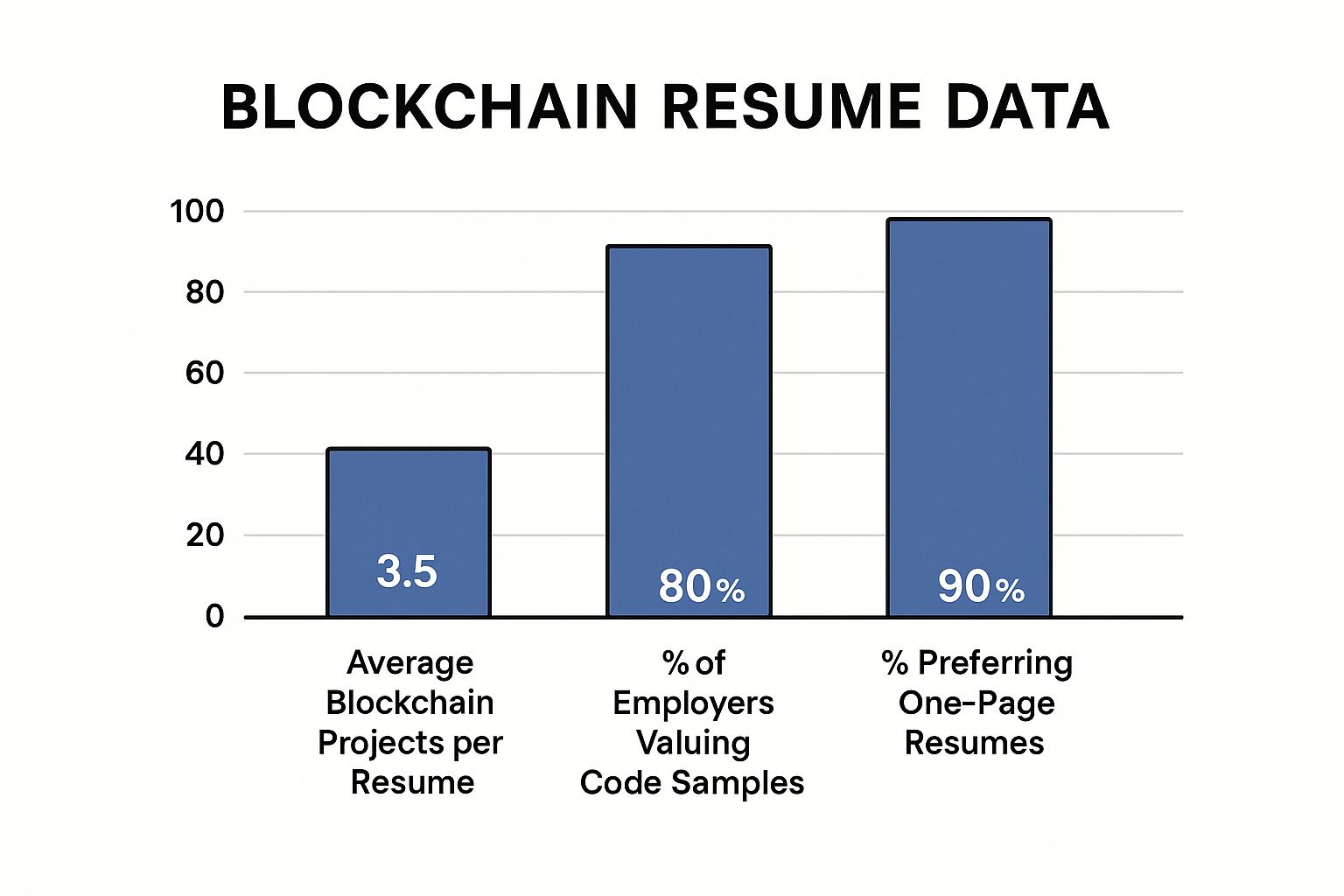
You've built a solid portfolio and a growing network, so now it's time for the final push. But hunting for a job in blockchain requires a completely different playbook. The best roles often don't even make it to the big, generic job boards. They're found in niche communities and announced directly by project leads. Your job search strategy needs to be as decentralized as the technology itself.
Where to Look: Beyond the Usual Suspects
A passive search won't cut it. You need to immerse yourself in the industry's daily conversation, where the real opportunities surface. The most valuable job leads come from:
- Crypto Twitter (X): Follow the founders, core developers, and venture capitalists in your chosen ecosystem. They frequently post about hiring needs on their timelines long before a formal job description is published.
- Project Discord and Telegram Servers: The #hiring or #jobs channels within a project’s community are pure gold. This is the first place teams look for talent because it’s filled with people who are already engaged with their work.
- Specialized Job Boards: Platforms that cater exclusively to Web3 roles are far more effective. They cut through the noise and connect you directly with companies that are actively seeking blockchain-specific skills.
To help you decide where to focus your energy, I've put together a table comparing the effectiveness of different channels based on my experience and observations in the space.
Blockchain Job Search Channels Effectiveness
Comparison of different job search methods and their success rates for blockchain positions, including timeline and effort requirements
| Channel | Success Rate | Average Time to Response | Best For Role Type |
|---|---|---|---|
| Project Discord/Telegram | High (60-70%) | 1-3 days | Developer, Community Manager, Moderator |
| Crypto Twitter (X) | Medium (40-50%) | 3-7 days | All roles, especially senior/leadership |
| Niche Web3 Job Boards | Medium-High (50-60%) | 1-2 weeks | Developer, Marketing, Product |
| Direct Network Referrals | Very High (>75%) | Varies (can be instant) | All roles, especially hard-to-fill ones |
As you can see, the methods that require more direct engagement, like participating in a Discord community or getting a referral, have the highest success rates. While job boards are useful, your best bet is to be an active part of the community.
Crafting an Application That Gets Read
In a field flooded with generic resumes, a personalized application immediately stands out. Before you even think about hitting "apply," do your homework. Read the project’s whitepaper, check out their recent blog posts, and get a feel for their technical roadmap. Your cover letter or introductory message should prove you’ve done this research by referencing specific features or challenges you find interesting.
The infographic at the top of this section highlights what hiring managers truly care about. The data is clear: they overwhelmingly prefer to see your actual work and a concise summary of your skills. Tangible projects and GitHub contributions speak much louder than a long, descriptive resume.
Navigating Compensation and Offers
Once an offer lands in your inbox, the conversation turns to compensation—another area where blockchain breaks the mold. The demand for skilled talent is intense. In 2025, blockchain developers command impressive salaries, with the average falling between $150,000 and $175,000 annually. You can read more on the booming market here.
However, the base salary is only part of the story. Your total compensation package will often include a token allocation, which is essentially equity in the network itself. When you evaluate an offer, you're not just looking at a salary; you're assessing the project's long-term vision, its tokenomics, and the vesting schedule. Is this a project you believe in for the next four years? Answering that question requires diligence and good advice.
This is where your professional relationships become critical. A strong network can provide priceless perspective when you're weighing complex offers, so learning how to network effectively is a skill that pays dividends long after you land the job.
Crushing Blockchain Interviews and Technical Tests
If you’re preparing for a blockchain interview, know that it’s a completely different arena. You won’t just be asked to reverse a linked list on a whiteboard. Instead, you’ll be judged on your ability to think through entire systems—from their economic incentives to their security weak spots and real-world trade-offs.
The hiring manager is trying to answer one main question: "Does this candidate grasp the holistic nature of decentralized problems?" Your coding chops are just the entry ticket to even have that conversation.
The Whiteboard Challenge, Reimagined
Forget about drilling standard algorithms. A blockchain whiteboard session feels more like a strategic discussion. An interviewer might ask you to weigh different scaling solutions, not just in theory, but in the context of their specific product. For instance, they could ask, “For our NFT marketplace, what are the real trade-offs between using Optimistic Rollups versus ZK-Rollups?”
They want to hear you talk about finality times, gas costs for the end-user, and the different security models involved. Your response reveals a depth of understanding that solving a simple coding puzzle never could. Expect questions that blend technology, economics, and product thinking:
- How would you design token incentives to stop a whale from manipulating governance votes?
- What are the top three security risks you see in this cross-chain bridge design?
- Walk me through how our system should react during a major network congestion event.
Acing the Take-Home Assignment
Many companies use a take-home coding challenge, and this is where a lot of promising candidates falter. Submitting code that simply "works" is the absolute bare minimum. Your actual mission is to deliver a professional-grade mini-project. This is your chance to show them what it’s actually like to work with you.
Hiring managers look at everything. Is your code clean, well-commented, and easy to follow? Did you write solid tests using a framework like Foundry or Hardhat? A project with 90%+ test coverage will make you stand out instantly.
Most importantly, did you write a detailed README file? This document should explain your architectural decisions, outline any trade-offs you made, and give clear instructions for running the project. A fantastic README demonstrates that you respect your future colleagues' time.
Show Passion, Not Hype
Finally, you need to show genuine interest without sounding like just another crypto hype artist. The key here is to be specific. Ditch broad statements like "decentralization is the future." Instead, talk about a specific Ethereum Improvement Proposal (EIP) you’ve been tracking or analyze a recent DeFi protocol hack and explain how it could have been avoided.
This approach shows you are deeply engaged and thinking critically. Anyone can parrot slogans from Twitter, but very few can discuss the details of EIP-4844 or the game theory behind a protocol's design. This level of insight is exactly what top teams are looking for when they post new blockchain engineering jobs.
Being a thoughtful student of the space, not just a cheerleader, is what will help you get a job in blockchain.
Your Action Plan for Blockchain Career Success
You've been doing your homework and getting a feel for the space, which already puts you ahead of the curve. Now it's time to turn that knowledge into a concrete plan. Landing a job in blockchain is more of a marathon than a sprint, and having a personal roadmap will help you cross the finish line without burning out.
Setting Realistic Milestones
Where you're starting from will naturally shape your timeline. If you're a seasoned web2 developer, you might aim for a focused 3-month plan to get comfortable with Solidity and key DeFi concepts. If you're completely new to tech, giving yourself a 6 to 12-month runway to build foundational skills is a much smarter approach.
Try breaking your larger goals into smaller, weekly pieces. For instance:
- Weeks 1-4: Dive into the core concepts. Read a couple of foundational whitepapers and practice explaining them in your own words to make sure you really get it.
- Month 2: Time to get your hands dirty. Build your first small project, something like a simple multi-sig wallet.
- Month 3: Start making connections. Join a project's Discord and try to contribute one meaningful comment or question each day.
Tracking your progress is a huge motivator. A simple spreadsheet where you log what you’ve done can be incredibly powerful. Remember to celebrate the small wins along the way!
Juggling Your Transition
Let's be real—most people can't just quit their day job to go all-in on crypto. The key here is consistency, not intensity. Carve out dedicated blocks of time and guard them fiercely. This could be an hour before work or a solid session on Saturday morning.
This focused effort, even if small, compounds significantly over months. Think of it as investing in your future career. Small, regular deposits are far more effective than trying to make one huge, stressful push.
Timing and Long-Term Vision
It’s tempting to get swept up in market hype, but don't try to time your entry. The crypto world is famous for its dramatic cycles, but your mission is to build skills steadily, regardless of price action.
In fact, here's an insider tip: bear markets are the best time to learn and network. The noise dies down, and the people who stick around are the dedicated builders. Companies that are still hiring are often more stable and focused on the long term. Preparing during these quiet times will position you perfectly for the next wave of growth and help you build a career that lasts.
Your action plan is ready. The final piece of the puzzle is finding the right opportunities and skipping the noise of generic job sites. Find Web3 centralizes thousands of roles from top companies, helping you target your search effectively. Your next career move is waiting. Explore real blockchain jobs on Find Web3.