
Thinking about a career in crypto? You're not just looking for a job; you're looking at the future. The crypto industry is bursting with high-paying opportunities that go way beyond trading. We're talking about roles in engineering, security, marketing, and community management, all with enormous growth potential for people ready to jump in.
Your Gateway into the World of Crypto Careers
Remember the early days of the internet? Getting a job back then felt like stepping into a whole new world. That's the kind of opportunity we're seeing with crypto right now.
This guide is your map for navigating this exciting frontier. We’ll look past the flashy trading headlines and pull back the curtain on the real jobs that are building the future of finance, gaming, and the web itself.
Think of this as your personal career playbook. It's designed to help you understand the lay of the land, find roles that genuinely match your skills, and craft a strategy to land a high-impact job. We’ll break down everything from the hottest technical roles to the creative and operational positions that keep the industry moving. You really don't have to be a coder to make your mark here.
More Than Just Coders and Traders
It's a common misconception that you need a computer science degree or a Wall Street background to get into crypto. While technical skills are definitely in high demand, the ecosystem is growing up fast and needs all kinds of talent to thrive.
Projects need people to tell their stories, manage their communities, design their products, and run their day-to-day operations.
The industry is hungry for a wide range of professionals, including:
- Creative Professionals who can shape a brand's identity and voice.
- Operational Experts who know how to make a project run like a well-oiled machine.
- Community Builders who can rally a loyal and passionate user base.
- Strategic Marketers who get how to connect with people in this unique digital space.
This massive expansion means that professionals from almost any background can find rewarding careers in crypto. The trick is to figure out how your current skills fit into this new puzzle.
"Don’t trust, verify. This core crypto principle is more relevant than ever in the digital age. State-sponsored attacks aren’t just a crypto, or U.S. corporate, issue – they’re a global threat." – Nick Percoco, Chief Security Officer at Kraken
This idea from a top security officer gets to the heart of it. Security and trust are everything in this industry, creating vital roles that have nothing to do with writing code.
What to Expect from This Guide
We’ve structured this guide to build your knowledge one step at a time. We'll start with a bird's-eye view of the job market, then dive into specific roles and the skills you'll need. To wrap it all up, we'll give you a practical, actionable plan to get hired.
Your journey into a crypto career starts with understanding the landscape and having a solid strategy. By the time you finish this article, you’ll have a much clearer picture of where you fit in and exactly what to do next.
Let's get started.
Understanding the Modern Crypto Job Market
To find a career in crypto, you first need a map of the territory. The crypto job market isn't a single, massive entity; it's more like a sprawling city with distinct districts, each with its own culture, challenges, and opportunities. Knowing these key areas is the first step toward figuring out where your skills can make the biggest splash.
Just like the regular economy has its own major industries—finance, tech, entertainment—the crypto world has its own powerful verticals. These are the real engines driving innovation and, crucially, creating jobs. Even when the market gets choppy, these core sectors keep building and hiring, focused on long-term goals instead of short-term price swings.
Let's dive into the main sectors where you'll find the most exciting careers in crypto.
The Pillars of Crypto Innovation
Right now, three main pillars support most of the development and hiring in the Web3 space. Think of them as the foundational layers for the future of a decentralized internet. Each one offers a different kind of work and attracts different types of talent.
Blockchain Infrastructure: This is the absolute bedrock of the entire ecosystem. It’s all about the core blockchains themselves (like Ethereum), scaling solutions that make them faster and cheaper, and the tools developers need to build applications. A job here is like being a civil engineer for a new digital world, designing the superhighways and power grids everyone else relies on.
Decentralized Finance (DeFi): The goal of DeFi is to rebuild the entire financial system on the blockchain. Picture a global, automated financial network that's always on, open to anyone, and doesn't require a bank. Roles in DeFi focus on creating platforms for lending, borrowing, and trading assets in a completely transparent, peer-to-peer way.
Web3 Gaming and NFTs: This sector is revolutionizing digital ownership and interaction. It’s not just about playing games; it's about truly owning your in-game items as Non-Fungible Tokens (NFTs) and even influencing a game’s direction. A career here puts you at the bleeding edge of a new entertainment medium, blending raw creativity with serious technology.
Market Trends and Hiring Realities
Let’s be honest: the crypto job market is definitely affected by market cycles. During a bull run, hiring can feel like a frenzy across the board. But when things cool down, the most resilient companies—and the most stable jobs—are usually found in the infrastructure sector.
Why is that? Because building the fundamental "roads and bridges" of Web3 is a long-term mission that isn't so tied to daily market sentiment. Projects working on security, scalability, and developer tools know their work is essential for the ecosystem's future, no matter what token prices are doing.
The crypto job market is growing up. It's moving beyond pure speculation and toward creating sustainable, real-world value. Companies are now looking for professionals who believe in their mission and can help build something genuinely useful.
This maturity is showing up in hiring trends. While the pay is still very competitive, a deeper look at the hiring landscape shows that candidates now care just as much about a company's mission, culture, and potential for innovation. Employers are catching on, realizing they need to offer more than just a big paycheck to land top talent. You can learn more about how compensation and expectations are changing in the detailed 2025 State of Crypto Hiring Report.
Ultimately, a smart job search means looking past the hype. By understanding which sectors are truly foundational, you can find opportunities that offer not just excitement, but also stability and real long-term growth. With this map in hand, you’re ready to start exploring the specific roles within these fascinating fields.
Exploring the Most In-Demand Crypto Roles
When people think about crypto jobs, they usually picture developers hunched over keyboards or traders glued to charts. But that's a tiny part of the picture. A successful crypto project is a lot like a bustling city—it needs architects, but it also needs planners, marketers, and community leaders to truly thrive.
The job market is a rich ecosystem of technical, non-technical, and creative roles, all working together to build out the decentralized world. Getting a handle on these different paths is like having a career compass. It shows you exactly where your current skills can plug in or what new abilities you might want to learn to land that dream job.
Let's break down some of the most sought-after positions in the space.
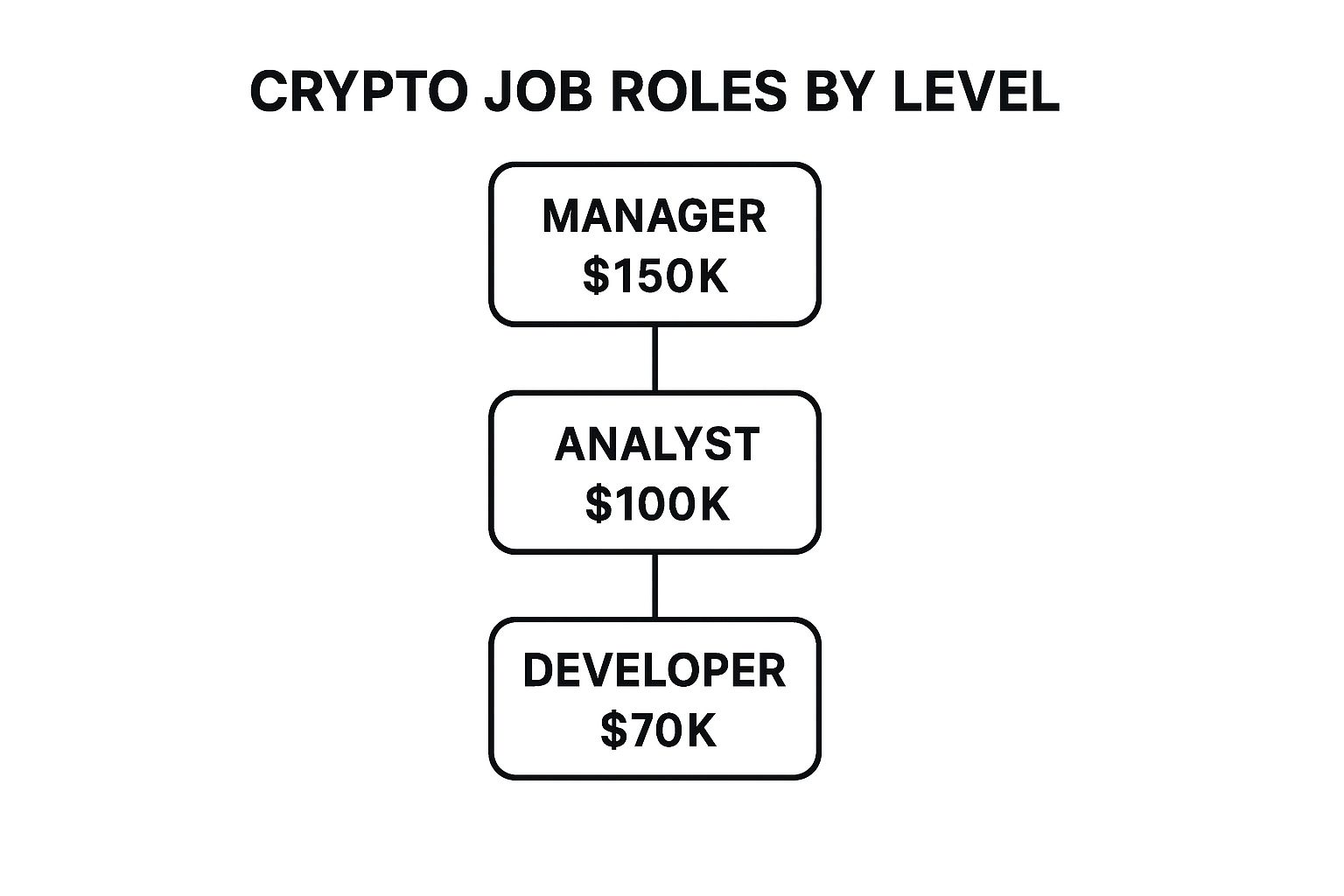
As you can see, there’s a clear path for growth. Senior roles command serious salaries, which really speaks to how much this industry values deep experience and strategic leadership.
Technical Powerhouses: The Builders and Guardians
These are the architects and engineers of Web3. They’re the ones actually building the digital foundations that everything else rests on. To succeed here, you'll need a solid background in software development, computer science, and a real knack for understanding decentralized systems.
1. Blockchain Developer
Think of these folks as the master builders of the crypto world. A Blockchain Developer designs, builds, and maintains a project's core blockchain architecture. They’re fluent in languages like Solidity (for Ethereum), Rust (for Solana), and Go, using them to create secure and efficient decentralized applications (dApps).
Their day-to-day is all about writing code, either for the blockchain protocol itself or for the apps that run on top of it. As you look at these high-demand roles, it’s worth seeing how different languages are used to build powerful systems; for example, you can Go for blockchain development to see what it’s capable of.
2. Smart Contract Auditor
If a Blockchain Developer is the architect, the Smart Contract Auditor is the structural engineer and safety inspector, all in one. They painstakingly comb through the code of smart contracts—the automated agreements that power DeFi—to hunt down vulnerabilities, bugs, or potential exploits before bad actors do.
This role is absolutely critical. A single mistake in a smart contract can lead to millions of dollars in lost funds, making auditors the true guardians of the ecosystem. It takes an adversarial mindset and an expert-level grasp of blockchain security.
3. Blockchain Quality Engineer
Quality is everything. A Blockchain Quality Engineer makes sure every single piece of a protocol or dApp works exactly as it should. They design and execute detailed testing plans, using everything from automated scripts to manual checks to find and squash bugs before a product ever reaches the public.
These are the perfectionists, obsessed with detail and process. Their entire focus is on creating a smooth, reliable user experience, which is the key to building trust and bringing crypto to the mainstream.
Non-Technical Pillars: The Strategists and Connectors
You don't have to be a coder to have a massive impact in crypto. Non-technical roles are the connective tissue holding everything together. They drive growth, build relationships, and keep projects running smoothly. These jobs call for sharp communication skills, strategic thinking, and a gut-level understanding of the market.
1. Community Manager
The Community Manager is the heart and soul of any crypto project. They’re the ones building, engaging, and growing the user base on platforms like Discord, Telegram, and X (formerly Twitter). It's a job that’s part brand ambassador, part customer support lead, and part event planner.
They answer questions, collect feedback for the dev team, and cultivate a positive, loyal culture. A strong community is a project's best defense and its biggest asset, and the Community Manager is the one who builds it brick by brick.
A project with amazing technology but no community is like a brilliant invention locked in a garage. It's the community that brings it to life, provides feedback, and champions its success.
2. Crypto Marketing Specialist
Marketing in Web3 is a whole different ballgame. A Crypto Marketing Specialist gets the unique culture and communication channels of the crypto world. They know how to create campaigns that connect with a smart, often skeptical audience, using X, specialized crypto media, and influencer partnerships to get the word out.
Their mission is to tell a project's story in a compelling way, bring new users to a dApp, and build a strong brand in an incredibly crowded market. This requires a blend of creative storytelling and hard, data-driven strategy.
3. Crypto Risk Analyst
Have a background in finance? Your skills are in extremely high demand. A Cryptocurrency Risk Analyst is tasked with evaluating the financial, operational, and security risks tied to digital assets and DeFi protocols. They dive deep into market trends, assess protocol security, and guide organizations in making smart decisions about investments and integrations.
With so much money on the line, this role is becoming more and more vital for exchanges, investment funds, and any large company looking to get into the crypto space.
Whether you're a developer, marketer, or community builder, countless opportunities are out there. When you're ready to start looking, the best first step is to browse a dedicated job board. You can explore a huge variety of careers in crypto from top Web3 companies. Check out the latest crypto job openings to see what’s available right now.
Essential Skills and What to Expect for Compensation

Landing a great job in crypto takes more than just a passing interest in digital coins. Companies are hunting for a specific blend of hard and soft skills. Ultimately, success in careers in crypto often boils down to your ability to pair deep technical know-how with the agility to navigate a field that’s always changing.
Think of it like being an early pioneer. You need a sturdy wagon and the skill to guide it (your hard skills), but you also need the grit and resourcefulness to handle rough terrain and find your way in a new world (your soft skills). Let’s break down what it takes to become a top candidate.
The Critical Hard Skills
For anyone aiming for a technical role, some skills are simply non-negotiable. These are the tools of the trade you'll rely on every single day to build, protect, and run the infrastructure of Web3.
Programming Languages: If you're a developer, you absolutely need to be proficient in languages like Solidity (the language of Ethereum and EVM-compatible chains) or Rust (popular for high-performance chains like Solana). A solid foundation in languages like Python, Java, or C++ is also incredibly useful for building out backend systems.
Cryptography and Security: A real-world understanding of cryptography is a must. This isn't just theory; you need to know the principles behind public-key crypto, hash functions, and digital signatures. This knowledge is what allows you to build secure apps and, just as importantly, audit smart contracts to find hidden vulnerabilities before they get exploited.
Blockchain Fundamentals: You have to understand how different blockchains actually work. This means getting familiar with concepts like consensus mechanisms (think Proof-of-Work vs. Proof-of-Stake), data structures, and the core ideas behind decentralization.
These technical skills are your ticket in the door. If you want to see how these are applied in practice, it’s a good idea to check out the various crypto engineering roles and see what real job descriptions are asking for.
The Soft Skills That Set You Apart
Technical chops will get you an interview, but it's the soft skills that will make your career take off. The crypto space moves incredibly fast, and the people who thrive are the ones who can adapt, communicate clearly, and learn on the fly.
A project with amazing technology but no community is like a brilliant invention locked in a garage. It's the community that brings it to life, provides feedback, and champions its success.
This gets right to the heart of it—communication and teamwork are just as vital as writing clean code. You need to be able to explain complex ideas in simple terms, collaborate with a team scattered across the globe, and genuinely connect with the people using your product. The key skills here are radical adaptability, clear communication, and a strong sense of ownership, especially in an industry that leans heavily on remote work.
Demystifying Crypto Compensation
Alright, let's talk money. A job offer in crypto often looks a little different than one from a traditional tech company. While you can expect a competitive base salary, many compensation packages come with a very powerful extra ingredient: tokens.
This mix of salary and token incentives is a huge part of the industry's DNA. It’s not just a perk; it's a way of giving you a real, tangible stake in the project you're helping build. If the project takes off, the value of your tokens can grow significantly, directly tying your financial success to the company’s vision.
To give you a clearer picture, here's a table with some realistic salary benchmarks for common roles. Just remember, these numbers can shift based on your experience level, the company's size and funding, and where you're located.
Estimated Salary Ranges for Popular Crypto Roles
This table provides estimated annual salary ranges for key roles in the crypto industry, based on industry reports and job market data. Ranges can vary based on experience, location, and company size.
| Job Role | Experience Level | Estimated Annual Salary (USD) | Common Additional Compensation |
|---|---|---|---|
| Blockchain Developer | Mid-Level | $120,000 – $180,000 | Project tokens, equity, performance bonus |
| Smart Contract Auditor | Mid-Level | $130,000 – $200,000+ | Project tokens, bug bounty rewards |
| Community Manager | Mid-Level | $70,000 – $110,000 | Project tokens, community grants |
| Cryptocurrency Risk Analyst | Mid-Level | $90,000 – $140,000 | Equity, annual bonus |
Getting comfortable with this unique compensation model is a crucial step. It helps you evaluate offers with confidence and truly grasp the significant upside that careers in crypto can offer.
How to Build Your Action Plan and Get Hired
Turning your curiosity about crypto into a real job offer takes a solid plan. Think of this section as your personal playbook for breaking into the industry. We'll walk through the exact steps to go from just being interested to becoming a candidate that companies can't ignore.
The first part of your journey is all about deep, focused learning. You need to go way beyond the headlines and dive into the resources that the pros actually use. This means making crypto podcasts a regular part of your routine, reading project whitepapers to understand the tech straight from the source, and getting active in the online communities where the real work gets done.
Step 1: Build Your Web3 Resume
In the world of crypto, what you’ve built can speak louder than where you’ve worked. A traditional resume is still good to have, but a public portfolio showcasing your work and contributions is infinitely more powerful. This idea is often called "proof-of-work," and it’s a core part of the industry's merit-based culture.
Your main goal here is to create tangible proof of your skills and genuine passion. Here’s how you can get started:
- Contribute to Open-Source Projects: Find a project you genuinely admire on GitHub and jump in. You could start by fixing a small bug or even just improving their documentation. It's one of the most direct ways to show off your technical chops.
- Build a Personal Project: Try creating a simple dApp, a data analytics dashboard, or a content site focused on a crypto niche that fascinates you. This is a fantastic way to demonstrate initiative and practical ability.
- Write and Share Your Knowledge: Start a blog, a Substack newsletter, or even just a thread on X (formerly Twitter) about what you're learning. If you can explain complex topics in a simple way, it proves you have a deep understanding of them.
The most compelling candidates are those who are visibly passionate and active in the ecosystem. Your public contributions act as a living resume that hiring managers can see and verify for themselves.
Step 2: Network Like a Native
Forget what you know about old-school corporate networking. While LinkedIn isn't totally useless, the real relationships in Web3 are built on platforms like X and Discord. This is where you'll find the founders, developers, and community managers hanging out every day.
Find the Discord servers for projects that interest you and aim to become a valuable member of the community. Ask thoughtful questions, help out the newcomers, and genuinely participate in conversations. Authentic engagement will get you noticed much more effectively than any cold email ever could.
For many jobs, especially in community and marketing, your reputation in these digital spaces becomes a huge part of your professional profile. If you're looking at those specific roles, our guide to crypto marketing jobs can give you even more tailored advice.
Step 3: Find and Apply for Roles
Once you’ve built some proof-of-work and started making connections, it’s time to hunt for the right opportunities. The best careers in crypto are rarely found on traditional job boards. The industry has its own dedicated job platforms where you'll find remote and on-site roles that aren't advertised anywhere else.
A huge number of crypto jobs are remote-first. Getting familiar with the ins and outs of landing a distributed role by reading a comprehensive guide to remote jobs can give you a serious advantage.
When you're finally ready to apply, make sure you customize your application. Don't just send a generic resume. Point directly to your public contributions and express your genuine passion for that specific project. This simple step shows you’ve done your homework and are already part of the community, not just another random applicant in the pile.
Frequently Asked Questions About Crypto Careers

It's completely normal to have a few questions swirling around as you think about jumping into the crypto world. Let's tackle some of the most common ones I hear from people who are exploring careers in crypto, so you can feel more confident about your next steps.
Do I Need a Computer Science Degree to Work in Crypto?
Absolutely not. It's a common misconception that you need to be a coding wizard to find a place in this industry. While a technical background is essential for roles like blockchain development, the crypto space has a huge appetite for talent in non-technical fields.
Companies are desperate for skilled people in marketing, community management, operations, design, and legal. I've often seen hiring managers prioritize real-world skills and a genuine passion for the space over a traditional college degree. What you can do often speaks louder than what's on a diploma.
How Can I Get Experience if I Have No Background?
The best way to get your foot in the door is to simply start doing the work. You need to build up what the industry calls "proof-of-work"—a public track record of your contributions that a hiring manager can easily see and verify. It shows you're not just interested; you're invested.
Here are a few practical ways to build your crypto resume from scratch:
- Join a community: Get active in a project's Discord or Telegram. Don't just lurk; answer questions, offer help, and become a familiar, valuable presence.
- Contribute to open-source: Find a project you admire on GitHub. You don't have to rewrite their entire codebase; start small by fixing typos in the documentation or tackling a minor bug.
- Create content: Start writing about what you're learning. Share your insights in a blog post, a thread on X, or even a short video. Building a small personal project is another fantastic way to show off your skills.
The candidates who really stand out are the ones who are visibly passionate and already active in the ecosystem. Your public contributions become a living resume that proves you have the drive and skills to succeed.
Are Crypto Jobs Stable, Considering How Much the Market Swings?
That’s the million-dollar question, isn't it? Volatility is definitely part of the package, but the industry is much more mature than it was a few years ago. Many well-funded companies, especially those building core infrastructure or foundational DeFi protocols, are playing the long game. They aren't as easily shaken by the market's day-to-day mood swings.
If stability is a top priority, I'd suggest targeting these more established projects. Also, keep in mind that certain roles are always in demand, no matter what the market is doing. Jobs in compliance, security, and risk analysis are crucial for protecting assets and keeping projects running safely, making them evergreen careers in crypto whether we're in a bull or bear market.
Ready to stop thinking about it and start applying? At Find Web3, we specialize in connecting talented people with the best opportunities in the Web3 ecosystem. You can explore thousands of listings from top-tier crypto companies and find your next role today. Visit https://findweb3.com to get started.