
Building Your Foundation in the NFT Art World
Before jumping into making your first piece of NFT art, it's a good idea to lay some groundwork. This is about more than just getting comfortable with new software; it’s a whole new way of thinking about your art. The most successful artists moving from physical to digital art don't just scan their old work. They adapt their creative vision for a new medium and a completely different kind of collector.
Start by taking a frank look at what you do best. Are you known for your detailed line work, your use of color to create a mood, or your ability to design unforgettable characters? Knowing your core strengths will help you figure out which art styles could really shine as NFTs. For example, an artist who excels at creating intricate, symmetrical designs might find generative art to be a perfect fit, where code can turn mathematical rules into beautiful visuals.
I once saw an artist, inspired by the book Symmetry in Chaos, create a generative collection where every mint was like a "digital dice roll," resulting in a completely unique pattern. This just goes to show that a strong conceptual foundation can be just as important as technical skill when you're creating NFT art.
Finding Your Niche in a Growing Market
The NFT market is huge, and that can feel a bit overwhelming at first. But all that activity means there's a growing audience of collectors actively searching for unique digital pieces. The global non-fungible token market was valued at around USD 36.23 billion in 2024 and is projected to hit USD 48.74 billion in 2025. You can get a deeper look at these figures by checking out the full research on NFT market growth projections.
This chart gives you a visual of the projected growth, which really highlights the expanding opportunity for artists.
This forecast shows just how much demand is increasing, making it a genuinely exciting time to get involved.
To carve out your space, you need to focus on what makes your art yours. Don't try to be everything to everyone. Instead, find a specific niche that you're genuinely passionate about. This could be anything from pixel art that pulls from old-school video games to abstract 3D sculptures. Researching what's out there doesn't mean you should just copy what's popular. Instead, use it to:
- Find communities that connect with your style.
- See the visual language successful artists in your niche are using.
- Pay attention to how collectors talk about and value the art they buy.
Authenticity and Personal Branding
At the end of the day, people invest in the artist just as much as they invest in the art. Your story, your methods, and your unique point of view are all part of what makes your work valuable. As you get started, learning how to elevate your personal brand for career success is key to making your work stand out.
Being authentic means sharing your creative process, talking honestly with your audience, and having real confidence in what you create. Don't shy away from experimenting or even sharing the "failures" and messy results. Sometimes, the journey is just as interesting as the final product. Collectors value the narrative behind the art, and a strong, genuine brand is what will set you apart from the noise and help you build a loyal following that loves your work for more than just the hype.
Mastering Digital Art Tools That Actually Work
With your concept ready, it's time to choose your creative toolkit. The huge number of digital art programs can feel paralyzing, but success in creating NFT art isn't about owning the most expensive software; it's about mastering the right software for your unique style. Let's cut through the noise and focus on the tools that consistently help artists produce top-tier work.
Your Digital Canvas: Raster and Vector Software
For most 2D artists, the creative process starts with either a raster or a vector editor. Raster programs, like Adobe Photoshop or Procreate, are built on pixels. Think of them as digital painting canvases, perfect for detailed illustrations, digital paintings, and photo edits where blending colors and creating rich textures are crucial. On the other hand, vector programs, such as Adobe Illustrator or the free option Inkscape, use mathematical equations to create clean, endlessly scalable graphics. This makes them the go-to for logos, sharp line art, and any design that needs to be resized without losing a drop of quality.
Many artists, myself included, often use a mix of both. For example, you might sketch and paint a character in Procreate, then pop it into Illustrator to add some crisp, scalable text or graphic elements. This hybrid approach gives you the best of both worlds.
Here's a look at the interface for Adobe Photoshop, a powerhouse tool for many digital artists.
This image shows a project with multiple layers, masks, and adjustment tools, giving you a sense of the software's depth. Getting comfortable with these features takes time, but the creative control you gain is incredible.
To help you decide, I've put together a quick comparison of some of the most popular tools artists are using to create NFTs.
Popular NFT Art Creation Tools Comparison
A comprehensive comparison of leading digital art software including pricing, features, and suitability for different art styles.
| Software | Price Range | Best For | Learning Curve | NFT-Friendly Features |
|---|---|---|---|---|
| Adobe Photoshop | ~$22.99/month | Digital Painting, Photo Manipulation, Detailed Illustration | Medium-High | Industry-standard, vast tutorials, powerful layering & effects |
| Procreate | ~$12.99 one-time | Digital Painting, Sketching (iPad) | Low | Intuitive touch interface, portable, great brush engine |
| Adobe Illustrator | ~$22.99/month | Vector Art, Logos, Clean Line Art, Scalable Graphics | Medium-High | Produces crisp, scalable SVG files, excellent for PFP traits |
| Blender | Free | 3D Modeling, Animation, Sculpting, Generative Art | High | Extremely powerful, open-source, large community support |
| Cinema 4D | ~$60-$100/month | 3D Motion Graphics, Abstract 3D Art | Medium | User-friendly interface, great for motion and abstract scenes |
This table gives you a starting point, but remember that the "best" tool is the one that fits your art and workflow. Many incredible artists use free software to produce mind-blowing work.
Stepping into the Third Dimension and Beyond
If your ideas are more sculptural or animated, 3D software is where the magic happens. Blender is a hugely popular, open-source, and completely free option that holds its own against expensive premium software. It's a fantastic place to start for creating 3D characters, abstract sculptures, and animated loops. For artists with a budget, Cinema 4D is well-known for its friendly interface, making it a favorite for motion graphics.
Here’s a quick rundown of tools based on art style:
- Digital Painting: Procreate (iPad), Adobe Photoshop, Clip Studio Paint
- Vector & Graphic Design: Adobe Illustrator, Affinity Designer, Inkscape (Free)
- 3D Modeling & Animation: Blender (Free), Cinema 4D, ZBrush
- Generative Art: p5.js (JavaScript library), TouchDesigner
If you're a traditional painter transitioning to digital, Procreate’s intuitive touch controls might feel more natural. If you have a coding background, exploring a tool like p5.js could unlock a whole new world of generative art. Also, don't forget the practical skills. Learning smarter file compression techniques is vital for ensuring your art looks great while keeping file sizes manageable for the blockchain.
Budget, Learning Curves, and Your Workflow
You absolutely do not need to spend hundreds on software subscriptions from day one. Many successful NFT artists create incredible work using free tools like Blender, Krita, and Inkscape. Start with what's accessible and really learn its core functions. An artist who knows every shortcut in a free program will be far more efficient than someone just clicking around in an expensive one.
Once you start selling your work, you can always reinvest in premium tools if you feel your current software is holding you back. The skills you build are transferable. As the Web3 space continues to grow, artists with solid technical and creative abilities are in high demand. If you're curious about a career beyond just creating, you can even explore opportunities for blockchain jobs where artistic and tech knowledge are highly valued.
Choosing the Right Blockchain Platform for Your Art
After you’ve settled on your digital tools, the next big decision is picking a permanent home for your art. This choice, the blockchain platform, is more than just a technical step. It directly influences who sees your work, how much you can potentially earn, and how collectors value what you create. Think of it like choosing between opening a gallery in a high-end, established art district versus a vibrant, bustling street market—each attracts a different crowd and sets a different tone.
Ethereum: The Established Blue-Chip Gallery
Ethereum is the original home of NFT art, and for many, it's still the gold standard. It’s the most recognized, trusted, and populated blockchain for high-value digital assets. For artists, this translates to having direct access to the largest pool of serious, well-funded collectors. Major marketplaces like OpenSea, Foundation, and SuperRare are all built on Ethereum, giving your art instant visibility to an audience ready to invest.
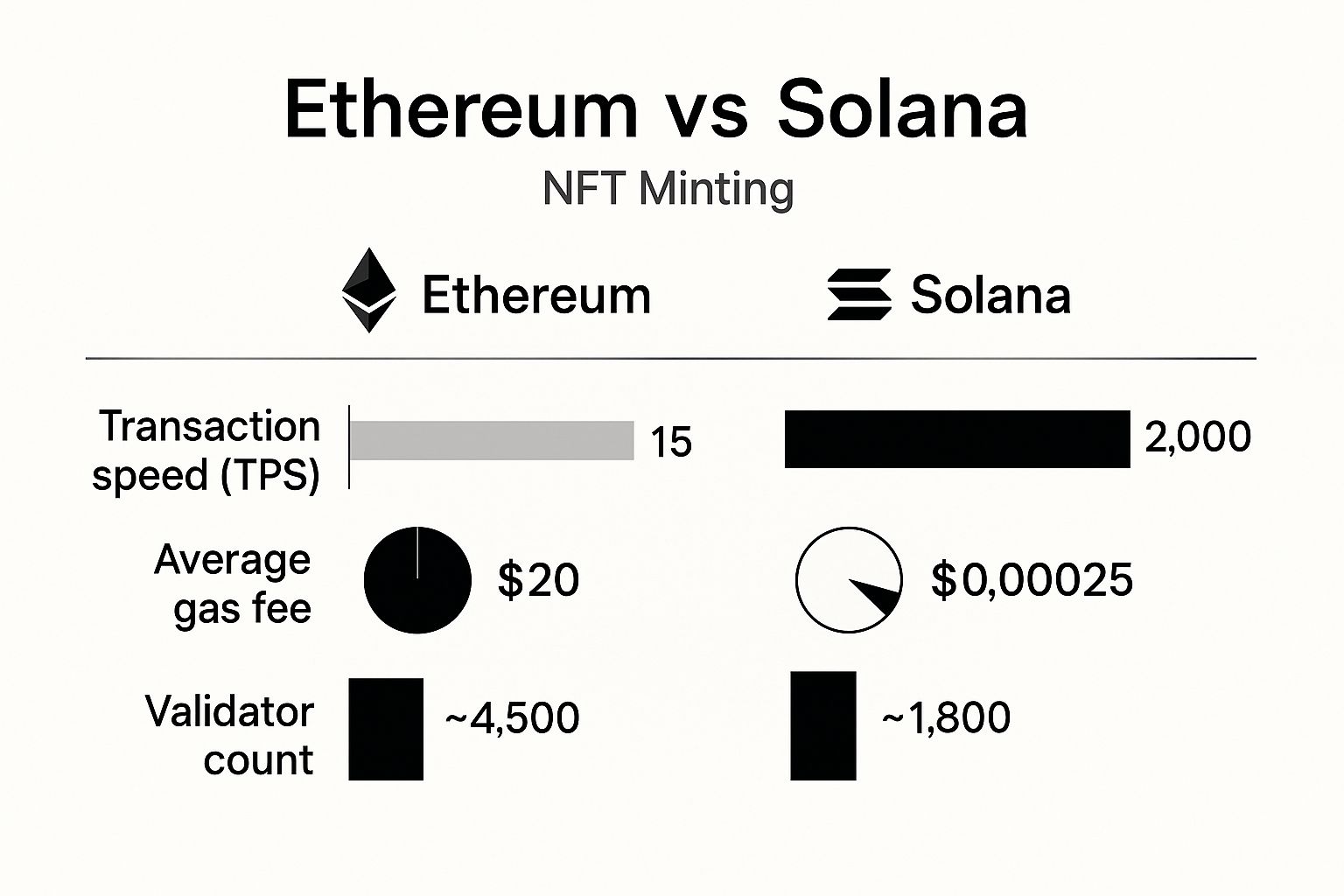
Because of its long track record and robust security, many collectors view Ethereum-based NFTs as "blue-chip" investments, which could boost your art's long-term value. However, this premium exposure has its price. Minting on Ethereum requires paying "gas fees," which are transaction costs that can swing wildly. Sometimes, these fees can run into hundreds of dollars for a single mint, making it a costly and somewhat risky choice for artists just getting started.
High-Speed, Low-Cost Alternatives: Solana and Polygon
If Ethereum is the exclusive, high-street gallery, then blockchains like Solana and Polygon are the lively, up-and-coming arts festivals. These platforms, known as Layer-2s or competing Layer-1s, were specifically created to address Ethereum's high costs and slow speeds. For example, creating NFT art on Solana involves transaction fees that are often just fractions of a penny, and the process is almost instant.
This low barrier to entry makes it a fantastic playground for artists. You can experiment freely, launch bigger collections, and attract collectors who might be more sensitive to high transaction costs.
To help you see the difference, here’s a quick comparison of some of the major platforms.
Blockchain Platform Comparison for NFT Artists
Analysis of major blockchain platforms including costs, speed, environmental impact, and market presence
| Platform | Average Minting Cost | Transaction Speed | Environmental Impact | Market Share | Best For |
|---|---|---|---|---|---|
| Ethereum | $10 – $200+ | ~13 minutes (slower) | Low (Post-Merge) | ~75% of NFT volume | High-value single editions, established artists, and collectors prioritizing security. |
| Solana | <$0.01 | ~2.5 seconds (very fast) | Very Low | ~10% of NFT volume | Large collections (PFPs), new artists, and projects needing fast, cheap transactions. |
| Polygon | <$0.02 | ~2.1 seconds (very fast) | Very Low | ~5% of NFT volume | Artists looking for an Ethereum-compatible alternative with low fees and high speed. |
As you can see, the trade-offs are clear. Ethereum offers unmatched market dominance and perceived value, while alternatives like Solana and Polygon provide incredible efficiency and affordability. The good news is the entire NFT ecosystem is growing. With an estimated 11.58 million users in 2024, there's plenty of room for multiple blockchains to thrive, meaning you can find an engaged audience beyond just Ethereum. If you're curious about the numbers, you can find deep insights into NFT statistics that show just how big the market has become.
Making Your Decision
So, which one is right for you? There's no single "best" answer—only what's best for your art and your goals.
Here's a simple way to think about it:
- Go with Ethereum if: You are releasing a small, high-value collection, your target audience consists of established "whale" collectors, and you can comfortably afford the initial gas fees. Here, prestige and security are your top priorities.
- Choose Solana or Polygon if: You are a new artist, want to experiment with different concepts, plan to release a large collection (like a PFP project), or want to keep costs rock-bottom for both yourself and your buyers.
Your choice of blockchain is a strategic move that should line up with your artistic vision and financial plan. As you get more comfortable in the space, you might even take a multi-chain approach, releasing different kinds of work on different platforms to connect with a wider range of collectors. To get an even better handle on the market, exploring important NFT stats can give you the data to back up your decisions.
Transforming Your Art Into NFTs That Sell
With your masterpiece ready and your blockchain selected, you've reached the most thrilling part: minting. This is the moment your digital file officially becomes a unique, verifiable asset on the blockchain. It might sound complex, but today's NFT marketplaces have made the process surprisingly straightforward. Let's walk through how to turn your art into a sellable NFT.
First, you'll need to connect your secure crypto wallet to your chosen marketplace, whether it's OpenSea, Magic Eden, or Foundation. This wallet is your digital identity—it's how you’ll pay for transaction fees (known as gas) and, more importantly, receive funds when your art sells. Once your wallet is linked, look for a "Create" or "Mint" button on the site. This is your gateway to uploading the art file, be it a JPG, PNG, GIF, MP4, or another supported format.
This screenshot from OpenSea’s creation page gives you a peek at the kind of simple interface you can expect.
As you can see, the platform guides you clearly, asking for the essential components: your art file, a name, and other descriptive details that bring it to life.
Crafting Compelling Metadata
After you upload your artwork, you'll be prompted to fill in its metadata. This isn't just a boring form; it's the permanent, on-chain information that defines your NFT. Think of it as your chance to tell the art's story and help collectors find it.
Here’s what you’ll typically be asked to provide:
- Name: Give your piece a title that's both memorable and fitting. It's the first thing potential buyers will see.
- Description: This is your artist's statement. What was the inspiration? What techniques did you use? A powerful narrative here can be the very thing that convinces a collector to buy.
- Properties (or Traits): These are vital, especially if you're creating a collection. Properties are simple labels that describe your art's attributes (e.g., Background: "Cosmic," Eyes: "Glowing," Style: "Pixelated"). They are what allow collectors to filter through thousands of pieces to find exactly what they're looking for, making your work much more discoverable.
- Collection: Grouping your art into a collection helps build a recognizable brand. It encourages collectors who like one piece to explore your entire portfolio.
Your metadata is the digital version of a gallery plaque. It adds context, depth, and helps buyers connect with the meaning behind the work. Taking a few extra minutes to write a thoughtful description can make a world of difference.
Setting Your Price and Royalties
Now, let's talk money. You need to decide on a sales strategy. Marketplaces usually offer a few choices:
| Sale Type | Description | Best For |
|---|---|---|
| Fixed Price | You list the NFT for a specific, set price. | Artists who have a clear value in mind for their work and prefer a direct sale. |
| Auction | You set a minimum bid and a time limit, letting collectors bid against each other. | Generating buzz and potentially driving the price higher through competition. |
| Open to Offers | You list the piece without a price, letting buyers submit offers you can review. | Testing the waters to see what the market is willing to pay for a unique piece. |
One of the most incredible features of creating NFT art is the ability to program creator royalties. This means you can earn a percentage—usually between 5-10%—every single time your art is resold on the secondary market. This is a massive shift for artists, creating a potential stream of passive income. For instance, if you set a 10% royalty and your piece sells initially for $100, then gets resold later for $1,000, you automatically get $100 from that second sale without lifting a finger.
Once you’ve filled in all the details and given everything a final check, you'll hit the "Mint" or "Create" button. Your wallet will pop up, asking you to confirm the transaction and pay the gas fee. After the blockchain confirms the transaction—which might take a few minutes—your art will officially be an NFT. Congratulations, you're now a published NFT artist
Navigating NFT Marketplaces Like a Pro
Your art is minted and now officially lives on the blockchain—a huge milestone! But the journey of creating NFT art isn't over yet. The next step is getting your work in front of collectors, and that means choosing the right marketplace. This decision is less like picking a store and more like joining a community with its own unique vibe and audience.
Understanding these differences is crucial. Think of it this way: selling a bold, experimental piece on a highly curated, art-focused platform is probably a better strategy than listing it on a massive marketplace where it could easily get lost in the shuffle. Each platform has its own unwritten rules and collector expectations.
Choosing Your Digital Gallery: Curated vs. Open Marketplaces
Your first big decision is whether to join a curated or an open marketplace. They offer completely different experiences for artists and attract different types of buyers.
- Open Marketplaces: Giants like OpenSea operate like a massive digital bazaar where anyone can mint and list their work. The biggest pro is accessibility and reach—you’re on the largest stage with the most potential viewers. The main challenge? It’s incredibly crowded, and getting your art noticed takes serious effort.
- Curated Marketplaces: Platforms such as Foundation or SuperRare feel more like exclusive art galleries. To join, you often need an invitation from another artist or must pass a strict application process. Just getting accepted is a stamp of approval. These platforms attract serious collectors hunting for high-caliber art and are generally less focused on trendy profile picture (PFP) projects.
Here's a peek at the homepage of OpenSea, the largest open marketplace. It gives you an immediate sense of its scale and variety.
This snapshot shows everything from trending collections to top artists, highlighting the sheer volume of assets available. To succeed here, you have to be proactive in building your own presence.
Building a Commanding Marketplace Presence
Just listing your art and hoping for the best is a recipe for disappointment. The most successful artists treat their marketplace profiles as a professional portfolio and a community hub. Your goal is to build trust and share a compelling story behind your work.
Here’s how to create a presence that gets noticed:
- Optimize Your Profile: Use a high-quality profile picture and banner that reflect your artistic brand. Your bio should be concise but powerful—who are you, and what is your art about? Make sure to link to your social media accounts so collectors can connect with you on other platforms.
- Engage Authentically: Don’t just be a seller; become a member of the community. Follow other artists you admire, leave thoughtful comments on their work, and join in on discussions. This helps build relationships and shows you're invested in the space for more than just a quick sale.
- Release with Consistency: Collectors are drawn to artists who show dedication. This doesn’t mean you need to mint new art every day, but creating a steady rhythm of quality releases keeps your audience engaged and signals that you're a serious creator.
Think of it as building a long-term relationship with potential buyers. A collector who sees you consistently producing great art and engaging with others is much more likely to invest in your work.
Understanding Market Dynamics and Timing
The NFT market has its own unique rhythm, with periods of high activity and quiet spells. While NFT art sales hit a massive peak in late 2021, the market has since matured and is showing new patterns of growth. For instance, recent data indicates a healthy comeback, with the monthly sales value in February 2025 showing a notable increase over the previous month. This suggests that collector interest remains strong, though they may be more selective than before. You can learn more about NFT art sales trends to get a better sense of these market shifts.
This information is valuable because timing your releases can make a real difference. Launching a new piece during a period of high market activity could get you more visibility. On the other hand, trying to drop your work during a hyped-up release from a famous artist might mean your art gets overshadowed. Pay attention to what's happening, but don’t let it completely dictate your creative flow. The best strategy is to build sustainable momentum through consistent quality, not just by trying to catch the next wave.
Building a Collector Base That Values Your Work
Great art deserves more than just a quick sale; it deserves a community that truly connects with your vision. Building a collector base is an art in itself, and it’s all about authenticity, not aggressive sales pitches. The trick is to stop "promoting" and start "sharing." Instead of a feed full of "buy my art," create content that invites people into your world, showing them your process, your growth, and your unique perspective.
When you first start creating NFT art, the pressure to sell can be intense. But the most lasting careers are built on real relationships. Collectors, particularly in the NFT world, are often investing in the artist's story as much as the artwork itself. They want to understand the "why" behind what you create. This means pulling back the curtain, sharing behind-the-scenes content, talking about your inspirations, and even showing the messy, imperfect steps along the way.
Strategic Storytelling on Social Media
You don't need to be on every platform, just the ones that matter for connecting with the NFT community. It's about being effective, not just present.
- Twitter (X): This is where the NFT world lives and breathes in real-time. It's the spot where collectors, fellow artists, and builders connect, share insights, and find new talent. Use it for quick feedback, sharing works-in-progress, and jumping into relevant conversations. It's less about polished visuals and more about genuine, timely interaction.
- Instagram: This platform is still a giant for visual storytelling. Use Reels and Carousels to weave compelling stories around each piece. You could post a time-lapse of your creative process or break down the symbolism in your latest work. Think of it as your digital gallery and artist's journal rolled into one.
Here’s a fantastic example of an artist using Twitter to share their art and engage with their followers directly.

This kind of direct, personal share works because it opens the door for conversation and displays the art right where the community is looking.
Building a Direct Line to Your Collectors
Beyond the public chatter of social media, having a direct line to your most loyal followers is a game-changer. An email list or a private community on a platform like Discord or Telegram creates an exclusive space for people who have already shown they're interested in your work.
This doesn't need to be some elaborate marketing machine. Your artist newsletter could simply offer:
- Early sneak peeks of upcoming collections.
- Exclusive stories behind your most popular pieces.
- First dibs on allowlists for new drops.
This strategy cultivates a sense of exclusivity and rewards your biggest supporters, helping turn casual followers into dedicated collectors. It’s about creating a community that feels like they have a personal stake in your journey.
The Power of Authentic Collaboration
Collaborating with other artists is one of the best ways to grow your audience. Look for creators whose style complements yours and pitch a joint project. This could be anything from a co-created piece or a shared collection to simply cross-promoting each other's work. Genuine partnerships expose your art to a new, relevant group of potential collectors who already value the opinion of the artist you’re working with.
Getting inside the mind of a collector is the final piece of this puzzle. Some are motivated by investment potential, while others are driven by a deep aesthetic or personal connection to the art. Your communication should speak to both. Be open about your process, tell the story behind your work, and focus on building real connections. This foundation of trust is what turns one-time buyers into lifelong patrons who become champions for your art. As you grow, you'll see that a strong community and brand can open doors to new opportunities, perhaps even leading to exciting full-time roles like some of the interesting NFT jobs emerging in the space.
Creating Sustainable Success in NFT Art
That initial thrill of your first NFT sale is incredible, but building a real, lasting career in this space means thinking beyond single wins. The artists who navigate the market's ups and downs are the ones who approach their art like a business, focusing on a long-term strategy and consistency. This is about more than just the next drop; it's about creating a foundation that can support you creatively and financially for years to come.
A big piece of that puzzle is smart diversification. If all your eggs are in one basket—one style of art or a single collection—you're vulnerable when trends shift. Think about creating multiple, distinct bodies of work. For example, you could focus on a primary collection of high-effort, 1-of-1 pieces on Ethereum while also offering a larger, more affordable edition series on a low-fee chain like Polygon. This strategy lets you connect with different collectors at various price points and builds multiple revenue streams.
Protecting Your Work and Managing Your Earnings
As your sales pick up, so do your responsibilities. Two areas you absolutely can't ignore are intellectual property (IP) and taxes. When you mint an NFT, you're usually selling a token that points to your art, not the copyright itself. It's crucial to have clear terms for your collectors. Can they print the piece for personal display? Are they allowed to use it for commercial projects? Defining these rights upfront prevents future headaches and builds trust with your community.
Likewise, you have to treat your earnings like a professional. Income from NFT sales, including any royalties, is typically taxable. Get into the habit of keeping meticulous records of every transaction—sales, minting fees, and royalty payments. You’ll need this information for tax reporting, and being organized from the start will save you a world of stress later. A smart move is to set aside a portion of every sale specifically for taxes.
As a professional artist, government resources like the IRS website in the United States become important.
This site provides the official guidelines you'll need for reporting income, highlighting why it's so important to treat your art sales as a legitimate business. We strongly suggest talking to a tax professional who gets crypto to make sure you're following all the local rules.
Continuous Growth and Community Building
Finally, long-term success really comes down to constant learning and genuine community involvement. The tools, platforms, and even artistic styles in the NFT world are always changing. Make time to learn new skills, whether that's getting better at a 3D software or playing with generative art. Staying curious and adaptable keeps your work fresh and relevant.
At the same time, invest in your relationships. Go beyond just seeing people as buyers and sellers; build real friendships with other artists and collectors. Champion their work, join in conversations, and add value without expecting an immediate return. These authentic connections are your most powerful asset—a support system that will be there for you long after the initial hype of a drop fades.
Ready to find your place in the ever-growing world of Web3? Explore thousands of roles in art, design, and more on Find Web3, the top job board for the blockchain industry.