
When you hear the term "digital asset jobs," you're tapping into a whole new professional world built around creating, managing, and securing value that exists purely in the digital realm. These roles are all about assets native to blockchain networks, and they go way beyond just trading cryptocurrencies.
This field covers an incredible range, from Non-Fungible Tokens (NFTs) to digital representations of real estate and even our online identities.
The New Frontier of Digital Assets Careers

It's a common mistake to think digital assets are just about Bitcoin and the dizzying highs and lows of the crypto market. While that's certainly part of the picture, the career opportunities are far more diverse—and often more stable—than most people imagine.
Think of it less as a speculative niche and more as a foundational upgrade to how we define and transfer ownership. This isn't just a financial revolution; it's a technological one that's creating new roles in almost every industry you can think of.
More Than Just Crypto Trading
The digital asset universe is expanding at a breakneck pace, and with that growth comes a huge demand for a wide variety of professional skills. We're not just talking about traders. Companies need people to build, secure, and manage these new forms of value.
Some of the biggest areas fueling the demand for digital assets jobs include:
- Tokenization of Real-World Assets: This is the process of converting ownership rights of a physical asset, like a skyscraper or a priceless painting, into a digital token on a blockchain. This requires a unique mix of legal experts, financial analysts, and smart contract developers.
- Decentralized Finance (DeFi): DeFi is all about building a new financial system from the ground up—one that’s open and accessible to anyone with an internet connection. This sector is hungry for security auditors, protocol designers, and UX specialists who can make these complex systems user-friendly.
- Non-Fungible Tokens (NFTs): Forget the initial hype around digital art for a moment. NFTs are now being used for event ticketing, exclusive memberships, and even intellectual property rights. This has opened the door for community managers, digital artists, and marketing strategists to find their place.
To give you a better sense of how these pieces fit together, let's look at the core asset categories and the career paths they're generating.
Core Digital Asset Categories and Career Paths
This table breaks down the main types of digital assets and the specialized job markets they are creating.
| Asset Category | Primary Use Case | Associated Job Roles |
|---|---|---|
| Cryptocurrencies | Decentralized peer-to-peer electronic cash systems and stores of value. | Quantitative Analyst, Security Engineer, Wallet Developer |
| DeFi Protocols | Open-source financial applications (lending, borrowing, exchanges). | Smart Contract Auditor, Protocol Designer, Tokenomics Expert |
| NFTs/Collectibles | Verifiable ownership of unique digital or physical items. | Community Manager, Digital Artist, NFT Marketplace Manager |
| Tokenized Assets | Digital representation of real-world assets (e.g., real estate, stocks). | Legal & Compliance Specialist, Asset Manager, Financial Analyst |
Each of these categories represents a distinct ecosystem with its own set of rules, technologies, and talent requirements, showing just how specialized this field has become.
The engine powering this entire shift is the blockchain—a secure, decentralized, and transparent digital ledger. Getting your head around its core principles is the non-negotiable first step toward building a career in this space.
To really seize the opportunities here, you have to understand the technology that makes it all possible. A solid grasp of blockchain development is the bedrock upon which many of the highest-paying and most interesting roles are built.
Whether your goal is to be a developer, an analyst, or a marketer, understanding how these systems actually work will give you a massive advantage. The industry isn't just growing; it's inventing entirely new career paths as we speak.
Why Digital Asset Skills Are in High Demand
The explosion in demand for digital asset jobs isn't just some passing trend. It's a seismic shift happening at the intersection of technology and finance, fueled by mainstream adoption and a wave of financial innovation. Everyone is starting to realize these assets are here for the long haul.
Think of blockchain as a revolutionary new kind of database—one that’s incredibly secure and transparent. For years, its main gig was powering cryptocurrencies. But now, industries are waking up to its potential. They're seeing that this "database" can securely track just about anything, from medical records and shipping containers to real estate deeds and even votes. This is creating a huge need for people who can actually build and manage these new systems.
The Expansion Beyond Cryptocurrency
The job market is blowing up because blockchain has officially broken out of its crypto-only bubble. Companies in supply chain, healthcare, and real estate are now actively recruiting blockchain specialists to make their operations more efficient and trustworthy.
This leap into traditional business sectors is carving out a whole new set of stable, interesting career paths. These jobs demand a unique mix of know-how from a specific industry (like logistics) and technical blockchain skills, which makes them both challenging and incredibly valuable.
The big picture is this: the need for digital asset skills is no longer chained to the volatile ups and downs of crypto markets. Instead, it’s tied to the real, strategic value that blockchain technology brings to established industries.
This diversification is exactly why the field has such strong legs for the future. As more and more businesses adopt this tech, the hunt for skilled professionals is only going to heat up.
Explosive Growth in DeFi and Institutional Investment
Another massive engine driving this growth is Decentralized Finance (DeFi). Imagine building a brand-new financial system from the ground up on the blockchain—one that operates in the open, without the need for traditional gatekeepers like banks. This space is booming, and it needs a huge workforce of developers, security auditors, and UX designers to build and protect these platforms.
At the same time, the big players in finance are jumping in with both feet. Hedge funds, investment banks, and wealth managers are funneling serious capital into digital assets. This has created a massive demand for people who get both traditional finance and this new digital world. They're hiring analysts, compliance officers, and portfolio managers who can confidently navigate this new asset class. This flood of institutional money is what's giving the job market a real sense of stability and legitimacy.
The numbers don't lie. The global DeFi market was valued at $13 billion in 2023 and is on track to grow at a blistering 42.7% compound annual growth rate through 2028. On top of that, the U.S. Bureau of Labor Statistics expects to see a 22% jump in demand for blockchain developers by 2025—a pace that leaves many other tech roles in the dust. You can dig into more detailed crypto job market forecasts over at RecruitBlock.io.
Keeping up with this rapid change requires a smart approach to building talent. Understanding the Top 10 Workforce Development Strategies for 2025 is a great place to start.
Exploring the Top Digital Assets Jobs

When people hear "digital assets," they often just think of trading. But behind the scenes, there's a bustling world of specialized ecosystems, each one hungry for unique talent. It's not just for coders or finance wizards; if you have a background in tech, law, or marketing, there’s a good chance your skills are in high demand.
Let's pull back the curtain on some of the most sought-after digital assets jobs right now. From the people who build the infrastructure to the analysts who predict market shifts, these roles are the engine of the digital economy. Figuring out what they do is the first step toward finding your place in it.
The Builders and the Strategists
At the heart of it all are the technical and analytical pros who actually create and measure value. These jobs require a very specific skillset, which is why they often come with impressive salaries.
Blockchain Developer
Think of a Blockchain Developer as the master architect for the new, decentralized internet. They're the ones building the decentralized apps (dApps) and smart contracts that make everything from DeFi protocols to NFT drops work. A typical day involves writing rock-solid, efficient code in languages like Solidity or Rust.
Digital Asset Analyst
This is the modern-day Wall Street analyst, but for a much wilder and faster asset class. A Digital Asset Analyst lives and breathes market data, digging into a project's fundamentals and tokenomics to spot both opportunities and hidden risks. They spend their time sifting through on-chain data and tracking social sentiment to create research that guides investment decisions.
The real job of an analyst is to separate signal from noise. In a market flooded with hype, their ability to deliver clear, data-driven insights is what makes them indispensable to investors and financial firms.
If you love the intersection of finance and technology, this is a fantastic career path. It’s a perfect blend of sharp financial thinking and a genuine understanding of how blockchain really works.
The Guardians and the Storytellers
It takes more than just great code and smart analysis to build a successful industry. Another group of professionals works to keep things running smoothly, legally, and in the public eye. These roles are absolutely vital for building trust and bringing digital assets to the mainstream.
Here’s a look at a few of these key players:
- Crypto Compliance Officer: These are the gatekeepers. They help companies navigate the tangled mess of financial regulations, anti-money laundering (AML) laws, and know-your-customer (KYC) rules. With regulations constantly changing around the globe, their job is to keep the business compliant and out of trouble.
- Web3 Marketing Manager: Marketing in Web3 is a whole different ballgame. It’s less about running ads and more about building a vibrant community. These managers live on platforms like Discord and Twitter, creating content that explains complex ideas simply and gets people excited. If you're interested in this side of things, learning some essential social media manager tips is a great place to start.
As you can see, the space needs all kinds of expertise. You can find thousands of openings for these and many other digital assets jobs on platforms connecting talent with the industry's top companies. A great way to get a feel for what’s out there is to browse a dedicated job board like this one: https://findweb3.com/jobs.
What It Really Takes to Land a Job in Digital Assets
If you're looking to break into the world of digital assets, it's about more than just knowing the buzzwords. You need a specific mix of hard skills and sharp strategic thinking. And let's clear up a common misconception right away: while the industry is famous for its highly-paid developers, you absolutely do not need to be a coder to build an incredible career here.
The space is hungry for talent from all sorts of backgrounds—finance, law, marketing, operations, you name it. The key is to blend your current expertise with a genuine understanding of how this new digital economy actually works.
The jobs out there generally fall into a few main buckets: technical, analytical, and creative. Each one needs a different toolkit. This chart gives you a bird's-eye view of how these career paths branch out.
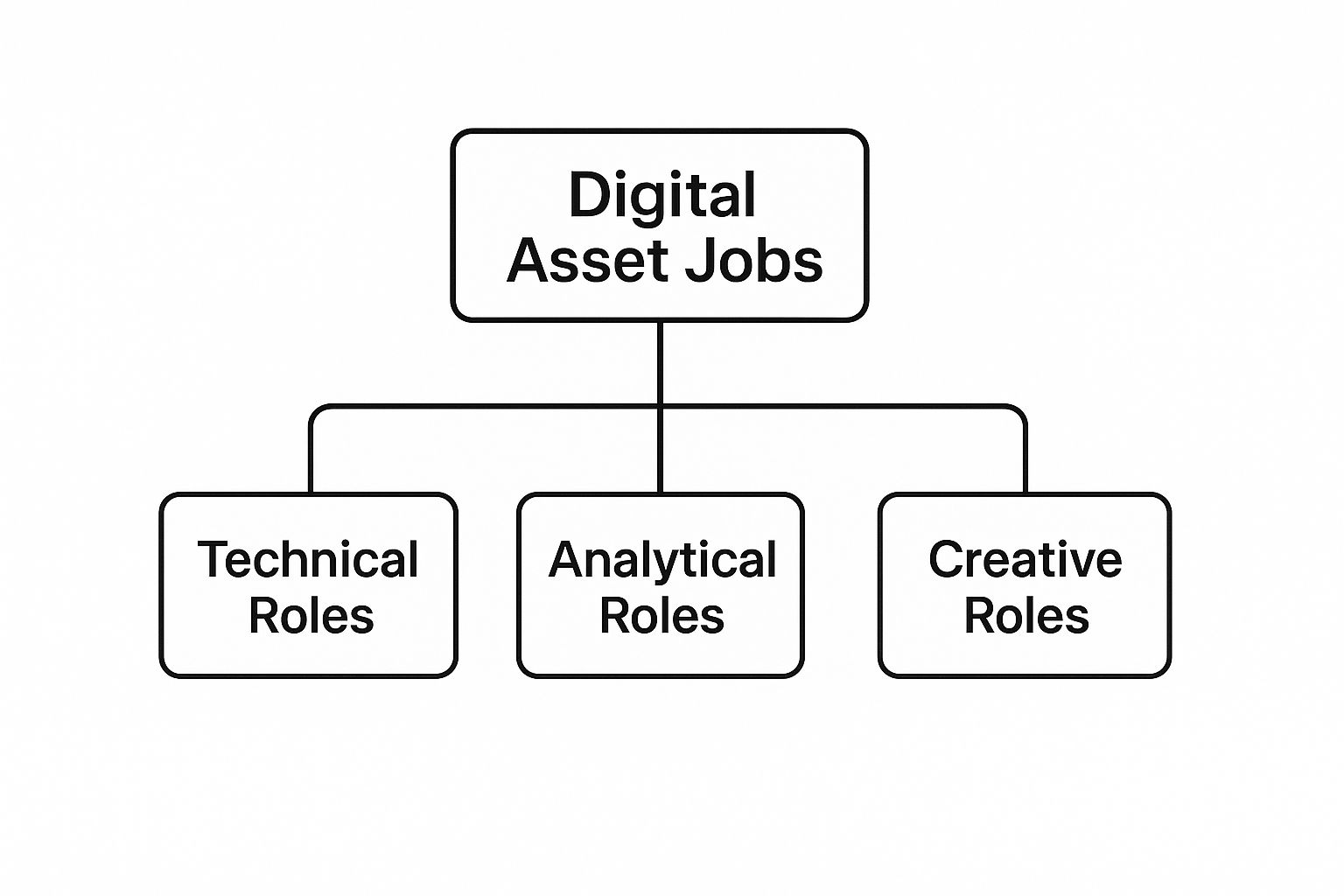
As you can see, the opportunities go way beyond just writing code, spilling into roles that depend on everything from market analysis to building vibrant online communities.
The Technical Toolkit
For anyone who wants to be on the front lines, actually building the infrastructure of Web3, strong technical skills are the price of admission. These are the abilities that allow you to create, secure, and maintain the decentralized apps and protocols that make this whole thing run.
- Blockchain Development: You need to speak the language. Proficiency in languages like Solidity (the go-to for Ethereum), Rust (powering networks like Solana), or Go is the foundation for building smart contracts and dApps.
- Cryptography: This is the bedrock of security. A solid grasp of cryptographic principles is a must for any security-focused role, as it's what keeps data safe and assets protected from bad actors.
- Data Analysis: The blockchain is a massive, open ledger of data. Being able to dive into that on-chain data with tools like SQL and Python is how teams figure out what users are doing and how well their protocols are performing.
These are the core competencies for the most sought-after engineering roles, the people who are directly pushing innovation and keeping the ecosystem secure.
The People-Powered Skills (Non-Technical)
On the flip side, you have the non-technical skills, which are just as vital for the industry's growth and mainstream adoption. These abilities are all about navigating the messy, human side of things—from complex regulations to building trust with a skeptical public.
Many of the biggest hurdles in digital assets today aren't technical bugs. They're challenges related to regulation, market strategy, and public perception. People who can bridge those gaps are worth their weight in gold.
This is where professionals from traditional fields can really make their mark, applying time-tested expertise to a brand-new arena. Some of the most in-demand non-technical skills include:
- Regulatory Know-How: Governments around the world are still figuring out the rules. A deep understanding of compliance, AML (Anti-Money Laundering), and KYC (Know Your Customer) procedures is a massive advantage.
- Risk Management: This space is volatile. The ability to spot, analyze, and hedge against financial and operational risks is non-negotiable for any company handling digital assets.
- Community Building: Web3 is all about community. Skills in social media, content creation, and genuine user engagement are what transform a cool project into a thriving movement. For anyone drawn to this side of things, there are tons of Web3 marketing jobs that call for these exact talents.
To give you a clearer picture, here’s how the skills break down across different types of roles.
Technical vs Non-Technical Skills for Digital Asset Jobs
A comparative look at the essential skills required for different career tracks within the digital assets industry.
| Skill Category | Examples of Key Skills | Common Job Titles Requiring These Skills |
|---|---|---|
| Technical | Solidity, Rust, Go, Smart Contract Auditing, Cryptography, Data Structures | Blockchain Developer, Smart Contract Engineer, Security Researcher, Protocol Engineer |
| Analytical | SQL, Python (for data), Financial Modeling, Tokenomics, Market Analysis | Data Analyst, Quant Trader, Research Analyst, Tokenomics Specialist, Venture Capital Analyst |
| Strategic/Business | Product Management, Business Development, Go-to-Market Strategy, Risk Management | Product Manager, Head of Strategy, Business Development Manager, Operations Lead |
| Creative/Community | Content Creation, Social Media Management, Graphic Design, Community Engagement | Community Manager, Content Strategist, Marketing Manager, Social Media Lead |
| Legal/Compliance | Regulatory Analysis, AML/KYC Procedures, Corporate Law, Policy Drafting | Compliance Officer, General Counsel, Regulatory Affairs Manager, Policy Analyst |
Ultimately, a successful career in digital assets hinges on finding the intersection between what you’re good at and what the industry desperately needs. Whether you're a coder, a marketer, or a legal expert, there's likely a place for you to make an impact.
How Institutional Adoption Is Shaping the Job Market

For a long time, the digital asset world felt like the Wild West—a place of huge opportunity, but also one defined by risk and a certain distance from "real" finance. That's changing, and fast. The single biggest reason? The institutions are here.
Major banks, hedge funds, and massive asset management firms have stopped watching from the sidelines. They're now actively building out their digital asset teams, and in doing so, they're bringing a whole new level of professionalism, stability, and demand for specialized talent into the space.
This flood of serious capital is completely reshaping the digital assets jobs market. It's not just about scrappy startups anymore; now, these roles are becoming part of the world's largest financial powerhouses.
The New Wave of Professional Roles
When the big players show up, they bring their operational standards with them. This is creating a massive opportunity for people with backgrounds in traditional finance, law, and enterprise tech. The focus is shifting dramatically toward security, compliance, and sophisticated financial strategy.
This has led to a surge in demand for some very specific, high-stakes positions:
- Digital Asset Custodians: These aren't just tech experts; they're guardians responsible for securing billions of dollars in digital assets. It’s a job that demands deep knowledge of both cybersecurity and financial regulations.
- Crypto Compliance Officers: With regulators paying closer attention, these experts are essential. They help firms navigate the incredibly complex legal minefield and avoid costly mistakes.
- Quantitative Analysts (Quants): The math whizzes of Wall Street are now pointing their skills at crypto. They're applying their financial modeling and algorithmic trading genius to the unique volatility of digital markets.
The real change here is a shift in mindset. Digital assets are no longer just a speculative curiosity; they're being treated as a legitimate asset class, just like stocks or bonds. This evolution is what's creating stable, long-term career paths.
And this isn't just a feeling; the numbers back it up. A 2025 survey of 345 institutional investors found that a whopping 67% plan to increase their digital asset investments. The main drivers are the hunt for higher returns and a growing sense of regulatory clarity. You can dig into all the details and explore the growing institutional appetite for digital assets in the full report.
Bridging Traditional Finance and Web3
This new reality creates the perfect on-ramp for professionals who want to move into digital assets without having to start their careers over. If you have experience in risk management, portfolio construction, or regulatory affairs, your skills are suddenly in high demand. Companies are desperate for people who can connect the old financial world with the new one.
These roles are often a blend of established financial principles and brand-new tech challenges. A portfolio manager, for instance, might now have to balance a fund that contains both traditional stocks and complex DeFi yield-farming strategies. It’s this hybrid nature that makes these digital assets jobs both incredibly challenging and rewarding.
If you’re thinking about making a move, you can find a ton of opportunities, including many blockchain jobs for experienced professionals, on platforms that specialize in the industry.
Navigating Broader Economic Influences on Hiring
While the digital asset world feels like its own universe, driven by incredible tech and innovation, it doesn't exist in a bubble. The industry is wired into the global economy, which means a career here is subject to the very same forces that sway traditional job markets.
Getting your head around this connection is crucial for setting realistic career expectations and making savvy moves.
Think of the industry as a high-tech sailboat. The crew's skill and the boat's design—that’s the innovation—are vital for performance. But the wind and the currents, the macroeconomic trends, are what ultimately dictate the speed and smoothness of the ride. When the economy is booming, companies have cash to burn on growth, and you see a hiring frenzy for digital assets jobs.
But when those economic winds turn into headwinds, the industry feels the squeeze just like everyone else.
Economic Indicators to Watch
A few key economic factors have a direct line to hiring and investment in the digital asset space. Keeping an eye on these can give you a much clearer picture of where the market is and where it might be headed.
Here's what to keep on your radar:
- Interest Rates: When rates go up, borrowing money gets expensive. This can put the brakes on venture capital flowing into startups and make established companies think twice about investing in new tech.
- Inflation: High inflation can spook consumers and eat into company profits, often causing businesses to pull back on hiring.
- Overall Employment Trends: The general health of the job market is a huge tell. If you see widespread layoffs in other industries, it often signals a more cautious hiring climate across the board.
We've seen this play out recently. For example, the U.S. labor market in 2025 showed signs of cooling off, and the ripples were felt in both traditional finance and digital assets. In July 2025, the U.S. only added 73,000 non-farm payroll jobs—way below what analysts expected—and the unemployment rate crept up to 4.2%.
This kind of data shows that no matter how exciting the tech is, the big-picture economic health is a critical piece of the puzzle for anyone building a career here. You can learn more about how the US labor market impacts crypto trends to see the connection.
Acknowledging these external risks isn't about being pessimistic; it's about being a realist. The most successful professionals understand market cycles. They're prepared to adapt, whether that means doubling down on skills during a downturn or jumping on opportunities during a boom.
Got Questions About Digital Asset Jobs? We’ve Got Answers.
Jumping into a new career path always brings up a ton of questions. Let's tackle some of the most common ones I hear about breaking into the digital asset space, so you can get past the uncertainty and start making moves.
Do I Really Need a Computer Science Degree?
Absolutely not. This is one of the biggest myths out there. While a Computer Science degree is obviously a huge plus for hardcore technical roles like a blockchain developer, the industry is starving for talent in other areas.
Think about it: every successful project needs experts in marketing, sales, legal, compliance, and finance. If you have a background in risk management or know your way around financial regulations, those skills are pure gold right now. Many of the most successful people I know in this field simply found a way to apply their traditional industry experience to this new frontier.
What's the Smartest Way to Start Learning?
Don't try to boil the ocean. Start with the basics and build from there. Before you dive into complex trading strategies or smart contract code, make sure you genuinely understand what a blockchain is. Get a solid grip on the difference between a coin and a token, and why decentralization actually matters.
Good online courses, reputable industry news sites, and the whitepapers of major projects are your best friends here.
Here's a pro tip: Reading is great, but engaging is better. Get on Twitter and Discord and join the conversation. You’ll get real-time insights and connect with people in a way no textbook can offer. Understanding the culture is just as important as understanding the technology.
Are These Jobs Only at Small, Risky Startups?
Not anymore. While the startup scene is definitely vibrant and a huge employer, the "big guys" are officially in the game. Don't overlook them.
Massive, established companies are now building out their own digital asset teams. We're talking about major financial institutions, top-tier consulting firms, and giant tech companies. They are all hiring for roles in:
- Blockchain strategy
- Digital asset management
- Web3 integration
These corporate roles can offer a fantastic blend of stability and a structured career path, letting you work on exciting new tech without the all-or-nothing risk of a brand-new startup.
Ready to find your place in the future of finance and technology? At Find Web3, we connect top talent with thousands of opportunities in the blockchain, crypto, and Web3 space. Explore the latest job openings from leading companies and start your career journey today.