
The Real Entry Level Blockchain Job Market (It's Not What You Think)
If you're picturing rooms full of cryptography PhDs as the only ones landing entry level blockchain jobs, let's clear that up right now. The myth that you need to be a seasoned expert from day one is probably the biggest thing holding people back. The truth is, the market is much more welcoming and varied than you might think. Companies aren't just hunting for coding geniuses; they need curious, adaptable people who can connect this new technology with regular business operations.
This change is happening because blockchain isn't a niche experiment anymore. The career field is growing fast as big corporations weave the technology into their main business functions. In 2023 alone, hiring for blockchain roles jumped by about 70%, which is a huge signal that the industry has gone from experimental to essential. You can discover more about this impressive career growth and see how giants like Walmart and JPMorgan Chase are leading the charge. This means lots of new opportunities are opening up, especially for those with solid foundational skills and a real drive to learn.
What Do These Roles Actually Look Like?
Forget the stereotype of a lone developer coding in a dark room. Most entry-level work is super collaborative. You could be working with traditional IT teams to help roll out a new blockchain-based supply chain system, or you might be helping a project manager translate business goals into technical specs for the dev team. The day-to-day is often more about practical problem-solving than inventing groundbreaking consensus algorithms.
The types of roles are also more diverse than most people realize. While developer jobs are certainly out there, a large chunk of entry-level positions are in analytics and coordination, as this chart shows.
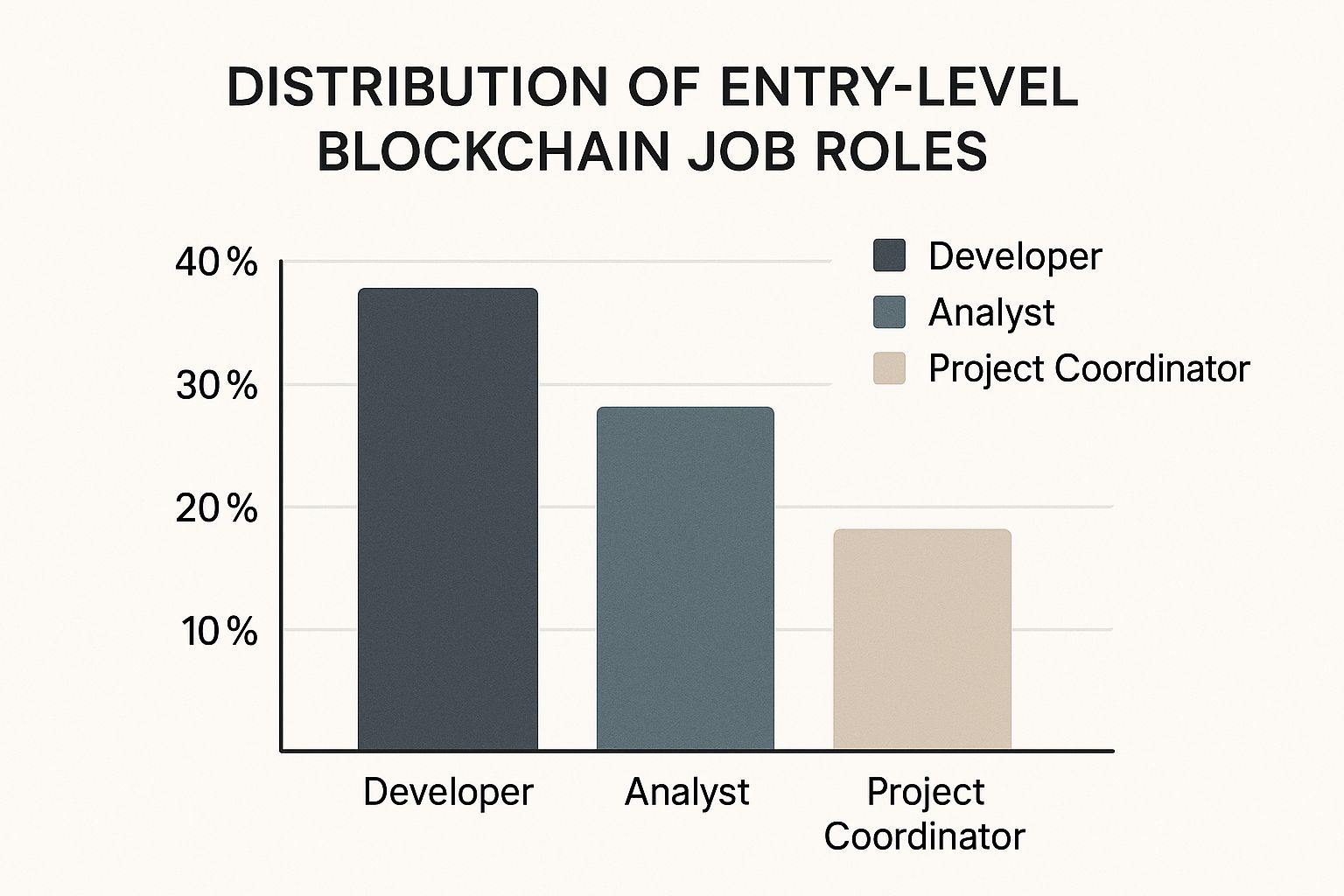
This data reveals that almost half of the available entry level blockchain jobs are in non-developer or hybrid roles. This really drives home the point that companies desperately need professionals who can analyze, manage, and communicate effectively.
To give you a clearer picture, here’s a breakdown of some common roles you'll find at the entry level.
| Job Title | Primary Responsibilities | Key Skills Required | Typical Salary Range |
|---|---|---|---|
| Blockchain Developer | Writing, testing, and deploying smart contracts and dApps. Maintaining and upgrading blockchain networks. | Solidity, Rust, Go, JavaScript, understanding of cryptography, data structures, and blockchain architecture. | $70,000 – $120,000 |
| Blockchain Analyst | Researching blockchain trends, analyzing on-chain data, and providing insights to support business decisions. | Data analysis (SQL, Python), strong understanding of blockchain protocols, market research, and clear communication. | $60,000 – $100,000 |
| Project Coordinator | Managing project timelines, coordinating between technical and non-technical teams, and ensuring project goals are met. | Project management tools (e.g., Jira, Asana), strong organizational skills, basic blockchain knowledge, excellent communication. | $55,000 – $90,000 |
| Community Manager | Engaging with the user community on platforms like Discord and Telegram, managing social media, and gathering user feedback. | Social media management, strong writing skills, deep understanding of the project's ecosystem, and empathy. | $50,000 – $85,000 |
This table shows there are multiple paths into the industry. Whether you're a coder, a data whiz, or a people person, there's likely a role where you can get your start.
Key Takeaways For Your Job Search
At the end of the day, hiring managers in the blockchain world are betting on your potential. They're looking for candidates who have a good grasp of fundamental programming concepts but, more importantly, show they can learn and adapt quickly. Your ability to think critically and solve problems often carries more weight than a long list of specific blockchain certificates.
As you begin your search, keep an eye out for companies with established training programs or clear mentorship structures. These are the organizations that are truly committed to growing new talent, not just chasing a trend. They get that building a solid team means investing in the next wave of blockchain professionals.
Skills That Actually Get You Hired (Skip The Fluff)
Let's cut through the noise. Job descriptions for entry level blockchain jobs can be intimidating, often listing a dozen different technologies. Here’s the secret: you don't need to be a master of everything. Hiring managers are looking for a solid foundation and a demonstrated ability to learn, not a unicorn who already knows it all.
The Technical Skills That Truly Matter
While blockchain-specific languages are important, many companies value general software development principles just as highly. Your existing knowledge in common languages can be a huge advantage.
- JavaScript & Python: You might be surprised, but strong skills in these languages are often more valuable than beginner-level Solidity. Why? Because many blockchain applications have extensive off-chain components, like front-end interfaces and backend services, which are built with these workhorse languages. A candidate who understands how to build a full application is incredibly valuable.
- Fundamental Software Principles: Do you know your way around data structures, APIs, and version control with Git? Perfect. These are the building blocks of any software role, blockchain included. Understanding how systems communicate and how to collaborate on a codebase is non-negotiable.
- Solidity (Or a similar smart contract language): You do need to get your hands dirty with a language like Solidity for most developer roles. It's the primary language for Ethereum, the largest smart contract platform.
Here's a look at the official Solidity documentation, a resource you'll become very familiar with.

The documentation itself highlights key concepts like smart contracts, data types, and control structures, which are the core areas to focus on when you're starting out.
Don't Overlook These "Soft" Skills
In a field as complex as blockchain, your ability to communicate and think critically can be the deciding factor that gets you hired. These aren't just buzzwords; they are practical necessities.
- Translating the Technical: Can you explain what a "smart contract" is to someone in the marketing department without their eyes glazing over? This skill is gold. A surprising amount of the job involves bridging the gap between technical and non-technical teams.
- Systematic Problem-Solving: When a transaction fails or a dApp has a bug, you need a logical process to diagnose the issue. Hiring managers want to see that you can approach problems methodically, not just guess randomly.
- Genuine Curiosity: The space changes fast. Employers want to see that you’re genuinely interested in keeping up. Mentioning a recent Ethereum Improvement Proposal (EIP) you read about or a new Layer-2 solution you've explored shows you're engaged beyond just wanting a paycheck.
If you’re looking to see how these skills apply in the real world, check out the engineering-focused roles on dedicated job boards. You will often see these exact competencies listed in the requirements for promising entry level blockchain jobs.
Building Knowledge That Demonstrates Real Competency
Getting into blockchain doesn't mean you need a formal degree, but you absolutely need a smart learning plan. Your objective isn't just to absorb information; it's to create a portfolio of work that proves you can actually do the job. A common mistake is getting sidetracked by cryptocurrency trading or binge-watching tutorials without ever applying the knowledge. Instead, channel your efforts into a strategy that mixes fundamental concepts with hands-on building.
Think about it like becoming a chef. You can read cookbooks all day (the theory), but you aren't really a chef until you step into the kitchen and cook a meal (the practice). The most effective way to learn is to grasp a concept and immediately use it in a personal project. This not only cements your understanding but also gives you something solid to present to hiring managers for entry level blockchain jobs.
From Theory to Tangible Projects
The goal is to build projects that address a simple, real-world issue. This shows more than just your coding skills; it proves you can analyze a problem and engineer a solution. Try to avoid just copying projects from tutorials. Instead, use the concepts you learn to create something unique, no matter how small it may seem.
Here are a few project ideas to get you started on building practical skills:
- Decentralized Voting dApp: A straightforward application that lets users create proposals and cast votes. This project makes you learn about smart contract logic, how to manage state, and basic front-end interactions.
- Simple Escrow Contract: Build a smart contract that holds funds from one person and releases them to another only when a specific condition is met. This is an excellent exercise for understanding security considerations and conditional logic in Solidity.
- NFT Minting Site: Create a basic website where a user can connect their wallet and mint a custom NFT. This covers deploying smart contracts, using front-end libraries like Ethers.js, and interacting with crypto wallets.
Once you have the core skills down and a few projects under your belt, you need to show them off effectively. Learning how to create a compelling online portfolio is a critical step in showcasing your real-world abilities to potential employers. Your GitHub profile essentially becomes your new resume. Make sure your project repositories include clear README.md files that detail what the project is, the tech stack you used, and instructions on how to run it. A well-documented GitHub is often more impressive than a traditional resume. This hands-on approach builds a portfolio that genuinely opens doors.
Salary Reality Check: What You Can Actually Expect
Let's talk numbers. It’s easy to get starry-eyed reading headlines about massive crypto salaries, but what can you really expect when you're just starting out in a blockchain role? The great news is that the pay is very competitive, even for newcomers. This isn't just hype; it's a classic case of supply and demand. There are simply more open blockchain jobs than there are skilled people to fill them.
Because of this talent gap, companies are willing to pay a premium for specialists with the right foundational skills. For example, an entry-level blockchain developer can now command a starting salary of around $121,000 per year. That’s a figure that goes head-to-head with many other established tech fields. You can learn more about the 2025 blockchain developer job outlook to see how these trends are pushing compensation upwards.
Beyond the Base Salary
When you get an offer, remember that your base salary is just one piece of the puzzle. The total compensation package in the blockchain world, particularly at startups, often includes some very attractive extras that could be worth a lot down the line.
- Equity or Token Options: Many Web3 companies give employees a direct stake in their success. This could be through traditional stock options or, more commonly, an allocation of the project’s native tokens. If the project takes off, this can be a life-changing part of your compensation.
- Competitive Benefits: To attract the best people, companies usually roll out the red carpet with strong benefits. Think comprehensive health insurance, truly flexible work policies, and generous paid time off.
- Remote Work Perks: With so many blockchain roles being remote-first, companies often provide stipends for setting up your home office, memberships to coworking spaces, and wellness programs to keep you happy and healthy.
To give you a clearer picture, let's look at what some common entry-level roles pay across different markets.
Entry Level Blockchain Salary Breakdown by Role
The table below breaks down typical salary ranges for various entry-level blockchain positions. Keep in mind that factors like your specific skills, the company's funding, and your location will influence the final numbers.
| Position | Starting Salary | Mid-Range | Location Factor | Remote Options |
|---|---|---|---|---|
| Blockchain Developer | $110,000 – $130,000 | $150,000+ | High in major tech hubs | Very common |
| Community Manager | $60,000 – $80,000 | $95,000+ | Moderate | Highly common |
| Product Manager | $90,000 – $115,000 | $130,000+ | High | Common |
| Blockchain QA Engineer | $85,000 – $105,000 | $120,000+ | Moderate to High | Common |
| Technical Writer | $70,000 – $90,000 | $100,000+ | Low to Moderate | Very common |
As you can see, even non-developer roles offer competitive starting salaries. The key takeaway is that your skills are in demand, and you should be compensated accordingly, regardless of whether you're coding smart contracts or managing a Discord community.
Navigating Salary Negotiations
When it's time to negotiate, the strongest card you can play is your portfolio of demonstrated skills. Don't feel pressured to accept the first number they throw at you. You can confidently ask for the higher end of the salary range by showing them exactly what you bring to the table.
Talk about the specific projects on your GitHub. Explain how your experience with Python or JavaScript directly applies to the problems they're trying to solve. Show that you've done your homework and understand their business. To get a feel for what companies are offering right now, it's a good idea to browse live crypto job listings and see the current salary benchmarks.
Remember, the blockchain industry moves fast. An entry-level role today can easily become a senior position with a much higher salary in just a few years. Think about the long-term growth potential, not just the initial paycheck.
Finding Legitimate Opportunities (Avoiding The Noise)

Hunting for your first blockchain job is a different beast altogether. If you just stick to the massive, general job sites, you’ll likely find yourself buried in noise, expired listings, and projects that seem a bit sketchy. To get ahead, you have to go where the real companies are looking for talent. It’s all about focusing your search on channels where the good opportunities aren't drowned out.
Instead of endlessly scrolling through irrelevant posts, make specialized Web3 job boards your first destination. These platforms are designed for the industry, meaning the companies posting there are serious about hiring and understand the roles they're trying to fill. They’re actively looking for people with your exact skills. If you're after a pre-vetted list of roles, you can check out our dedicated page for entry level blockchain jobs, which does a lot of the filtering for you.
Also, don't sleep on platforms like Twitter (now X) and LinkedIn. They’ve become powerful recruitment tools in the Web3 space. By following founders, developers, and venture capitalists, you get a front-row seat to hiring announcements, sometimes before they're even officially posted anywhere else.
Spotting Red Flags vs. Green Flags
A big part of navigating this job market is learning to tell the difference between a solid opportunity and a dud. Since the industry is still finding its feet, you need to be able to protect yourself from scams or projects that are doomed from the start.
| Green Flags (Signs of a Good Opportunity) | Red Flags (Reasons to Be Cautious) |
|---|---|
| Clear Project Vision: The company has a well-defined mission and can explain the problem they're solving with blockchain. | Vague "Disruption" Talk: The job description is packed with buzzwords but offers no real substance on what they do. |
| Public Team & Investors: You can easily find information on the core team and their financial backers, who have credible histories. | Anonymous Team: If you can’t find out who runs the company, consider it a massive red flag and steer clear. |
| Active GitHub Repository: Their codebase shows consistent, quality contributions from the development team. | "Pay to Work" Schemes: Any job that asks you to invest your own money to get hired is a definite scam. |
| Realistic Job Description: The role has clear responsibilities and doesn't expect you to be an expert in ten different programming languages. | Unrealistic Salary Promises: If an offer sounds way too good to be true, especially without a proper interview, it probably is. |
The demand for people with blockchain skills is definitely growing. Projections show a major increase is on the horizon as more industries adopt the technology. For example, the U.S. Bureau of Labor Statistics predicts a 22% increase in demand for blockchain developers by 2025, a growth rate that outpaces most other tech roles. You can explore more hiring trend data to get a better sense of this momentum. This makes it all the more important to find high-quality, legitimate roles where you can build a lasting career.
Applications That Get Past The Initial Screen
Your application is the first handshake you make with a potential employer. It needs to do two things at once: show you "speak" blockchain and be easy to understand for a non-technical recruiter. This is a tricky balance, and it’s where a lot of people miss the mark. The secret is to translate your past experiences—even from fields like marketing or finance—into the language of blockchain value.
Think of it this way: instead of saying you "managed social media," rephrase it to "grew and engaged a community of 5,000+ members." That's a skill that translates directly to a Web3 Community Manager role. You're connecting what you've already done to the results you can deliver in a blockchain setting.
Tailoring Your Resume and Cover Letter
Sending out generic applications is the quickest way to have them end up in the digital trash bin. When you're going for entry level blockchain jobs, you have to prove you've done your homework on the specific project. Your cover letter is more than a formality; it’s your prime opportunity to tell a story that grabs their attention.
- Solve Their Problem: Dive deep into the job description. If it says they need help with "user onboarding," your cover letter should highlight a time you simplified a complicated process for new users.
- Show, Don't Just Tell: Don't just claim you're "passionate about decentralization." That’s what everyone says. Instead, talk about a specific decentralized application (dApp) you use or admire. Explain why its tokenomics or user experience works so well. This proves you're not just a fan, but a critical thinker in the space.
- Translate Your Skills: Coming from a traditional finance background? Emphasize your skills in risk analysis or regulatory compliance—both are incredibly important in DeFi. If your background is in marketing, focus on data analysis and user segmentation, skills essential for growing any project's user base.
Making Your Portfolio and Projects Shine
For developers, your GitHub or personal portfolio is your most valuable piece of real estate. It’s where you stop talking and start showing what you can actually build. You can bet that any recruiter for a technical role will be digging through your code.
Present your projects like a professional. Each one needs a crystal-clear README.md file. Explain what the project is, the tech stack you used, and—this is the most important part—what you learned while building it. Admitting you faced challenges and explaining how you solved them shows a level of maturity that’s far more impressive than pretending it was all a breeze.
Ultimately, avoid overusing buzzwords; clear, concise project descriptions always win. A well-put-together application doesn't just show what you've done, it reveals how you think.
Interview Success: Technical Questions And Cultural Fit
Getting through a blockchain interview is a two-part game. You'll definitely get technical questions that check your basic knowledge, but just as important is showing you're the right cultural fit for an industry that's always moving and often a bit chaotic. It's less about spitting out crypto trivia and more about showing how you think and learn on your feet.
The Technical Conversation
You can bet on questions that dig into your understanding of the basics. For an entry level blockchain job, the interviewer wants to see if you can explain core ideas clearly, not if you've memorized every single Ethereum Improvement Proposal.
- Explain It Simply: Be ready to break down concepts like a "hash," a "block," or "gas fees" like you’re explaining them to a friend who isn't in tech. This proves you truly understand the material, not just the definitions.
- Problem-Solving Over Perfection: If they give you a coding challenge or a system design problem, they're watching your process. It’s completely fine if you don’t have the perfect answer right away. Talk them through your thought process, state your assumptions, and explain how you'd find a solution. This tells them much more about your potential than a perfectly rehearsed answer.
- Focus on the 'Why': Instead of just defining Proof-of-Work, be ready to talk about why a project might pick it over Proof-of-Stake. What are the trade-offs when it comes to security, speed, and decentralization?
Demonstrating Cultural Fit
Blockchain companies, particularly startups, run on passion, curiosity, and the ability to adapt. Your excitement and mindset can be just as convincing as your technical know-how.
To improve your odds, it helps to see things from the employer's side. Understanding their strategies for hiring and evaluating developers gives you an edge. It allows you to highlight the qualities they're looking for: a real desire to learn and a proactive approach.
When it's your turn to ask questions, go deeper than just salary and benefits. Ask smart questions that show you're genuinely interested:
- "What's the biggest technical challenge the team is working on with your protocol right now?"
- "How does the company help its junior developers continue learning and growing?"
- "Could you share a story about a time the team had to pivot on a feature? What was that like?"
These kinds of questions show you’re thinking about your long-term impact and growth, which makes you a much more appealing candidate for any entry level blockchain job.
Ready to find the perfect role to put these interview skills to the test? Find Web3 features thousands of curated jobs from top companies in the blockchain industry. Start your search today