
Diving into the Hottest Solidity Dev Jobs of 2025
Demand for skilled Solidity developers remains high. This listicle reveals six in-demand Solidity dev jobs you should know about in 2025. Discover key responsibilities, required skills, and potential salaries for roles like Smart Contract Developer and DeFi Protocol Engineer. Whether you're a seasoned blockchain expert or new to Web3, this guide helps you navigate the exciting job market and find the perfect Solidity dev job. Check out Find Web3 to accelerate your job search.
1. Smart Contract Developer
A Smart Contract Developer is a specialized software engineer focused on designing, developing, testing, and deploying smart contracts on blockchain platforms, primarily Ethereum and other EVM-compatible networks. This role sits at the heart of the Web3 revolution, powering everything from decentralized finance (DeFi) protocols and non-fungible token (NFT) projects to decentralized autonomous organizations (DAOs) and the metaverse. For those seeking solidity dev jobs, this is often the most direct and impactful path.
Smart contract development requires a deep understanding of Solidity, the primary programming language for Ethereum smart contracts. These developers are responsible for translating complex business logic and functionalities into secure, efficient, and auditable code that executes on the blockchain. This involves careful consideration of gas optimization techniques to minimize transaction costs and a thorough understanding of security vulnerabilities to prevent exploits. The role often extends beyond writing code to include integrating smart contracts with frontend applications, managing multi-chain deployments, and collaborating with other developers and stakeholders.
Successful implementations of smart contracts are ubiquitous in the blockchain ecosystem. The Uniswap V3 protocol, a leading decentralized exchange, exemplifies sophisticated smart contract architecture for automated market making. OpenZeppelin, a renowned security auditing firm, provides battle-tested contract libraries that serve as building blocks for countless projects. Similarly, Compound’s DeFi lending protocols showcase the power of smart contracts to enable trustless financial interactions. Even early NFT projects like CryptoKitties demonstrate the innovative use of smart contracts for digital asset ownership and management.
For aspiring smart contract developers, mastering OpenZeppelin libraries is crucial for secure and efficient implementations. Extensive practice on testnets before deploying to the mainnet is essential to avoid costly errors. Furthermore, understanding common attack vectors like reentrancy and learning formal verification techniques are invaluable skills in this security-sensitive field.
Smart contract development offers compelling advantages, including high demand in the market, competitive salaries ranging from $80k to $200k+ annually, and abundant remote work opportunities. This career path provides a direct impact on blockchain innovation and fosters a continuous learning environment due to the rapidly evolving nature of the technology.
However, the role comes with its challenges. Smart contract developers bear a high responsibility for preventing security vulnerabilities, as exploits can have significant financial consequences. The rapid pace of technological change necessitates constant upskilling and adaptation. Moreover, the limited debugging tools available compared to traditional software development can make troubleshooting complex issues more challenging. Finally, gas fee considerations significantly influence design decisions, requiring developers to balance functionality with cost efficiency.
The following infographic provides a quick reference for key data points related to Smart Contract Developer roles:
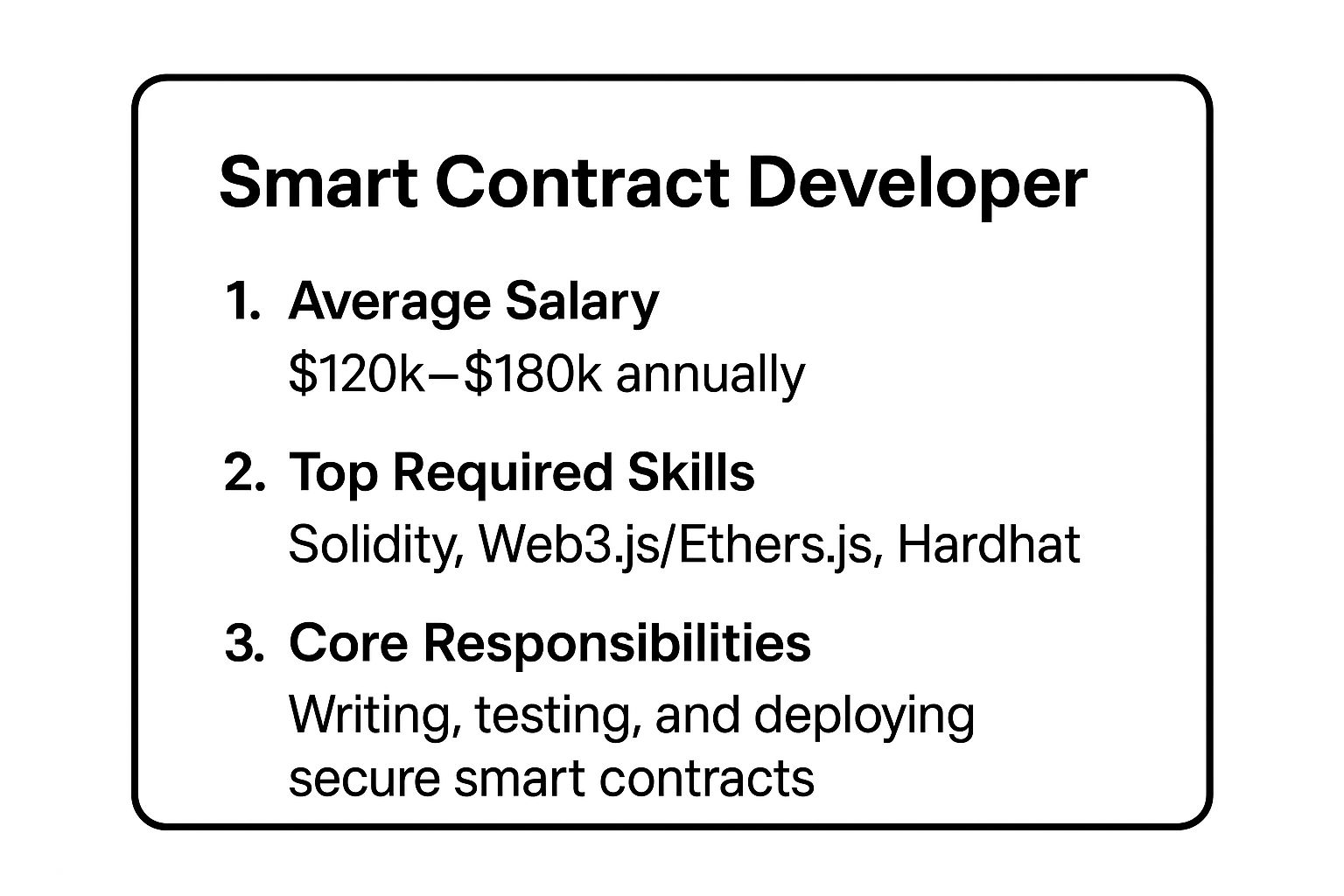
As the infographic highlights, the average salary for a Smart Contract Developer falls between $120k and $180k annually, reflecting the high demand and specialized skillset required. Mastery of Solidity, alongside proficiency in Web3.js/Ethers.js and development frameworks like Hardhat, are essential for securing these solidity dev jobs. The core responsibilities revolve around the crucial tasks of writing, testing, and deploying secure and efficient smart contracts.
Smart contract development isn't just about writing code; it's about shaping the future of decentralized technologies. From DeFi to NFTs and beyond, smart contracts are the foundational building blocks of Web3, and skilled developers are in high demand. Whether you’re a seasoned software engineer looking to transition into the blockchain space or a recent graduate seeking an exciting and impactful career, smart contract development offers a unique opportunity to be at the forefront of innovation. Pioneering teams like OpenZeppelin, the Ethereum Foundation, ConsenSys, and Compound Labs have popularized and continue to drive the evolution of this crucial role in the blockchain ecosystem. If you’re passionate about building the decentralized future, a career as a Smart Contract Developer is a path worth exploring.
2. DeFi Protocol Engineer
DeFi Protocol Engineers are the architects of decentralized finance, crafting the intricate systems that power lending platforms, automated market makers (AMMs), yield farming strategies, and liquidity mining systems. This specialized solidity dev job demands a profound understanding of both financial mechanisms and the intricacies of blockchain technology. They aren't just writing code; they're building the financial infrastructure of the future, requiring a deep understanding of tokenomics, game theory, and the nuances of decentralized governance. This role is critical to the continued growth and evolution of the DeFi ecosystem, making it a highly sought-after position within the broader context of solidity dev jobs.
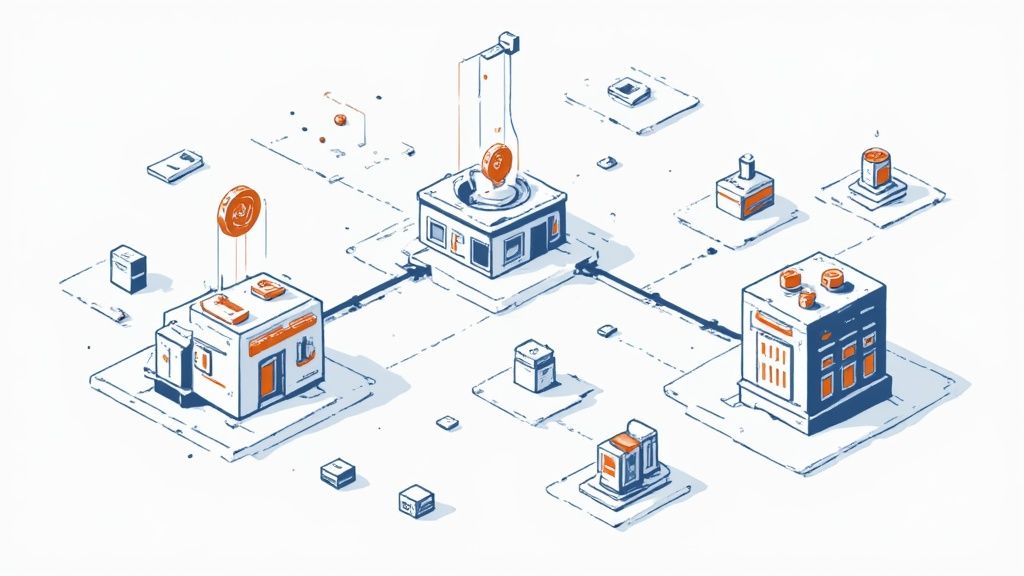
DeFi protocols operate autonomously based on pre-defined rules encoded in smart contracts, eliminating intermediaries and offering transparency. A DeFi Protocol Engineer is responsible for designing, developing, and deploying these smart contracts. This includes complex mathematical modeling to ensure the stability and security of the protocol. They work with concepts like liquidity pools, where users deposit funds to facilitate trading and earn rewards, and design tokenomics models that incentivize participation and govern the protocol. Furthermore, they must consider cross-protocol integrations, allowing different DeFi platforms to interact and create a more interconnected ecosystem. Another critical aspect is mitigating MEV (Maximum Extractable Value), which refers to the potential profit that can be extracted by manipulating the order of transactions within a block.
Examples of successful DeFi protocols showcase the ingenuity of DeFi Protocol Engineers. Aave's lending protocol architecture allows users to borrow and lend crypto assets without intermediaries. Curve Finance's AMM algorithms facilitate efficient stablecoin trading with minimal slippage. Yearn Finance's vault strategies automatically optimize yield farming for users. And MakerDAO's CDP system allows users to generate DAI, a decentralized stablecoin, by collateralizing other crypto assets. These examples highlight the diverse range of projects available within solidity dev jobs, particularly in the DeFi space.
If you're aiming for a career as a DeFi Protocol Engineer, focusing on certain key skills is essential. Study existing DeFi protocols thoroughly, dissecting their code and understanding their underlying mechanics. Understand flash loan mechanics, a powerful tool that can be used for arbitrage and other complex strategies. Learn about oracle integration and price feeds, crucial for ensuring accurate price data within the protocol. Finally, master gas optimization for complex transactions, as minimizing gas costs is essential for the viability of DeFi protocols.
Learn more about DeFi Protocol Engineer
The DeFi space offers several advantages for aspiring solidity dev jobs seekers. It's at the cutting edge of financial innovation, offering the chance to work on groundbreaking technologies. Compensation packages are typically high, often including equity/token incentives. You'll have the opportunity to work with leading DeFi protocols and contribute to the evolution of the decentralized financial landscape. Global remote opportunities are also common.
However, this specialization also presents challenges. Security requirements are extremely stringent, as vulnerabilities can lead to significant financial losses. The regulatory landscape surrounding DeFi is still evolving, creating uncertainty. It’s a high-stress environment due to the large sums of money at stake, and the complex economic modeling required demands a high level of analytical skill.
Despite the challenges, the demand for skilled DeFi Protocol Engineers remains high. This role represents not just a job, but a chance to shape the future of finance. For those seeking solidity dev jobs with a significant impact, this path offers an unparalleled opportunity to contribute to a rapidly evolving and transformative industry. Pioneers in the space, such as Andre Cronje (Yearn Finance), Stani Kulechov (Aave), Hayden Adams (Uniswap), and Rune Christensen (MakerDAO), exemplify the potential for innovation and impact in this field.
3. Blockchain Security Auditor
The explosive growth of decentralized applications (dApps) and the vast sums of value locked within smart contracts have created an urgent need for robust security. This is where the Blockchain Security Auditor enters the picture. This specialized solidity dev job focuses on identifying and mitigating vulnerabilities in smart contracts before they are deployed, protecting projects and users from potentially devastating exploits. For developers seeking a challenging and impactful role within the blockchain ecosystem, becoming a Blockchain Security Auditor represents a highly rewarding solidity dev job opportunity.
Blockchain Security Auditors are the guardians of the decentralized world. They meticulously examine smart contract code, employing a combination of manual analysis, automated tools, and formal verification methods to uncover potential weaknesses. Their work is crucial for preventing exploits that could lead to the loss of user funds, reputational damage, and the erosion of trust in a project. This role demands a deep understanding of Solidity, the primary programming language for Ethereum smart contracts, and other blockchain-specific languages. Beyond just coding proficiency, a successful auditor possesses a keen eye for detail, a proactive security mindset, and a relentless drive to stay ahead of evolving attack vectors.
The process typically involves several stages. Initially, auditors conduct a thorough manual code review, scrutinizing the logic and implementation for common vulnerabilities. They leverage automated security testing tools to identify potential issues that might be missed during manual inspection. Formal verification methods, based on mathematical models, offer higher assurance by rigorously proving the absence of specific vulnerabilities. Finally, the auditor compiles a detailed vulnerability assessment report, outlining identified weaknesses and providing recommendations for remediation. Post-deployment monitoring may also be part of the auditor's responsibilities to ensure ongoing security.
Examples of successful implementations of blockchain security audits include:
- ConsenSys Diligence: (https://consensys.net/diligence/) Known for their rigorous audit reports that provide a comprehensive analysis of smart contract security.
- Trail of Bits: (https://www.trailofbits.com/) A leading cybersecurity firm offering in-depth security assessments for blockchain projects.
- OpenZeppelin: (https://openzeppelin.com/security-audits) Renowned for their open-source smart contract libraries and their expertise in security audits.
- Certik: (https://www.certik.com/) Specializes in smart contract verification using formal methods and automated analysis.
These companies demonstrate the high demand for robust security in the blockchain space and highlight the critical role of Blockchain Security Auditors in protecting the ecosystem.
Actionable tips for aspiring Blockchain Security Auditors:
- Learn common vulnerability patterns: Familiarize yourself with the SWC registry (Smart Contract Weakness Classification and Test Cases) to understand common security flaws.
- Practice with deliberately vulnerable contracts: Platforms like Capture the Ether offer challenges that allow you to practice exploiting and mitigating vulnerabilities.
- Develop systematic audit methodologies: Create a structured approach to ensure comprehensive coverage during audits.
- Build a portfolio with bug bounty participation: Contributing to bug bounty programs demonstrates your skills and builds your reputation within the community.
Why Choose This Solidity Dev Job?
This solidity dev job offers numerous benefits. The high demand translates into lucrative hourly rates, ranging from $150 to $500 per hour, along with flexible consulting opportunities. The work is intellectually stimulating, requiring continuous learning of new attack vectors and staying at the forefront of blockchain security advancements. Furthermore, a successful track record as a Blockchain Security Auditor can lead to significant reputation-based career growth.
However, this career path also presents certain challenges. The high level of responsibility and the potential liability associated with overlooking vulnerabilities can be demanding. The role requires extensive security knowledge and the pressure to find all potential weaknesses can be intense. Staying up-to-date with the ever-evolving attack methods is crucial.
When and Why to Choose This Approach:
If you are a detail-oriented individual with a passion for security and a strong understanding of Solidity, a career as a Blockchain Security Auditor might be the perfect fit. This solidity dev job is ideal for individuals who thrive in challenging environments, enjoy continuous learning, and want to make a tangible impact on the security of the blockchain ecosystem. As the blockchain industry continues to expand, the demand for skilled security professionals will only increase, making this a promising career path for those seeking a rewarding and impactful role within the Web3 landscape. Whether you're a seasoned developer or a recent graduate, becoming a Blockchain Security Auditor offers an opportunity to contribute to the future of decentralized technology.
4. NFT Platform Developer
The explosive growth of Non-Fungible Tokens (NFTs) has created a surge in demand for specialized solidity dev jobs, and among the most sought-after roles is the NFT Platform Developer. These developers are the architects behind the digital marketplaces and platforms that power the buying, selling, and trading of NFTs, as well as the minting of new, unique digital assets. They are responsible for building the infrastructure that supports the entire NFT ecosystem, from initial creation to ongoing management and interaction. This involves a deep understanding of blockchain technology, specifically Ethereum and its associated standards like ERC-721 and ERC-1155, which govern the properties and behaviors of NFTs.
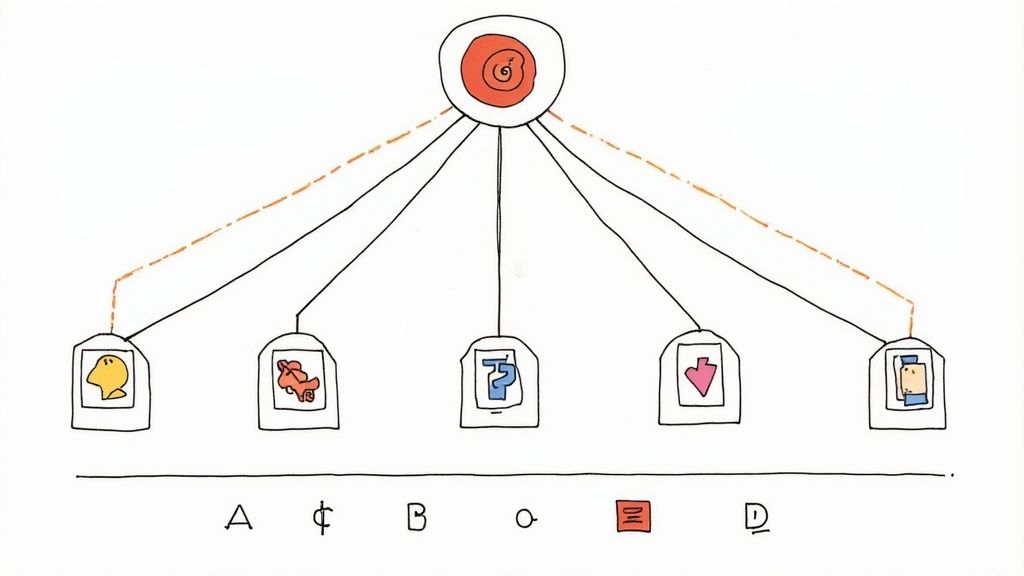
NFT Platform Developers work on a range of tasks, from implementing core marketplace functionality like listing, bidding, and purchasing NFTs, to designing and integrating complex royalty systems that ensure creators receive a percentage of each subsequent sale. They also manage the metadata associated with each NFT, which includes information like the asset's name, description, image, and other relevant attributes, often leveraging decentralized storage solutions like IPFS. Furthermore, they must optimize their code for gas efficiency, particularly for batch operations like minting large collections of NFTs, to minimize transaction costs on the blockchain. This role sits at the intersection of technology and creativity, demanding both strong technical skills and an appreciation for the artistic and cultural aspects of the NFT space.
Successful implementations of NFT platforms are readily visible in the current market. OpenSea, the largest NFT marketplace, provides a prime example of robust marketplace contract development and user-friendly interface design. Foundation showcases innovative auction mechanisms for digital art, while Art Blocks has pioneered the use of generative algorithms to create unique on-chain NFT artwork. Dapper Labs, with its NBA Top Shot platform, demonstrates the potential of NFTs for mainstream adoption, bringing digital collectibles to a wider audience. These platforms serve as both inspiration and practical examples for aspiring NFT Platform Developers.
For those interested in pursuing this career path, several tips can help you succeed. First, mastering efficient batch minting techniques is crucial for minimizing gas costs and maximizing profitability for both creators and platform users. Designing flexible royalty systems allows for diverse revenue models and ensures artists are fairly compensated for their work. Considering Layer 2 scaling solutions is becoming increasingly important for handling high-volume NFT drops and reducing network congestion. Finally, prioritizing user experience, especially for those new to the crypto space, is essential for broader adoption of NFTs. Learn more about NFT Platform Developer
The demand for NFT Platform Developers stems from the rapidly growing NFT market and its increasing integration with mainstream industries. This burgeoning field offers exciting opportunities for creative and diverse projects, with the potential to develop high-impact consumer applications. It combines technical challenges with artistic expression, making it an appealing career path for those seeking a blend of technical and creative work.
However, like any emerging field, there are also challenges. Market volatility can influence the demand for NFT developers, and scalability remains a significant hurdle for handling high-volume transactions. Environmental concerns related to the energy consumption of blockchain networks are also a consideration. Furthermore, regulatory uncertainty in various jurisdictions adds another layer of complexity.
Despite these challenges, the role of the NFT Platform Developer remains a vital one in the evolving Web3 landscape. They are the builders of the infrastructure that supports the digital ownership revolution, and their expertise will continue to be in high demand as the NFT market matures and expands into new areas. If you're a solidity dev seeking a dynamic and rewarding career path within the blockchain space, becoming an NFT Platform Developer offers a unique opportunity to shape the future of digital ownership and creativity.
5. Layer 2 Solutions Developer
The explosive growth of decentralized applications (dApps) on the Ethereum blockchain has exposed the limitations of its underlying infrastructure. Network congestion, high gas fees, and slow transaction speeds have created a pressing need for scalability solutions. This is where Layer 2 (L2) solutions come in, and with them, the high demand for skilled Solidity dev jobs focused on this crucial area. As Ethereum strives to become the world computer, Layer 2 solutions are vital for its future, making L2 developers essential for Web3 development. This makes a career as a Layer 2 Solutions Developer one of the most exciting and impactful solidity dev jobs available today.
Layer 2 solutions operate on top of the Ethereum mainnet (Layer 1), handling transactions off-chain while leveraging the security and decentralization of the underlying blockchain. This allows for significantly faster and cheaper transactions without compromising the core benefits of Ethereum. Several approaches exist, each with its own trade-offs, creating a diverse and challenging field for Solidity developers. A deep understanding of these different approaches is essential for anyone looking to pursue this career path.
A Layer 2 Solutions Developer specializes in designing, implementing, and maintaining these scaling solutions. They work with various technologies like Polygon, Arbitrum, Optimism, and other rollup technologies, focusing on improving the performance and usability of Ethereum dApps. Their work often involves:
- Cross-chain bridge development: Building secure and efficient bridges that facilitate the transfer of assets and data between Layer 1 (Ethereum) and Layer 2 networks. This involves intricate Solidity programming and a deep understanding of security considerations.
- Rollup technology implementation: Utilizing optimistic and zero-knowledge rollups to bundle transactions off-chain and submit proof to the mainnet, drastically reducing gas costs and improving transaction throughput. This requires expertise in specific rollup architectures and their implementation details.
- State channel programming: Developing state channels that allow participants to conduct multiple off-chain transactions before finalizing them on the mainnet, ideal for micropayments and high-frequency interactions. This involves a strong grasp of state management and secure communication protocols.
- Gas optimization across networks: Minimizing transaction fees by optimizing smart contracts and implementing efficient cross-chain communication strategies. This requires a meticulous approach to coding and a deep understanding of gas mechanics.
- Multi-chain deployment strategies: Deploying and managing dApps across multiple Layer 2 networks to maximize reach and resilience. This necessitates familiarity with various L2 ecosystems and deployment best practices.
Examples of successful Layer 2 implementations demonstrate the real-world impact of this technology:
- Polygon PoS bridge contracts: Enabling seamless transfer of assets between Ethereum and the Polygon network, facilitating faster and cheaper transactions for various dApps.
- Arbitrum rollup implementations: Offering a cost-effective solution for dApps requiring high throughput and low latency, showcasing the power of optimistic rollups.
- Optimism fraud proof systems: Providing a robust security mechanism for optimistic rollups, ensuring the integrity of off-chain transactions.
- Lightning Network payment channels: Demonstrating the potential of state channels for instant and low-cost payments, though primarily used with Bitcoin, it informs similar solutions on Ethereum.
Tips for aspiring Layer 2 Solutions Developers:
- Understand different L2 trade-offs (security vs. speed): Each Layer 2 solution prioritizes different aspects. Recognizing these trade-offs is crucial for selecting the right solution for specific dApp requirements.
- Learn about fraud proofs and validity proofs: These mechanisms are essential for securing Layer 2 solutions and ensuring their reliability. A deep understanding of these concepts is fundamental for L2 development.
- Practice cross-chain communication patterns: Mastering secure and efficient communication between Layer 1 and Layer 2 networks is vital for building robust and scalable dApps.
- Study bridge security models: Bridge vulnerabilities can have severe consequences. A thorough understanding of bridge security best practices is crucial for protecting user assets.
The field of Layer 2 solutions development presents both exciting opportunities and significant challenges. While the pros include contributing to a crucial area of blockchain technology, working with cutting-edge solutions, and enjoying high demand for these specialized solidity dev jobs, the cons include navigating a rapidly evolving landscape, tackling complex technical challenges, and addressing interoperability and security concerns across multiple chains.
Companies like Polygon, Offchain Labs (Arbitrum), Optimism, and Matter Labs (zkSync) have been instrumental in popularizing and advancing Layer 2 technologies, creating a vibrant ecosystem and offering numerous opportunities for skilled Solidity developers. For those seeking a challenging and rewarding career at the forefront of blockchain innovation, Layer 2 Solutions Development offers a path full of potential and impact in the ever-evolving world of Web3. These solidity dev jobs represent not only the future of Ethereum scaling but also a crucial component in the wider adoption of blockchain technology.
6. DAO Infrastructure Developer
Decentralized Autonomous Organizations (DAOs) are revolutionizing how we think about organizational structures, and with this revolution comes a critical need for specialized solidity dev jobs. Enter the DAO Infrastructure Developer, a highly technical role focusing on the very foundation of these decentralized entities. This role sits at the cutting edge of blockchain technology and plays a vital part in shaping the future of governance. If you’re a Solidity developer seeking a challenging and impactful role, building the infrastructure for DAOs could be the perfect fit.
These developers are the architects of decentralized governance, responsible for creating the frameworks, systems, and mechanisms that empower communities to make decisions collectively and transparently. They work with Solidity, the programming language of the Ethereum blockchain, to build the smart contracts that govern a DAO's operations. Their work encompasses everything from designing voting systems and treasury management solutions to implementing proposal and execution frameworks. In essence, they build the digital infrastructure that enables decentralized decision-making and community governance.
The features a DAO Infrastructure Developer implements are crucial for the DAO's functionality. These include:
- Governance token mechanics: Defining how tokens grant voting rights and influence within the DAO.
- Voting system implementation: Building secure and transparent on-chain or off-chain voting mechanisms.
- Treasury management contracts: Developing secure systems for managing the DAO's assets and funds.
- Proposal and execution frameworks: Creating the process for members to submit, discuss, and enact proposals.
- Multi-signature wallet integration: Implementing secure mechanisms for authorizing transactions and managing access to the DAO's resources.
The role offers compelling advantages for the right candidate. It provides the opportunity to work on the cutting edge of organizational structures and tackle a diverse range of complex governance problems. The growing adoption of DAOs across various industries further increases the demand for these specialized solidity dev jobs, offering excellent career prospects. Finally, the position uniquely blends technical expertise with a deep understanding of governance principles.
However, it's also important to be aware of the challenges. Building DAO infrastructure requires navigating complex governance edge cases and finding the right balance between decentralization and efficiency. The evolving legal and regulatory landscape surrounding DAOs presents another layer of complexity, and developers must be vigilant about potential attack vectors specific to governance systems.
Successful examples of DAO infrastructure implementations offer valuable learning opportunities. The Compound governance system, Aragon DAO framework, MolochDAO structure, and Snapshot off-chain voting platform demonstrate different approaches to decentralized governance and showcase the diversity of solutions being developed. Studying these examples can provide insights into best practices and potential pitfalls.
Learn more about DAO Infrastructure Developer
For Solidity developers aspiring to this role, here are some actionable tips:
- Study existing governance attacks and defenses: Understanding past vulnerabilities is crucial for building secure and resilient systems.
- Understand game theory in voting systems: This knowledge helps design mechanisms that incentivize participation and prevent manipulation.
- Implement time delays for critical functions: Timelocks provide a buffer against impulsive actions and allow for community review before enacting critical decisions.
- Design for upgradability and evolution: The DAO landscape is constantly evolving, so building systems that can adapt to future needs is essential.
The concept of the DAO has been popularized by pioneering organizations like the Aragon development team, Compound governance architects, MolochDAO creators, and the Snapshot Labs team. Their work continues to push the boundaries of decentralized governance and inspire innovation in the field.
This specialization within solidity dev jobs isn't just about writing code; it's about shaping the future of organizations. The demand for skilled DAO Infrastructure Developers is on the rise, making it a rewarding career path for those passionate about blockchain technology and decentralized governance. If you're a Solidity developer looking to make a real impact, building the infrastructure for the decentralized future might just be the perfect opportunity.
Top 6 Solidity Dev Job Sources Comparison
| Role | Implementation Complexity 🔄 | Resource Requirements 💡 | Expected Outcomes 📊 | Ideal Use Cases 💡 | Key Advantages ⭐ |
|---|---|---|---|---|---|
| Smart Contract Developer | Medium-High 🔄 Requires secure, gas-optimized contract design | Moderate: Solidity, testing frameworks, security knowledge | Secure, efficient smart contracts powering dApps | DeFi protocols, NFTs, multi-chain apps | High demand, competitive salary, remote work |
| DeFi Protocol Engineer | Very High 🔄 Complex financial modeling & protocol design | High: Advanced Solidity, financial expertise, security auditing | Innovative DeFi protocols with economic models | Lending, AMMs, yield farming, liquidity mining | Cutting-edge finance, high compensation, token incentives |
| Blockchain Security Auditor | High 🔄 In-depth manual and automated security analysis | Specialized: Formal verification, vulnerability assessments | Secure, audited smart contracts preventing exploits | Pre-deployment audits, bug bounties | High hourly rates, consulting flexibility, reputation growth |
| NFT Platform Developer | Medium 🔄 Focus on ERC standards and marketplace integration | Moderate: NFT standards, metadata, frontend integration | NFT marketplaces, minting platforms with royalties | NFT sales, collectibles, digital art platforms | Growing market, creative projects, consumer impact |
| Layer 2 Solutions Developer | High 🔄 Advanced cross-chain, rollup, and scaling solutions | High: Cross-chain protocols, cryptography, network architecture | Scalable, multi-chain Ethereum applications | Scaling Ethereum, rollups, bridges | Solves scalability, cutting-edge tech, growing demand |
| DAO Infrastructure Developer | Medium-High 🔄 Governance frameworks and treasury management | Moderate: Governance tokens, voting, multi-sig wallets | Decentralized organizational governance platforms | DAO setups, decentralized voting systems | Future-focused org structures, governance innovation |
Level Up Your Career: Finding the Right Solidity Dev Job
This article explored a range of exciting career paths within the Solidity development landscape. From building secure smart contracts as a Smart Contract Developer to architecting innovative DeFi protocols as a DeFi Protocol Engineer, the demand for skilled Solidity developers is undeniable. We also examined the critical roles of Blockchain Security Auditors, NFT Platform Developers, Layer 2 Solutions Developers, and DAO Infrastructure Developers, highlighting the diverse skill sets and specializations within this dynamic field. Just as robust systems are crucial in any technical profession, maintaining your tools and equipment is also essential. Regular maintenance and timely repairs are crucial for extending the lifespan of your audio equipment. For those unexpected issues, resources like this guide on pro audio repair can be invaluable.
Mastering Solidity and related blockchain technologies opens doors to a world of innovation and impact. By specializing in one of these areas, you can contribute to the growth of decentralized technologies, shaping the future of finance, art, governance, and more. The key takeaway? Solidity dev jobs represent not only lucrative career opportunities but also a chance to be part of a transformative technological movement.
The journey to securing the right Solidity dev job requires both technical proficiency and a proactive approach. But finding the perfect match can be challenging. That's where Find Web3 comes in. Connect with leading Web3 companies seeking talented Solidity developers like you and discover the latest solidity dev jobs waiting to be filled. Start exploring the possibilities and take the next step in your Web3 career today!