Top Web3 Companies in 2026: 7 Employers to Watch
Profiles of seven Web3 employers, from OpenSea and Coinbase to Immutable and ConsenSys, with what each builds and the roles they hire for.
Web3 hiring is scattered across hundreds of separate career pages, Discord servers and Telegram channels, which makes it hard to work out who is actually building something and who is actually hiring. This guide profiles seven companies that employ people across engineering, product, design, marketing, compliance and support: what each one does, what it runs on, and what the work looks like.
Company details change quickly in this industry, so treat the career notes below as a starting point and check the company's own careers page before you apply.
1. Find Web3: The Central Hub for Your Web3 Career
Find Web3 is a job board dedicated to crypto and Web3 roles. It aggregates listings from company career pages and takes direct postings from employers, covering blockchain, crypto, NFTs, DeFi, DAOs and the metaverse. Current counts for open roles and hiring companies are shown on the jobs board and the companies directory.
Why Find Web3 Stands Out
It only covers crypto and Web3, so the filters match how the industry actually describes its work: by function, by job type, by remote or on-site, and by topic such as DeFi, NFT, DAO or gaming. That means one place to look instead of dozens of career pages.
Key Features and Capabilities
- Filtering: Narrow by category (Engineering, Marketing, Design, Product, Operations, Sales, Support, Non-Tech), by job type, by location including remote, and by topic.
- Company profiles: The companies directory lists firms with roles posted recently, each with its current openings.
- Pay data: Listings show a salary range where the employer states one, and the salaries page publishes median pay for 15 roles, calculated only from listings that state pay.
- Hiring trends: The Web3 jobs report breaks down postings by month and category.
For Job Seekers: A Strategic Approach
- Set up alerts. Save alerts for the specific titles you want, such as "Solidity Developer" or "NFT Community Manager", so new listings reach you rather than the other way around.
- Research the company first. Use the company profile and the employer's own site to understand what it builds and how it makes money before you write an application.
- Check the pay data. The salaries page gives you a reference point before a compensation conversation.
The board is free for job seekers. Employers pay $99 for a 30-day listing, which is sent to job alert subscribers for its category.
2. OpenSea
OpenSea is a marketplace for NFTs and, since the OS2 rebuild, for fungible tokens as well. It lists digital art, collectibles, virtual land, domain names and in-game assets, and lets anyone mint and sell their own NFTs and set royalties without writing code.
Why OpenSea Stands Out
Breadth of chain support. OpenSea started on Ethereum and now covers a long list of networks including Polygon, Arbitrum, Optimism, Base, Avalanche and Ronin, and it added Solana NFT trading in August 2026, its first non-EVM chain for NFTs since an early beta. For a buyer or creator, that means choosing the network that fits the fees and the audience rather than the one the marketplace happens to support.
Navigating the OpenSea Ecosystem
- Career opportunities: Smart contract engineer, frontend and backend developer, product manager for marketplace and creator tools, and community and support roles.
- What the work involves: Consumer-facing product at the intersection of trading infrastructure and creator tools, so both marketplace mechanics and wallet-level UX matter.
- Where to look: OpenSea posts openings on its own careers page; comparable roles elsewhere appear under NFT jobs, and NFT statistics covers the state of the market these companies trade in.
Platform Pros and Cons
| Pros | Cons |
|---|---|
| Extensive Selection: Wide variety of NFTs across many categories and blockchains. | Mainnet Costs: Trades settled on Ethereum mainnet still carry gas fees that cheaper chains avoid. |
| Low Barrier to Entry: Minting and listing require no smart contract work. | Variable Quality: Anyone can list, so collections range from established projects to copies and spam. |
| Liquidity: A large buyer base compared with single-chain marketplaces. | Centralized Operation: The company can delist collections and freeze trading, unlike the underlying chains. |
Website: https://opensea.io/
3. Coinbase
Coinbase is one of the largest cryptocurrency exchanges and has been listed on Nasdaq since April 2021. It lets individuals and institutions buy, sell, trade and store digital assets, and its regulated, publicly reporting status makes it the first crypto account many people open.
Its products extend past the exchange: a self-custody wallet, staking, institutional custody and trading, and Base, the Ethereum layer-2 network Coinbase incubated. The standalone Coinbase NFT marketplace was shut down in August 2024 and its functions moved into Base.
Why Coinbase Stands Out
Regulatory posture. Coinbase files public financial statements, pursues licenses in the markets it operates in, and publishes beginner education through Coinbase Learn. That is a slower way to run an exchange, and it is what the company sells.
Navigating the Coinbase Ecosystem
- Career opportunities: Engineering (blockchain, security, backend), data science, product management, legal and compliance. Legal and compliance work is a standing part of hiring at a regulated exchange, which is not true everywhere in this industry.
- What the work involves: Consumer financial products under regulatory scrutiny, so shipping involves legal review that a startup would not have.
- Work environment: Coinbase has run a remote-first policy since 2020, hiring across many countries.
Platform Pros and Cons
| Pros | Cons |
|---|---|
| Intuitive Interface: Straightforward for beginners to buy, sell and store crypto. | Higher Fees: The simple buy-and-sell flow costs more than the advanced trading interface or a professional exchange. |
| Regulated and Public: Files audited financials and holds licenses in major markets. | Limited Advanced Features: Professional traders will find fewer order types and tools than on derivatives-focused venues. |
| Wide Asset Selection: Supports a large and growing list of cryptocurrencies. | Custodial Risk: Assets held on the exchange are held by Coinbase, not by you, unlike a self-custody wallet. |
Website: https://www.coinbase.com/
4. Binance
Binance operates one of the largest cryptocurrency exchanges by trading volume. It is a centralized exchange, but it also builds and funds infrastructure: BNB Chain, a token launchpad, staking and savings products, and derivatives markets. For most of its users it is the gateway into crypto rather than one venue among several.
Why Binance Stands Out
BNB Chain. It is EVM-compatible, so Ethereum tooling and contracts port across, and its fees are lower than Ethereum mainnet. That combination attracted a large ecosystem of decentralized applications, from DeFi protocols to games, and it gives Binance a decentralized ecosystem feeding off its centralized exchange.
Navigating the Binance Ecosystem
- Career opportunities: Blockchain engineer, data scientist, product manager for DeFi or NFT products, compliance officer and marketing roles.
- What the work involves: A globally distributed workforce with no single headquarters, and a fast release cycle across many product lines.
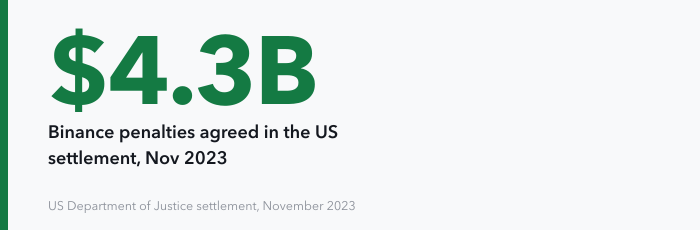
- One thing to know: In the settlement announced by the US Department of Justice in November 2023, Binance pleaded guilty to charges including failures in its anti-money-laundering controls and agreed to pay about $4.3 billion in penalties; founder Changpeng Zhao stepped down as chief executive. Compliance has been a standing part of the company's hiring since.
Platform Pros and Cons
| Pros | Cons |
|---|---|
| High Liquidity: Deep order books mean large trades execute with less slippage. | Regulatory Scrutiny: Restricted or under investigation in a number of countries, with a US guilty plea in 2023. |
| Low Trading Fees: Among the most competitive fees, especially for high-volume traders. | Complex for Beginners: The number of products and trading options is a lot to take in at first. |
| Broad Product Range: Spot and derivatives trading, staking, launchpad and chain infrastructure in one place. | Centralization Risk: The exchange is a single point of failure regardless of the chain it supports. |
Website: https://www.binance.com/
5. Immutable
Immutable builds infrastructure for blockchain games. Its original product, Immutable X, is an Ethereum scaling layer designed for NFTs, with instant trade confirmation and no gas fee for minting or trading. It has since grown into a wider platform: Immutable Chain for game infrastructure, Passport for player accounts that work across games, and a set of growth and analytics tools for studios.
Why Immutable Stands Out
It builds for one industry. General-purpose scaling networks leave studios to work out wallets, onboarding and marketplaces for themselves; Immutable ships SDKs, APIs and a wallet layer aimed at game developers, so a studio can add digital ownership without its players ever seeing a seed phrase.
Navigating the Immutable Ecosystem
- Career opportunities: Go and TypeScript engineers, product managers for the gaming platform, business development managers and game partnership leads.
- What the work involves: Games and blockchain infrastructure together, so candidates usually bring depth in one and working knowledge of the other.
- Work environment: Immutable is headquartered in Sydney and also hires remotely.
Platform Pros and Cons
| Pros | Cons |
|---|---|
| Gas-Free Transactions: Immutable X removes the transaction fee for minting and trading NFTs. | Narrow Focus: Built for games; a non-gaming NFT project is not the intended user. |
| Built-In Player Onboarding: Passport handles accounts and wallets so players do not need an existing crypto wallet. | Tied to Web3 Gaming: Its prospects rise and fall with a games category that is still unproven commercially. |
| Developer Tooling: SDKs and APIs aimed at studios rather than at crypto-native builders. | Learning Curve: Non-technical creators will find the tools developer-oriented. |
Website: https://www.immutable.com/
6. Consensys
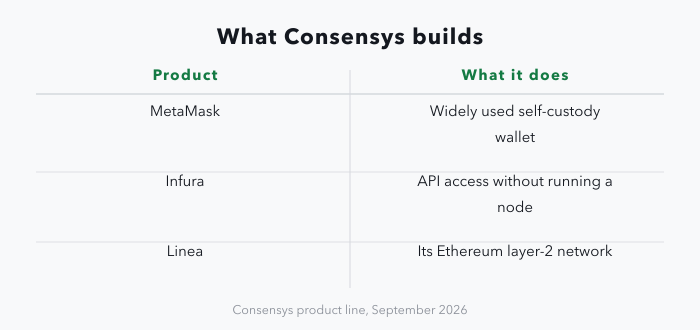
Consensys builds core software for the Ethereum ecosystem. Its products are used daily by people who never think about the company behind them: MetaMask, one of the most widely used self-custody wallets; Infura, which gives applications API access to Ethereum and other networks without running their own node; and Linea, its Ethereum layer-2 network.
Why Consensys Stands Out
It sits underneath other people's products. A wallet, node access and a scaling network are the pieces most applications need and few want to build, which makes Consensys infrastructure rather than a destination.
Note for anyone working from older tutorials: Consensys announced in September 2023 that it was sunsetting the Truffle and Ganache development tools and pointed users to Hardhat. Guides that tell you to start a project with Truffle are out of date.
Navigating the Consensys Ecosystem
- Career opportunities: Protocol engineer, blockchain developer, security auditor, product manager for developer tools, and enterprise solutions roles.
- What the work involves: Deeply technical work on open-source software with public repositories and a vocal developer community, so contributions are visible.
- Work environment: A globally distributed workforce, with roles listed across multiple countries.
Platform Pros and Cons
| Pros | Cons |
|---|---|
| Core Infrastructure: MetaMask, Infura and Linea cover wallet, node access and scaling. | Ethereum Focused: Strongest on Ethereum and EVM chains, with less native support elsewhere. |
| Strong Reputation: A long-standing and respected name in the Ethereum community. | Learning Curve: The developer tools assume familiarity with smart contract development. |
| Documentation and Community: Extensive docs and a large developer base. | Centralization Concerns: Many applications default to Infura, concentrating reliance on one provider. |
Website: https://consensys.io/
7. Unstoppable Domains
Unstoppable Domains sells blockchain-based domain names such as .crypto, .x and .wallet. Each domain is minted as an NFT, so the owner holds it in their own wallet, and it can be used as a readable name in place of a wallet address: funds go to "jane.crypto" rather than to a 42-character string. Domains can also point to decentralized websites.
Why Unstoppable Domains Stands Out
No renewal fees. Traditional domains are rented annually from a registrar; an Unstoppable domain is bought once and held as an asset in the buyer's wallet. The trade-off is resolution: a name only works where a wallet, browser or application has chosen to support it.
Navigating the Unstoppable Domains Ecosystem
- Career opportunities: Blockchain engineer, partnerships manager, full-stack developer and product marketing manager.
- What the work involves: Much of the company's value comes from integrations, so partnerships and developer relations carry unusual weight for a company of its size.
- Work environment: A globally distributed, remote-first team.
Platform Pros and Cons
| Pros | Cons |
|---|---|
| One-Time Purchase: No renewal fees after the initial payment. | Limited Browser Support: Most browsers do not resolve these domains without an extension or custom settings. |
| Readable Addresses: Replaces long wallet addresses with a name, which removes a common source of costly typos. | Outside ICANN: These names sit outside the traditional DNS system and are not universally recognized. |
| Self-Custody: The domain is an NFT held in the owner's wallet. | Ecosystem Dependent: A domain is only as useful as the number of apps and wallets that support it. |
Website: https://unstoppabledomains.com/
Top 7 Web3 Companies Comparison
| Company | What it does | Where it runs | Who it hires |
|---|---|---|---|
| Find Web3 | Job board for crypto and Web3 roles | Aggregated listings plus direct employer postings | Small team; the site is a hiring channel rather than an employer |
| OpenSea | NFT and token marketplace | Ethereum, Polygon, Base, Arbitrum, Solana and others | Engineering, product, design, support |
| Coinbase | Exchange, custody, wallet, Base layer-2 | Nasdaq-listed; licensed in major markets | Engineering, security, data, legal, compliance |
| Binance | Exchange, derivatives, launchpad, chain ecosystem | BNB Chain; globally distributed | Engineering, compliance, product, marketing |
| Immutable | Infrastructure for blockchain games | Immutable X and Immutable Chain on Ethereum; Sydney HQ | Engineering, product, business development, game partnerships |
| Consensys | MetaMask, Infura, Linea | Ethereum and EVM chains | Protocol and security engineering, product, developer relations |
| Unstoppable Domains | Blockchain domain names minted as NFTs | Ethereum and Polygon | Engineering, partnerships, product marketing |
Choosing Where to Apply
These seven cover most of the shapes a Web3 job comes in: infrastructure at Consensys and Immutable, consumer trading products at Coinbase, Binance and OpenSea, and identity at Unstoppable Domains. The hiring is not confined to engineering. Compliance, legal, support, design and marketing roles appear across all of them.
A few things worth doing before you apply:
- Use the product. Mint something, run a test transaction, install the wallet, read the docs. Specifics from actually using a product are the difference between a generic application and one that reads like it came from someone who cares.
- Contribute where the work is public. Consensys, Immutable and OpenSea all maintain public repositories and developer forums. Filed issues and merged fixes are visible work; a cover letter is not.
- Check what the pay actually is. The salaries page publishes medians by role from listings that state a salary, and the Web3 jobs report shows which categories are hiring month by month.
- Look past the seven. The companies directory lists every firm with roles posted recently, most of which are smaller than the ones profiled here and hiring in less crowded pipelines.
Rather than checking each career page in turn, start from the jobs board, which collects openings across the ecosystem in one place.