What Is Web3? Blockchain, Smart Contracts and DAOs
The building blocks behind Web3, from blockchains and smart contracts to decentralized storage and oracles, and what DAOs change about control.
What Is Web3?
Web3 is the name given to internet services built on public blockchains, where accounts, payments and records are handled by software that no single company runs. The idea behind the label is ownership: users hold their own data and digital assets instead of renting them from a platform. The term is contested. There is no agreed test for what qualifies, and plenty of people use it as a synonym for the crypto industry.
Understanding the Evolution of the Web
Web1, the early internet, was mostly static pages. Readers consumed what publishers put up and little else. Web2 added interactivity: Facebook, YouTube and X (formerly Twitter) let anyone publish and connect, and in exchange those platforms hold the accounts, the data and the rules.
Web3 proposes a different arrangement, built on blockchains, cryptocurrency and decentralized applications (dApps). Accounts are keys held by the user rather than logins held by a company, and the code that runs a service is public and shared.
A Web3 social platform, for example, would give users an account they control across applications, and could put decisions about moderation and fees to a vote of token holders rather than to a company. For the vocabulary, see the crypto and Web3 terms glossary.
The Size of Web3 Today
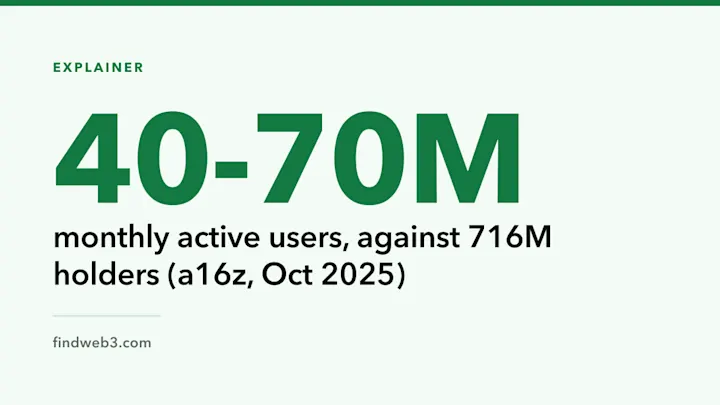
Nobody has a reliable count of Web3 users. Estimates of crypto ownership are far apart: 560 million (Triple-A, 2024), 716 million (a16z, October 2025) and 774 million (Crypto.com Research, June 2026). Ownership is also not use. a16z put monthly active users at 40 to 70 million against its own 716 million holders.
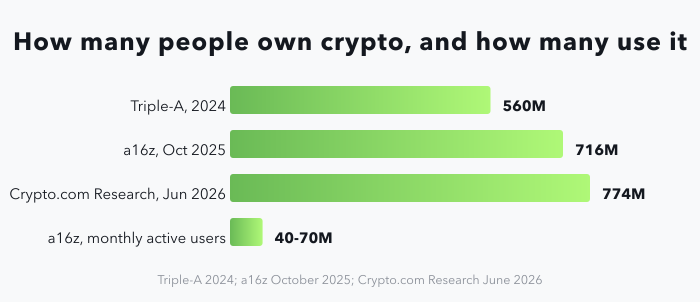
Find Web3 keeps the sourced version of these figures, with publishers and dates, on its Web3 statistics page.
The Building Blocks Powering Web3 Innovation
Four pieces do most of the work.
Blockchain: The Trust Foundation
A blockchain is a shared record of transactions, copied across many independent computers. New entries are added in batches, and old entries are not edited or deleted. Changing an old entry would mean rewriting every entry that came after it on a majority of the copies at once, which is what makes the record hard to tamper with and why no central operator is needed to vouch for it.
Smart Contracts: Automating Trust
Smart contracts are programs stored on a blockchain that run when their conditions are met. They work like a vending machine: a defined input produces a defined output, with no one in the middle deciding whether to honor the deal. The terms are visible to anyone who reads the code, and so are the bugs.
Decentralized Storage: Owning Your Data
Blockchains are expensive places to keep files, so Web3 applications lean on decentralized storage. Instead of sitting in one provider's data center, as with Google Drive or Dropbox, a file is split and distributed across a network of machines, with the network paying or penalizing them for keeping it available. There is no single operator who can lose the file, delete the account, or be ordered to take the file down.
Oracle Networks: Bridging the Gap
Blockchains cannot see outside themselves. Oracle networks feed them external data: prices, weather, sports results, interest rates. A crop insurance contract, for instance, can use an oracle for rainfall readings and pay out automatically when the reading crosses an agreed threshold. The contract is only as reliable as the oracle behind it.
Web1 vs. Web2 vs. Web3: Evolution of the Internet
| Feature | Web1 (1990s-2000s) | Web2 (2000s-2020s) | Web3 (Emerging) |
|---|---|---|---|
| Nature | Read-Only | Read-Write | Read-Write-Own |
| Control | Centralized (Websites) | Centralized (Platforms) | Decentralized (Users) |
| Data | Static | Dynamic, User-Generated | User-Owned, Verifiable |
| Trust | Based on Website Authority | Based on Platform Reputation | Based on Blockchain Consensus |
| Technology | HTML, FTP | Javascript, AJAX, Cloud Computing | Blockchain, Smart Contracts, Cryptography |
| Examples | Personal Websites, Static Content | Social Media, E-commerce, Mobile Apps | Decentralized Applications (dApps), NFTs, DAOs |
Decentralization: Why Web3 Changes Everything
Decentralization is the argument at the center of Web3: move the power to set rules away from a handful of companies and spread it across the people using the service.
Power to the People: The Shift in Control
In Web2, a small number of firms hold the user data and write the terms of engagement, and a change of policy can end a business built on their platform overnight. A Web3 service spreads that control across the participants running and governing the network, so no single party can change the rules or remove a user on its own. The practical difference shows up in two places: who owns the data, and who decides what stays up.
DAOs: Reimagining Governance
Decentralized Autonomous Organizations (DAOs) are the governance version of the same idea. Members vote through smart contracts, and the votes and the treasury are public. A DAO-run social platform would put its community guidelines and moderation policy to its members rather than to a trust and safety department.
Data Ownership and Privacy in a Decentralized World
Web3 identity puts the account in the user's hands: a key, not a row in a company's database. Data can sit on a decentralized storage network, with individual applications granted access to only the parts they need. There is no central store of personal records to be breached, and no need to hand over a full profile to use a service. The trade is that recovery is on the user too, because there is no support desk holding a copy of the key.
Web3 in Action: Real Applications Transforming Industries
Decentralized Finance (DeFi): Reshaping the Financial Landscape
Decentralized Finance (DeFi) rebuilds lending, trading and insurance as smart contracts, with no bank in the middle. Anyone with a wallet can supply assets to a lending pool or borrow against them, and every position is visible on-chain.
The mechanics matter. Rates are set by supply and demand in each pool and move constantly, loans are overcollateralized, and a fall in the price of the collateral can trigger an automatic liquidation. There is no deposit insurance, and a bug in a contract is a permanent loss rather than a reversible transaction.
Find Web3 lists DeFi jobs, and the sector's sourced figures are on the DeFi statistics page.
NFTs: Revolutionizing Digital Ownership
A non-fungible token (NFT) is a unique entry on a blockchain pointing to a specific item: an image, a track, a game item, a ticket. It lets a creator sell directly to a buyer and lets anyone check who holds the token and where it came from.
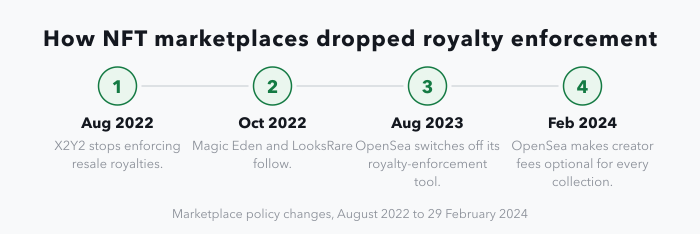
Two limits are worth stating plainly. The token records ownership of the token, which is not the same as copyright in the underlying work. And resale royalties are not enforced by the blockchain: marketplaces decide whether to honor them. Most stopped enforcing them between 2022 and 2024 — X2Y2 in August 2022, Magic Eden and LooksRare that October, and OpenSea, which switched off its royalty-enforcement tool in August 2023 and made creator fees optional for every collection by 29 February 2024. Figures for the market are on the NFT statistics page.
Social Platforms: User-Owned Communities
On a Web3 social platform, the account and the follower graph belong to the user rather than the app, so moving to a different client does not mean starting over. That also makes a platform-wide ban harder to impose, which is an advantage or a problem depending on what is being posted.
Gaming: True Ownership of Virtual Assets
Blockchain games hold in-game items as tokens, so players can sell or trade them outside the game and keep them if they stop playing. The same design lets a game's economy be traded speculatively, which has been the main criticism of the category.
Identity Solutions: Privacy and Verification
Decentralized identity lets a user prove one specific thing — that they are over 18, or hold a particular credential — without handing over a document or creating another account. The credential is issued once and presented selectively, instead of being copied into every service that asks.
Confronting Web3's Growing Pains and Criticisms
Technical Hurdles
Scalability is the oldest problem. A blockchain that every node must verify has a hard ceiling on throughput, and when demand hits it, fees rise and confirmations slow. Most of the engineering effort of the past few years has gone into layer 2 networks that batch transactions off the main chain.
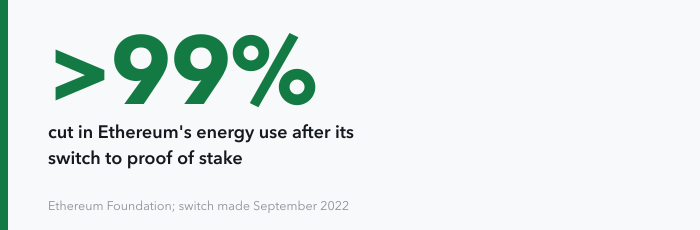
Energy use is a second criticism, and it applies to proof of work specifically. Bitcoin still secures its chain that way. Ethereum switched to proof of stake in September 2022, which the Ethereum Foundation says cut the network's energy use by more than 99%. Any description of mining ether after that date is out of date.
Interoperability is the third. Assets and data do not move freely between chains, the bridges built to move them have repeatedly been hacked, and users end up managing separate balances on separate networks.
User Experience Barriers
Setting up a wallet, holding a seed phrase, approving transactions and paying gas is a lot to ask of someone who just wants to use an application. The failure modes are unforgiving: lose the seed phrase and the funds are gone, approve a malicious contract and they can be taken, send to the wrong address and there is no one to call. Self-custody removes the intermediary and the intermediary's safety net at the same time.
Regulatory Uncertainty and Wealth Concentration
Rules differ by country and keep changing, which makes it hard for a business to know whether a token it issues is a security, or which licenses it needs where. Companies building in the space carry that uncertainty as a standing cost.
Concentration is the more awkward criticism, because it cuts at the premise. If a small number of holders control most of a token, they control most of the votes in its DAO, and a decentralized structure delivers centralized outcomes. Token distribution is worth reading before treating any governance claim at face value.
Your First Steps Into Web3: A Practical Guide
Setting Up Your Web3 Wallet
A crypto wallet is the account: it stores the keys that control your assets and signs you in to dApps. MetaMask and Trust Wallet are the common starting points for browser and mobile.
- Download from the official source. Fake wallet apps and extensions are a standard attack. Check the developer name and use the link on the project's own site.
- Write down the seed phrase offline. It is the only way back into the wallet if the device is lost, and anyone who has it has the funds. No legitimate support team will ever ask for it.
- Consider a hardware wallet for anything you are not actively spending. It keeps the keys on a device that never connects to the internet.
Acquiring Your First Cryptocurrency
Centralized exchanges such as Coinbase and Binance sell crypto for dollars, euros and other national currencies, and handle the identity checks that come with that. Decentralized exchanges trade one token for another directly from a wallet, with no account and no intermediary — and no recourse if the wrong transaction gets approved.
Either way, transactions are final, prices are volatile, assets in a self-custody wallet are not insured, and nothing here is investment advice.
Exploring Web3 Applications
- DeFi: Aave and Compound for lending and borrowing.
- NFTs: OpenSea for browsing and buying digital collectibles.
- Social: Lens for a social graph the user carries between applications.
Wallets show what each approval grants before it is signed. Reading that screen is the habit worth forming early.
Joining Web3 Communities
Most projects run a public Discord or forum where the roadmap is discussed and questions get answered, and joining a DAO is the fastest way to see governance work in practice. Unsolicited direct messages from those servers — offers of help, airdrop links, support staff who contact you first — are almost always scams.
Find Web3 lists crypto and Web3 roles, publishes median pay by role from listings that state a salary, and tracks hiring by month in the Web3 jobs report.